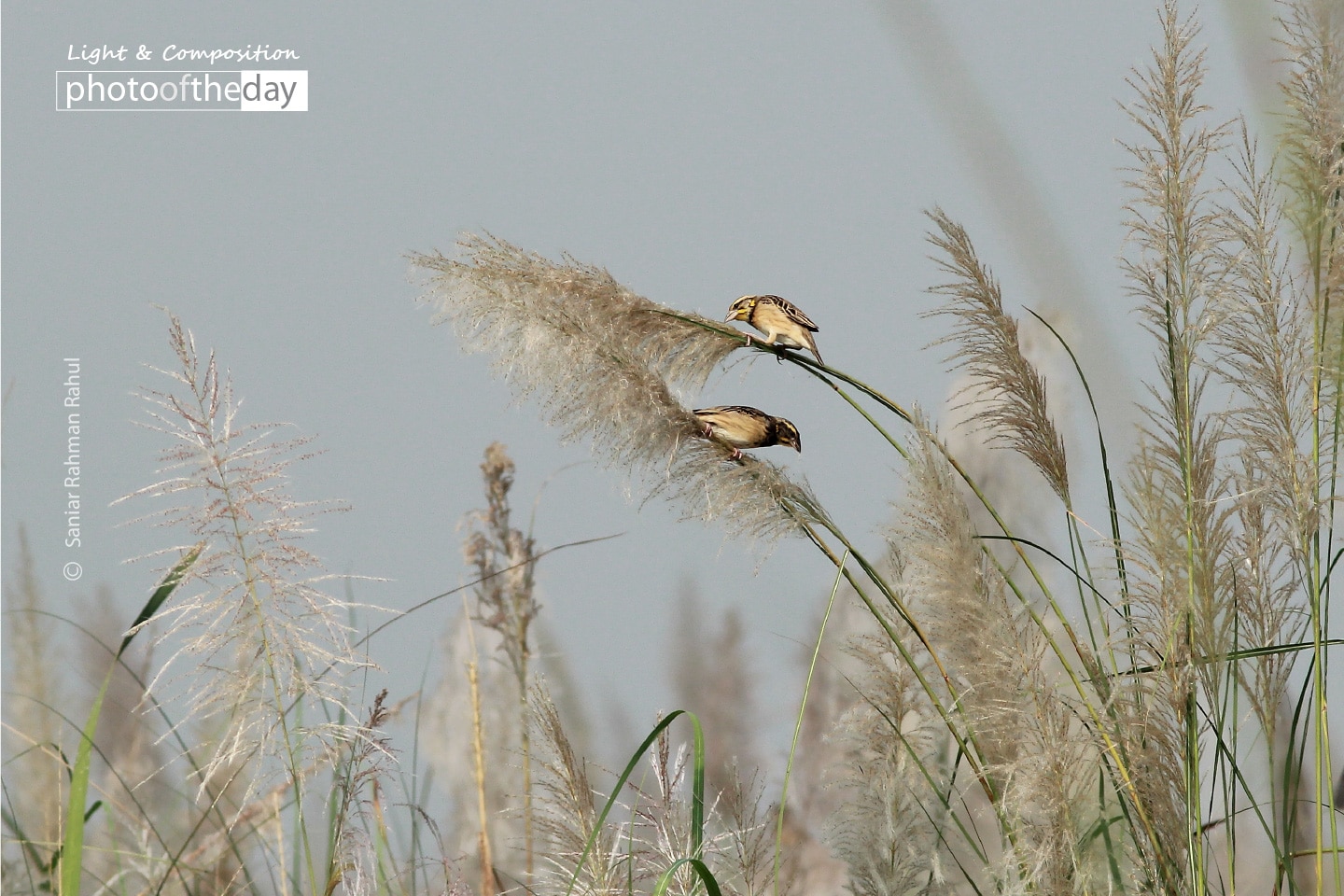
Black Breasted Weaver by Saniar Rahman Rahul
Captured along the banks of the Padma River in Munshiganj, this photograph highlights the elusive Black Breasted Weaver, a species rarely spotted in this specific region. The image documents the intricate behavior of these birds, known for their elaborate nest-building process where males construct enclosed structures from reeds and mud to attract mates. The photographer’s ability to document this avian behavior in its natural habitat, combined with the sharp focus on the subject's unique plumage, makes this a compelling piece of wildlife photography. It serves as both a beautiful portrait and a valuable record of the biodiversity found within the Indian subcontinent's river plains.
Saniar Rahman Rahul
Based in Dhaka, Bangladesh, Saniar Rahman Rahul is an accomplished Art Director at Grey Worldwide with a deep-rooted passion for photography that began in his childhood. His creative journey was heavily influenced by his father’s early work with a camera, eventually leading him to bridge his professional expertise in graphic design with the art of photography. Recognized as an early recipient of the 'Photo of the Month' award in 2010, Rahul continues to explore the natural world, bringing a refined aesthetic sense developed through years of experience in the international advertising industry.
Resonance Score Breakdown
Transparency Note: The resonance score (11.9/20) is calculated based on social engagement metrics collected before the award announcement.
Expert Photography Reviews · 5
The Architecture of Waiting
There is a specific, thin quality to the light just before a storm breaks, when the air turns a bruised, metallic silver and the world seems to hold its breath. It is a quiet, expectant pressure.
Read the reflection →The Architecture of Belonging
The male weaver bird spends his days stripping blades of grass into long, flexible ribbons, weaving them into a complex, inverted flask that hangs precariously above the water.
Read the reflection →Reviews & Comments
Share your thoughts about this award-winning photograph. Your reviews contribute to the community engagement score.
The weaver’s placement against the chaotic texture of the reeds creates a necessary fulcrum. It’s a precarious balance, yet the subject’s sharp, dark plumage anchors the frame’s upper quadrant. The negative space doesn’t collapse; it breathes. I’ve rarely seen such disciplined geometry in avian work. The tension between the bird’s rigid posture and the surrounding organic disorder is precise. It doesn’t rely on sentiment. It’s a cold, calculated success of spatial arrangement. It’s quite brilliant.
One doesn’t capture the Black Breasted Weaver by accident. It’s a skittish creature, and the mud-slicked banks of the Padma aren’t exactly a comfortable office. I’ve spent enough hours in damp reeds to know the ache in the lower back that precedes a shot like this. Rahul clearly didn’t just stumble upon this nest; he sat, he waited, and he likely froze. It’s a proper bit of work. I find myself genuinely envious of the patience.
The weaver hangs. A single reed. The rest is just sky and river haze. I’ve spent minutes watching that blur of grey. It’s quiet. It doesn’t demand attention, yet it holds the frame. The bird is small, but the space around it is vast. It makes me want to hold my breath. Nothing here is accidental. The empty corner is not empty. It’s a pause. A rare, still moment in the reeds.
You waited for this. I can feel the stillness you held by the Padma River. It’s not just a bird; it’s the frantic, beautiful labor of a creature trying to build a home. I’ve spent enough time in the field to know that patience isn’t just a skill—it’s a form of respect. You didn’t just capture a weaver; you caught a moment of pure, raw instinct. There’s something honest happening here. I appreciate that.
Most wildlife shots are just trophies, but this one sticks. Of the thousands I’ve reviewed, it’s the tension between the bird’s frantic, mud-caked labor and the fragile, woven architecture that earns its place. I’ll admit, the way the light catches the weaver’s eye makes me lean in closer every time. It’s not just a record of a rare species; it’s a document of persistence. Thirty years from now, we’ll still care about this struggle.