Panel by Chris Horner
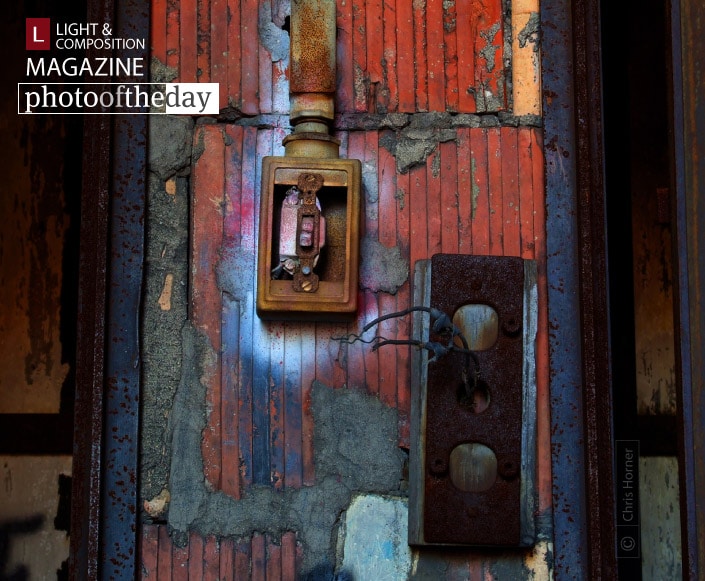
Captured within the decaying grandeur of Detroit’s Michigan Central Station, this photograph focuses on an elevator call panel illuminated by the warm, dramatic glow of the setting sun. The photographer masterfully highlights the vibrant, natural patina of the surface, emphasizing the intricate layers of the scene. By framing the panel between the rusted, hollowed-out elevator doors, the image creates a compelling juxtaposition between the building's former elegance and its current state of urban ruin. This work is award-worthy for its technical precision, minimal retouching, and its ability to transform a neglected architectural relic into a striking study of light, texture, and history.
Chris Horner
Based in Charlotte, North Carolina, Chris Horner is a dedicated freelance photographer who transitioned into professional practice after honing his craft over several years. His portfolio is defined by a keen eye for urban landscapes, which eventually expanded to include the dynamic world of automotive and racing photography. Beyond his fine art prints, Horner collaborates with local entrepreneurs, providing high-quality imagery for commercial marketing. His work reflects a commitment to capturing the essence of his subjects, whether they are architectural ruins or high-speed vehicles, as he continues to grow his professional creative business.
Resonance Score Breakdown
Transparency Note: The resonance score (13.2/20) is calculated based on social engagement metrics collected before the award announcement.
Expert Photography Reviews · 4
The Weight of Waiting
We build things to last, yet we are only ever passing through. A button pressed, a door that does not open, a floor that no longer rises.
Read the reflection →The Skin of Time
The smell of wet iron always pulls me back to the basement of my childhood home, where the air tasted of damp earth and slow, creeping oxidation. It is a metallic tang that coats the back of the tongue, sharp and cold, like licking a frozen key in the middle of winter.
Read the reflection →Reviews & Comments
Share your thoughts about this award-winning photograph. Your reviews contribute to the community engagement score.
Detroit’s decay is a tired subject, yet Horner’s elevator panel holds my attention. It’s clear he didn’t just stumble upon this light; he sat in that freezing, hollowed-out ruin until the sun hit the brass just so. I’ve spent enough hours shivering in abandoned shells to recognize the commitment here. It’s a quiet, patient study of oxidation and fading grandeur. He earned this glow. It’s a rare, honest bit of work.
That elevator panel doesn’t just reflect light; it interrogates the void of Michigan Central. Horner’s sun isn’t a warm glow, but a final, desperate confession of a dying structure. When I look at those rusted, hollowed-out doors, I feel a sudden, cold ache in my chest—the realization that we are merely ghosts haunting our own history. It’s a brutal, honest confrontation with entropy. Shadows here aren’t hiding anything; they’re the only things left that are real.
The sun didn’t just strike this panel; it whispered to the rust. Chris waited for that precise, golden hour when the light finally softened the decay of Michigan Central. I’ve stood in such hollowed spaces, feeling the silence press against my skin. It’s haunting how the warmth clings to the metal, turning neglect into a prayer. I find myself wanting to reach out and touch the texture, feeling the history beneath that fading, amber glow.
The ochre of that rusted elevator panel, bleeding into the bruised, oxidized copper of a forgotten age, feels like a Morandi still life caught in the terminal glow of a Detroit sunset. It’s a haunting, amber-drenched melancholy that makes my heart ache for the ghosts of industry. One finds the light here isn’t merely illuminating; it’s a tactile, golden sediment settling upon the decay, turning mere ruin into a symphony of bruised, atmospheric warmth.