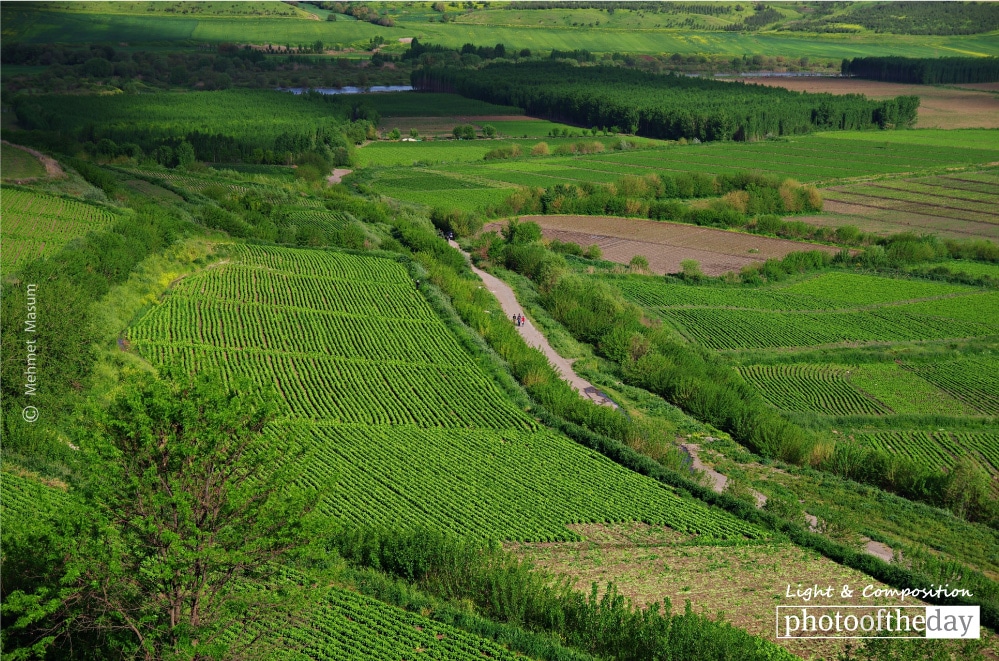
Hevsel Gardens in Diyarbakir by Mehmet Masum
Captured with a keen eye for historical significance, this image showcases the Hevsel Gardens, a lush seven-hundred-hectare expanse nestled between the ancient Diyarbakır Fortress and the Tigris River. The photographer utilized a 50mm focal length and a swift shutter speed of 1/1000sec to freeze the vibrant textures of this UNESCO World Heritage site under optimal lighting. By framing the fertile landscape against the backdrop of one of the world's longest city walls, the composition highlights the harmonious intersection of nature and human history. This photograph earns its award-worthy status through its precise technical execution and its evocative portrayal of a landscape steeped in cultural heritage.
Mehmet Masum
Based in Diyarbakir, Turkey, Mehmet Masum Suer is a distinguished documentary photographer and former journalist whose work focuses on the rich historical and cultural tapestry of the region. Since transitioning to professional photography in 2005, he has dedicated his lens to documenting ancient architecture, cultural festivals, and the artistic heritage of cities like Mardin and Van. An internationally recognized artist with the AFIAP distinction, Suer’s work has been featured in global exhibitions, tourism publications, and on postage stamps, cementing his reputation as a vital chronicler of historical landscapes.
Resonance Score Breakdown
Transparency Note: The resonance score (11.3/20) is calculated based on social engagement metrics collected before the award announcement.
Expert Photography Reviews · 5
The Persistence of Roots
When a river floods its banks, it deposits a layer of nutrient-rich silt that acts as a silent ledger, recording the history of the watershed in the soil itself.
Read the reflection →The Weight of Ancient Soil
I once sat with an old farmer in a village near the Tigris, watching him turn the earth with a rusted spade. He didn't speak much, but he pointed to the dark, rich soil and told me that the ground remembers everything.
Read the reflection →Reviews & Comments
Share your thoughts about this award-winning photograph. Your reviews contribute to the community engagement score.
The Hevsel Gardens don’t just sit there; they breathe. We look at these ancient walls and feel the weight of centuries pressing against the soft, green life of the Tigris. It’s a portrait of a city that has listened to the river for millennia. I find myself holding my breath, wondering what stories these stones would tell if they could finally speak. It’s a landscape that feels deeply, achingly human. I’m truly moved by its quiet endurance.
The Hevsel Gardens don’t merely exist; they endure beneath the crushing weight of those ancient basalt walls. Masum’s lens captures a light that feels uncomfortably bright, almost desperate to bleach the history from the Tigris banks. I’ve stared at these shadows, and they’re too thin, too fleeting. It’s a landscape that’s forgotten how to hide. I feel a profound, cold loneliness here—the gardens are screaming for a darkness that the photographer simply wouldn’t provide.
Most landscapes I review are just pretty postcards, but this one anchors itself in time. By pinning the lush, chaotic green of the Hevsel Gardens against the rigid, ancient stone of the fortress, Masum forces a dialogue between growth and permanence. I’ve stared at these walls for years, yet the way the light hits that specific masonry makes me ache to walk those paths. It’s not just a view; it’s a record of survival.
The Hevsel Gardens are a vital corridor for migratory birds, yet this frame ignores the life within the greenery. It’s technically sharp, sure, but it feels hollow. I’ve spent weeks in similar river basins waiting for a kingfisher to break the silence; here, the landscape is treated like a static backdrop rather than a living home. It’s a pretty view, but it doesn’t capture the pulse of the Tigris. I’m left wanting more wildness.
At f/3.5, the Tamron’s focal plane is razor-thin, yet it resolves the Hevsel Gardens with startling acuity. The light’s interaction with the foliage reveals micro-contrast that the naked eye simply misses. I’m genuinely moved by how the lens renders the Tigris’s edge; it’s a crisp, optical triumph. While the diffraction limit isn’t reached here, the clarity is profound. It’s rare to see such technical discipline capture the ancient, fertile textures of Diyarbakir with this much scientific grace.