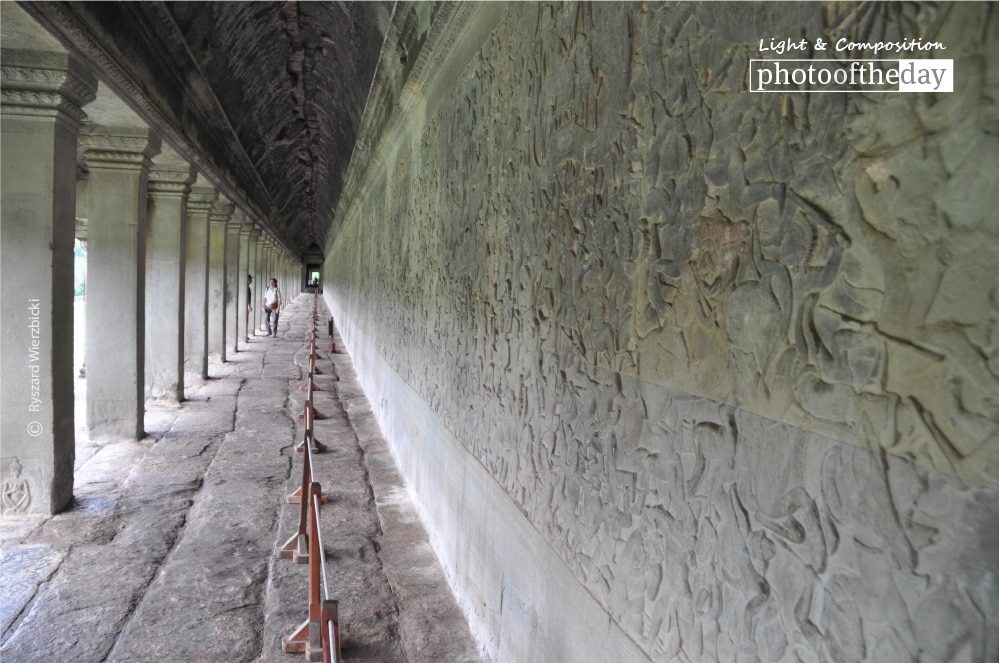
Angkor Corridor by Ryszard Wierzbicki
Captured amidst the timeless stones of Angkor Wat, this photograph masterfully utilizes the temple's ancient architecture to frame a compelling visual narrative. The photographer skillfully navigated the complex light and shadow play inherent to the site, choosing a composition that emphasizes the rhythmic geometry of the corridors. By focusing on the interplay between the weathered textures of the ruins and the surrounding environment, the image evokes a profound sense of history and stillness. This work stands out for its balanced perspective and the photographer's ability to transform a classic landmark into a fresh, evocative exploration of architectural form and atmosphere.
Ryszard Wierzbicki
Born in Poland in 1963, Ryszard Wierzbicki is a dedicated traveler and photographer currently based in Swindon, United Kingdom. After a diverse professional career in education and marketing, he transitioned into a life of exploration, focusing his lens on the landscapes and cultures of South-East Asia. His work is deeply influenced by his passion for scuba diving and his humanitarian commitment to supporting orphans in Thailand and Burma. Through his photography and travel forums, he shares his unique perspective on the world, blending technical skill with a profound curiosity for the human and architectural stories he encounters.
Resonance Score Breakdown
Transparency Note: The resonance score (12.0/20) is calculated based on social engagement metrics collected before the award announcement.
Expert Photography Reviews · 5
The Weight of Echoes
We often speak of time as a river, something that flows away from us, carrying our moments into a sea of forgetting. But perhaps time is more like stone—a dense, accumulating substance that keeps everything it has ever touched.
Read the reflection →The Weight of Echoes
I remember sitting in a small cafe in Siem Reap, watching a monk walk past the temple gates. He moved with a deliberate, rhythmic pace, as if he were measuring the distance between centuries rather than meters.
Read the reflection →Reviews & Comments
Share your thoughts about this award-winning photograph. Your reviews contribute to the community engagement score.

We walk through these stone corridors and feel the weight of centuries pressing against our skin. Ryszard hasn’t just captured architecture; he’s captured a silence that feels like a held breath. It’s as if the walls themselves are waiting to tell us their secrets. I find myself leaning in, listening for the ghosts of pilgrims past. It’s a haunting, rhythmic space that makes me feel incredibly small, yet deeply connected to the human story.
You’ve captured the weight of those stones, but I’m searching for the pulse. The geometry is perfect, sure, but it feels a bit cold. I’ve walked those corridors, and they usually hum with the ghosts of the people who built them. You’ve got the light right, but I don’t feel your heartbeat in the frame. It’s a beautiful study of architecture, but where’s the human ache? I wanted to feel the heat of the day.
The jury’s obsession with clarity here feels stifling. Wierzbicki’s corridors are trapped in a rigid, documentary cage. I’d have traded that crisp stone texture for a ghost-like smear of motion, something closer to Sugimoto’s long-exposure theatres. Why resolve every grain of sandstone when the space begs for a dissolution of form? It’s technically competent, sure, but it’s safe. I’m genuinely bored by how much the photographer chose to reveal. Where is the mystery?
The ochre of these weathered stones, bruised by the humidity of a dying afternoon, hums with the quiet, dusty melancholy of a Morandi still life. It’s a palette of parched earth and lichen-stained shadow that pulls at my heart, grounding the architecture in a visceral, ancient silence. One finds the light here doesn’t merely illuminate; it clings to the masonry like a memory, turning the corridor into a vessel for time itself.
Angkor’s corridors are usually choked with tourists, yet here, the silence feels heavy, almost tactile. One suspects Wierzbicki didn’t just stumble upon this alignment; he likely spent hours dodging crowds, waiting for the light to graze those weathered stones just so. It’s a disciplined frame. I’ve stood in that humidity until my clothes felt like a second, sodden skin, so I respect the patience required to let the architecture breathe without a soul in sight.