An Innocent Smile by Bahar Rismani
In a small neighborhood park near her home, Bahar Rismani captured this candid portrait of a local child at play. Drawn to the genuine joy and innocence of the children she frequently spends time with, the photographer utilized a 45mm focal length to create an intimate connection with her subject. The resulting image is a testament to the beauty of spontaneous moments, where the soft natural light and the child's expression harmonize perfectly. This photograph is award-worthy for its ability to transform a simple, everyday interaction into a poignant, timeless study of childhood wonder and human connection.
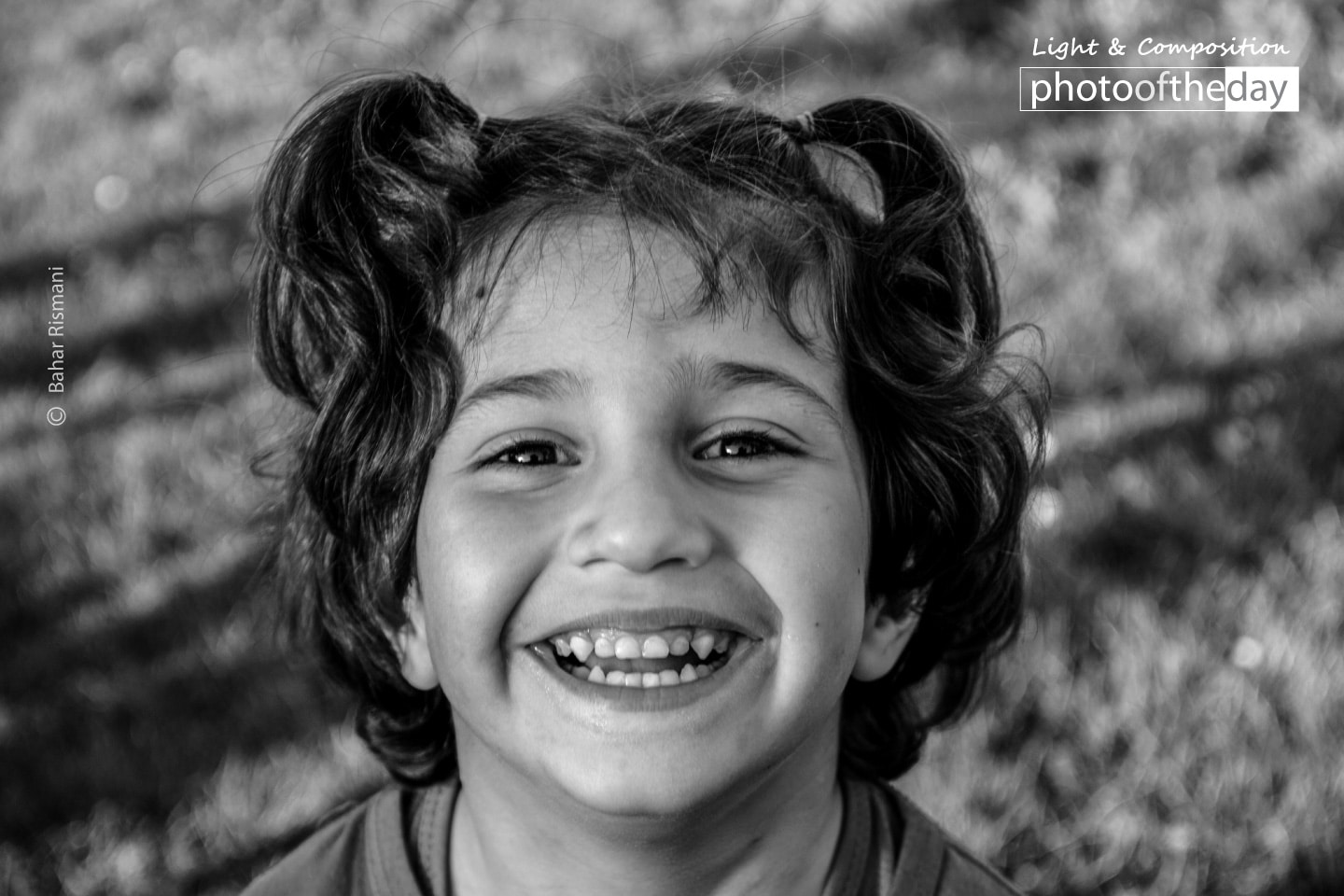
Exposure 1/80sec @ f/5 | ISO 100 | Focal Length 45mm
Bahar Rismani
Born in 1982 in the Kurdish city of Mahabad, Iran, Bahar Rismani is a dedicated portrait photographer with a seven-year career focused on documenting the human experience. Holding a degree in accounting, she balances her professional life with extensive travel across cities and villages to capture the essence of Kurdish women’s culture and traditional attire. Her work serves as a vital visual archive, aiming to preserve ancient heritage and clothing styles through evocative, storytelling portraiture that highlights the dignity and history of her subjects.
Resonance Score Breakdown
Transparency Note: The resonance score (10.9/20) is calculated based on social engagement metrics collected before the award announcement.
Expert Photography Reviews · 8
The Unmapped Geography of Joy
In the study of botany, there is a phenomenon known as thigmotropism—the way a plant’s tendrils navigate the world by touch. They do not know where they are going; they simply reach out, encounter a surface, and curl around it, finding support in the unexpected.
Read the reflection →The Unburdened Spirit
Epictetus famously remarked that we are not disturbed by things, but by the views we take of them. As we grow older, we accumulate a heavy inventory of these views—prejudices, anxieties, and the rigid expectations of how the world ought to behave.
Read the reflection →Reviews & Comments
Share your thoughts about this award-winning photograph. Your reviews contribute to the community engagement score.
The blurred, verdant bokeh of the Mahabad park creates a soft, impressionistic stage that isolates the child from the mundane world. It’s a gentle, painterly frame that makes the subject’s presence feel suspended in time. I’m truly moved by how the dappled light catches the texture of her clothing, grounding her in this specific, sun-drenched afternoon. The environment doesn’t distract; it cradles her joy, turning a fleeting moment into a quiet, universal sanctuary of childhood.
You didn’t just snap a kid playing; you caught the exact second their guard dropped. That smile isn’t for the camera, it’s for the world. I’ve spent years in places where joy is rare, and seeing this, I felt a genuine ache in my chest. You waited for the light to hit just right, and it paid off. There’s something honest happening here. You didn’t force the moment, and that’s why it works.
It’s a charming portrait, but I find myself unsettled by the proximity. At 45mm, you’re standing right in the child’s personal space. In my work, I’ve learned that true connection isn’t forced; it’s earned through distance and time. When I see this, I don’t feel the joy of a spontaneous moment. I feel the intrusion of a lens that hasn’t waited for permission. It’s an extracted smile, not a captured one.
Before the eye identifies the child, a sudden lightness settles in the chest. It’s the activation of a dormant memory, that specific, unburdened joy we’ve all misplaced. The soft light on her face doesn’t just illuminate; it demands a pause in my own breathing. I’ve returned to this portrait three times today, and each time, the smile feels less like a captured moment and more like a quiet, persistent ache for a world that’s still simple.
The light here isn’t forced; it’s a soft, diffused glow that settles on the child’s face like a quiet prayer. She stood in that park, waiting for the world to stop rushing, and I feel a sudden, sharp ache for that simplicity. It’s not just a portrait; it’s a moment where the land and the child breathe together. I’ve spent hours waiting for such stillness. It’s rare to find it captured so honestly.
The geometry here is precarious. The subject’s tilt disrupts the verticality of the background, creating a spatial tension that almost collapses the frame. It’s a risky alignment. The 45mm focal length forces an intimacy that doesn’t quite resolve the surrounding clutter. I’ve grown tired of such sentiment, yet the child’s placement against the blurred foliage provides a necessary fulcrum. It doesn’t hold perfectly, but the structural instability is, frankly, the only thing keeping me interested.
That smile is pure electricity. You can feel the kid’s energy vibrating off the sensor. It’s a classic Cartier-Bresson instinct—capturing the fleeting spark before the world intervenes. One tenth of a second later and the light shifts, the innocence fades into a pose. I’ve spent years hunting that exact look. Bahar didn’t hesitate. She caught the soul of Mahabad in a blink. It’s honest, it’s raw, and honestly, it makes me want to grab my camera.
The park’s background isn’t just a backdrop; it’s a datum of urban life. The blurred fenestration and concrete edges frame the child, grounding her joy in a tangible, lived-in environment. I’m struck by how the light catches the soft contours of her face, echoing the solid-void relationship of the structures behind her. It’s a rare, honest threshold between the built world and the human spirit. I’d love to know what lies just outside this frame.