Rose Foliage by Dawid Theron
In this striking macro study, the photographer explores the intricate textures found along the edge of a rose’s foliage. By experimenting with a reversed kit lens, the artist achieves a unique perspective that transforms a common garden element into a complex, abstract landscape. The image highlights the delicate veins and organic contours of the leaf, demonstrating a keen eye for the subtle details that often escape the casual observer. This photograph is award-worthy for its technical ingenuity and its ability to elevate a simple botanical subject into a compelling piece of fine art through creative macro experimentation.
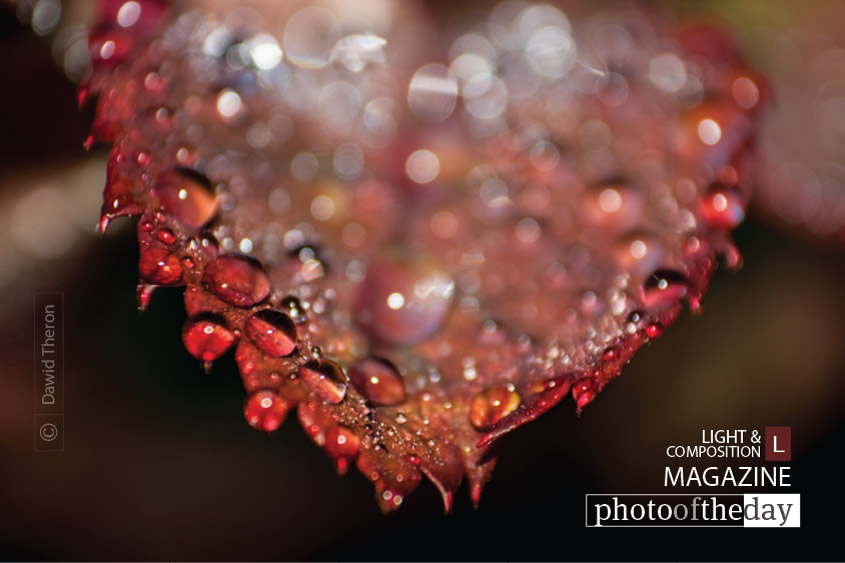
Exposure 1/100sec @ f/3.5-5.6 | ISO 100 | Focal Length 18-55mm
Dawid Theron
Based in Tulbagh, South Africa, Dawid Theron is a fine art photographer who views the world as his personal canvas. He specializes in capturing the overlooked beauty of nature’s smaller elements, such as floral textures and flowing water, while also finding inspiration in the lines and shapes of architectural structures. By utilizing his camera as an artistic tool, Theron seeks to share the hidden works of art he discovers in his surroundings, consistently pushing the boundaries of perspective and detail in his photographic practice.
Resonance Score Breakdown
Transparency Note: The resonance score (12.6/20) is calculated based on social engagement metrics collected before the award announcement.
Expert Photography Reviews · 6
The Veins of Memory
We walk through the world as if it were a flat surface, ignoring the architecture beneath the skin. Every leaf is a map of a season’s labor, a delicate network of rivers carrying the sun’s gold into the dark heart of the stem.
Read the reflection →The Architecture of the Small
Why do we assume that the grandest truths are written in the stars or carved into the faces of mountains? We spend our lives looking for meaning in the vastness, convinced that significance requires scale.
Read the reflection →Reviews & Comments
Share your thoughts about this award-winning photograph. Your reviews contribute to the community engagement score.
Most macro work is just technical showing off, but Theron’s leaf edge feels different. Using a reversed kit lens, he’s found a topography that looks like a mountain range. I’ve seen thousands of botanical close-ups, yet this one makes me want to reach out and touch the serrated, vein-mapped surface. It’s the restraint in the depth of field that saves it. It’s not just a leaf; it’s a landscape that will still feel vital in thirty years.
We look at these serrated edges and we aren’t just seeing a leaf; we’re meeting a survivor. Dawid has listened to the quiet, rugged pulse of this Tulbagh rose. It’s a portrait of resilience, etched in veins that map a life lived against the wind. I find myself leaning in, feeling the sharp, jagged history written into the green. It’s a photograph that asks to be returned to, because it’s finally heard the plant’s own story.
Reversing a kit lens is a desperate man’s game, but it’s one that pays dividends here. Most would’ve walked past these veins, but Theron clearly spent the morning hunched over in the Tulbagh dirt. I’ve spent enough hours shivering in the fynbos to recognize the grit required to stabilize a 500d in such tight quarters. It’s a sharp, honest bit of work. He didn’t just find this leaf; he sat with it until it yielded.
The serrated edge cuts the frame. It’s a sharp, green horizon. I’ve spent minutes watching the light catch those tiny, translucent veins. It doesn’t demand attention. It simply exists. There’s a quiet tension in the blur beyond the leaf. It’s a deep, dark breath. I feel a sudden, strange calm looking at it. Nothing here is accidental. The empty corner is not empty. It’s a pause. A rare, silent weight in a noisy world.
The verdant veins pulse with the melancholic, muted sage of a Morandi still life, yet it’s the sudden, searing intrusion of chlorophyll-bright lime that truly catches one’s breath. I’ve found myself utterly transfixed by how the light catches those serrated edges, turning them into a translucent, emerald-tinted lace that feels almost liquid. It’s a quiet, botanical rapture; one doesn’t just see the leaf, one feels the humid, heavy air of a Tulbagh garden clinging to the glass.
Veins pulse like rivers in a drought, yet it’s the encroaching darkness that demands our attention. Theron doesn’t just capture a leaf; he forces it to confront its own finitude. I’ve stared at these jagged edges until my eyes ached, feeling the cold, suffocating weight of the void pressing against the green. It’s a brutal, honest anatomy. When light fails, the truth remains. It’s haunting, really—a reminder that everything beautiful is merely waiting for the dark.