To the Sea by Sébastien Beun
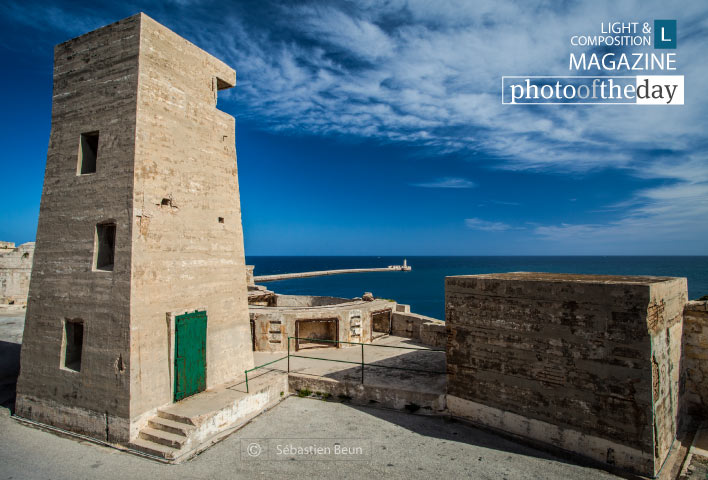
Captured at the historic Fort Saint Elmo in Valletta, Malta, this photograph highlights a secluded section of the ancient fortification overlooking the sea. The photographer utilized a wide 20mm focal length to emphasize the structural resilience of the watchtower, which has guarded the entrance to the Marsamxett and Grand Harbours since 1533. By balancing the harsh Mediterranean light with a deliberate aperture setting, the image captures the textured stone and historical weight of a site once central to the 1565 Ottoman siege. This work is award-worthy for its ability to transform a site of military history into a serene, architectural study of light and stone.
Sébastien Beun
Born in 1981 and based in Thuin, Belgium, Sébastien Beun is a dedicated photographer whose journey began at age twelve with his father’s vintage darkroom equipment. After mastering the nuances of black and white film development, he transitioned into the digital realm while maintaining a deep appreciation for traditional techniques. Today, Beun captures a diverse range of subjects that resonate with his personal experiences, consistently seeking to document the world through a lens that bridges historical legacy and modern artistic expression.
Resonance Score Breakdown
Transparency Note: The resonance score (11.9/20) is calculated based on social engagement metrics collected before the award announcement.
Expert Photography Reviews · 7
The Architecture of Silence
We often mistake stillness for an absence, as if a room left empty or a wall left unpeopled has lost its purpose. But stone has a memory that outlasts the pulse of any heart.
Read the reflection →The Weight of Waiting
Stone does not hurry. It remembers the slow movement of the tides and the long, patient arc of the sun across the sky. We often mistake stillness for an absence of life, yet in the quiet corners of the world, stone is breathing.
Read the reflection →Reviews & Comments
Share your thoughts about this award-winning photograph. Your reviews contribute to the community engagement score.
At f/16, the diffraction limit begins to soften the micro-contrast of those ancient limestone blocks, yet the 20mm focal length renders the geometry with startling rigor. It’s a delicate balance; the lens captures the granular texture of the stone against the Mediterranean glare. I’m genuinely moved by how the light clings to the weathered edges of the watchtower. It’s not just history here—it’s the physics of light revealing the silent, enduring resilience of Valletta’s architecture.
Valletta’s stone doesn’t just hold light; it interrogates it. Beun’s frame forces the Mediterranean sun into a narrow, brutal dialogue with the shadows of Fort Saint Elmo. I’ve spent hours staring at these jagged voids, feeling the cold, historical ache of the 1565 siege pressing against the lens. It’s not serene. It’s a confrontation. When the darkness finally swallows the architecture, I feel a genuine, unsettling shiver. It’s where the silence of history truly begins.
The limestone here doesn’t merely exist; it breathes in the pale, chalky hues of a Morandi still life, absorbing that relentless Mediterranean glare until the stone turns the colour of sun-bleached bone. It’s a quiet, aching harmony that pulls at my chest, especially where the shadows deepen into the bruised, dusty violet of a fading twilight. One finds oneself lost in these textures, where the ancient, calcified history of Valletta dissolves into pure, shimmering light.
Most architectural shots of Valletta are postcard-perfect, but this one hits differently. By pinning the watchtower against that vast, indifferent horizon, Beun forces us to confront the fragility of stone against time. I’ve seen thousands of fortifications, yet this composition makes me feel the salt air on my own skin. It’s the tension between the rigid geometry and the fluid sea that ensures this will still matter in thirty years. It’s a rare, quiet triumph.
You’ve captured the weight of that stone, but I’m looking for the ghost of the man who stood watch there. It’s technically sharp, sure, but it feels a bit cold. I’ve spent enough time in ruins to know they aren’t just architecture; they’re echoes of fear and duty. And I don’t feel that pulse here. You’ve got the light right, but next time, find the human ache in the walls. I want to feel your heartbeat.
The frame holds its breath. That 20mm lens pulls the stone into a tight, rhythmic tension against the Mediterranean horizon. It’s a silent tracking shot that refuses to pan. I feel the heat radiating off those ancient walls, a stillness so heavy it’s almost deafening. Beun didn’t just capture a tower; he caught the exact second before the siege began. It’s the frame the editor keeps because the cut would have been a mistake.
The frame hinges on a powerful diagonal, slicing the composition into a precise 3:2 ratio of stone mass to negative space. The watchtower’s vertical axis anchors the left quadrant, creating a perfect counterweight to the horizon’s pull. It’s a masterclass in spatial equilibrium. I’m genuinely struck by how the 20mm lens distorts the geometry just enough to heighten the tension. It’s not just a ruin; it’s a solved equation of light, shadow, and ancient, rigid vectors.