A Red Rose by Siew Bee Lim
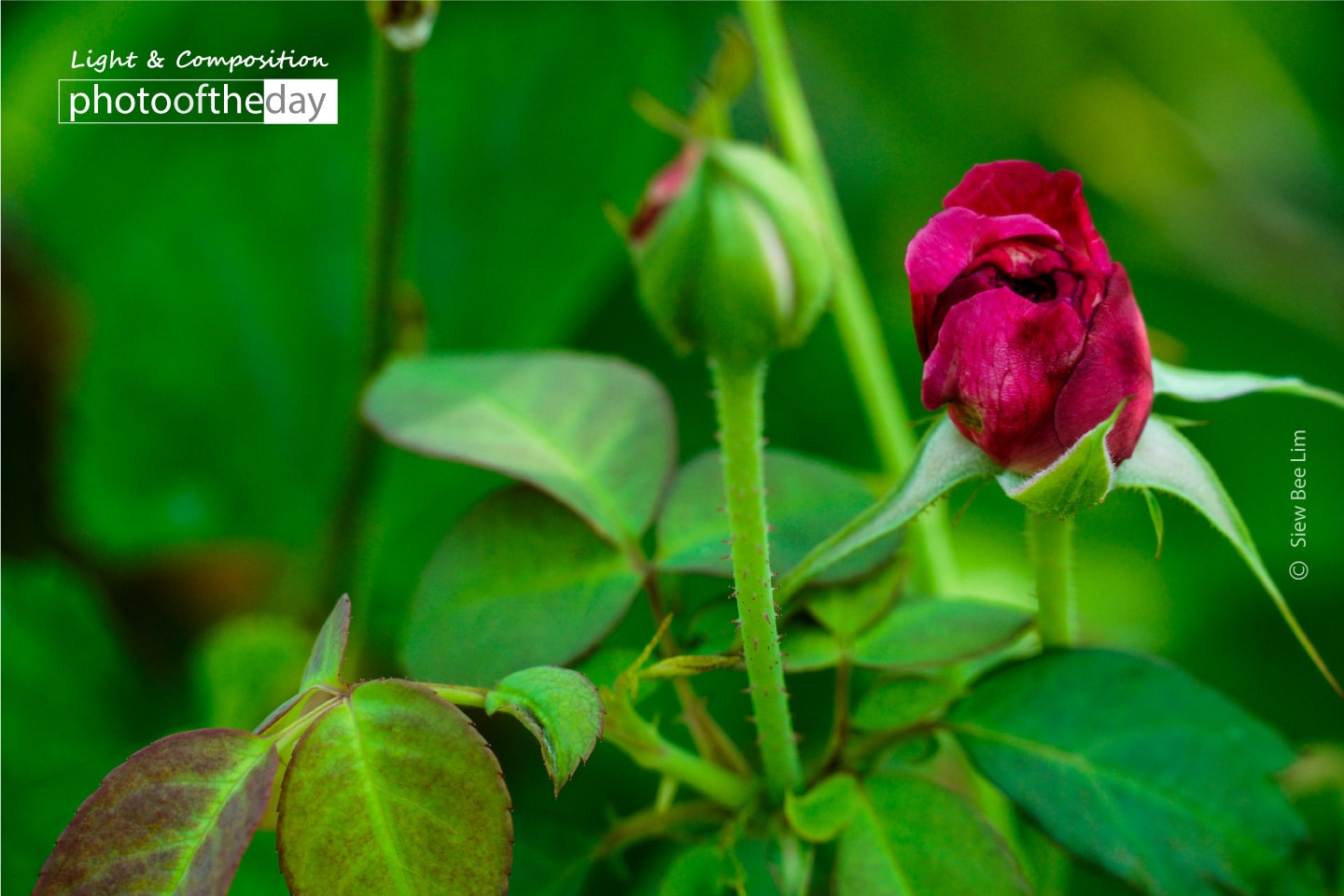
Captured on a soft, cloudy morning in Singapore, this image of a red rose serves as a meditation on the harmony found within nature. Taken over an hour after sunrise, the photograph benefits from the gentle, diffused light that allows the vibrant crimson petals to stand out against their surroundings. The photographer’s deliberate focus on color and texture elevates a simple subject into a compelling study of botanical beauty. By isolating the rose, the image achieves a serene aesthetic quality that distinguishes it from other captures in the same session, showcasing a keen eye for detail and a refined sense of natural composition.
Siew Bee Lim
Born in Singapore in 1965, Siew Bee Lim is a dedicated photographer who balances her professional background as a programmer with a long-standing passion for the visual arts. Though she initially explored photography as a young hobbyist in the era of darkroom film, she has returned to the craft with renewed vigor, seeking formal education to refine her technical and artistic vision. Drawing inspiration from her lifelong appreciation for Chinese painting and literature, she continues to develop her unique perspective, viewing her current journey with Light & Composition as a significant step in her creative evolution.
Resonance Score Breakdown
Transparency Note: The resonance score (11.7/20) is calculated based on social engagement metrics collected before the award announcement.
Expert Photography Reviews · 5
The Quietude of Being
Seneca once remarked that nature does not hurry, yet everything is accomplished. We live in an age that mistakes motion for progress and noise for significance, forgetting that the most profound transformations occur in the stillness of a garden, not the clamor of the forum.
Read the reflection →The Architecture of Unfolding
There is a quiet violence in the way a bud decides to surrender. It is not a sudden collapse, but a slow, deliberate negotiation with the air.
Read the reflection →Reviews & Comments
Share your thoughts about this award-winning photograph. Your reviews contribute to the community engagement score.
Why must we isolate the rose? By stripping away the Singaporean soil, Siew Bee Lim renders the flower a decorative object, untethered from its ecosystem. It’s technically precise, sure, but it feels sterile. I’m left craving the grit of the garden, not just the velvet of the petal. Whose gaze demands this clinical perfection? Does the beauty here serve the plant, or merely our desire to consume nature without the mess of its actual life?
Soft, diffused light is a coward’s refuge. By washing away the struggle between illumination and void, this rose becomes a mere botanical specimen, stripped of its ontological weight. I’ve spent years hunting for the darkness that defines a subject, yet here, the shadows are too thin, too polite. It’s a pretty surface, sure, but it doesn’t bleed. I find myself mourning the depth that could have been, had the photographer dared to let the crimson suffer.
Soft light is fine for a garden, but where’s the pulse? I’m looking for the chaos of Singapore, the grit, the people moving in a blur. This rose is pretty, sure, but it’s static. It doesn’t breathe. Cartier-Bresson would’ve waited for a hand to reach in or a shadow to slice the frame. It’s technically clean, but it’s safe. I crave the tension of a heartbeat. One tenth of a second later, and nothing changes.
A rose in Singapore is a common enough sight, yet one rarely sees it treated with such quiet discipline. It’s clear the photographer didn’t just stumble upon this bloom; they waited for that specific, diffused morning light to soften the crimson. I’ve spent enough damp hours in the field to recognize the patience required here. It’s a modest, earned study. I find myself wishing I’d been the one standing there, shivering in the humidity.
Floral photography is a graveyard of clichés, yet this rose survives the cull. Of the hundreds of botanical studies I’ve judged, most collapse into mere decoration. What separates this is the restraint; the velvet texture of the petals against that muted, humid Singapore morning light feels tactile. I’d argue it’s the lack of artifice that makes it endure. It doesn’t scream for attention, and honestly, that quiet confidence is exactly why I’m still looking at it.