The Hands of the Chef by Diep Tran
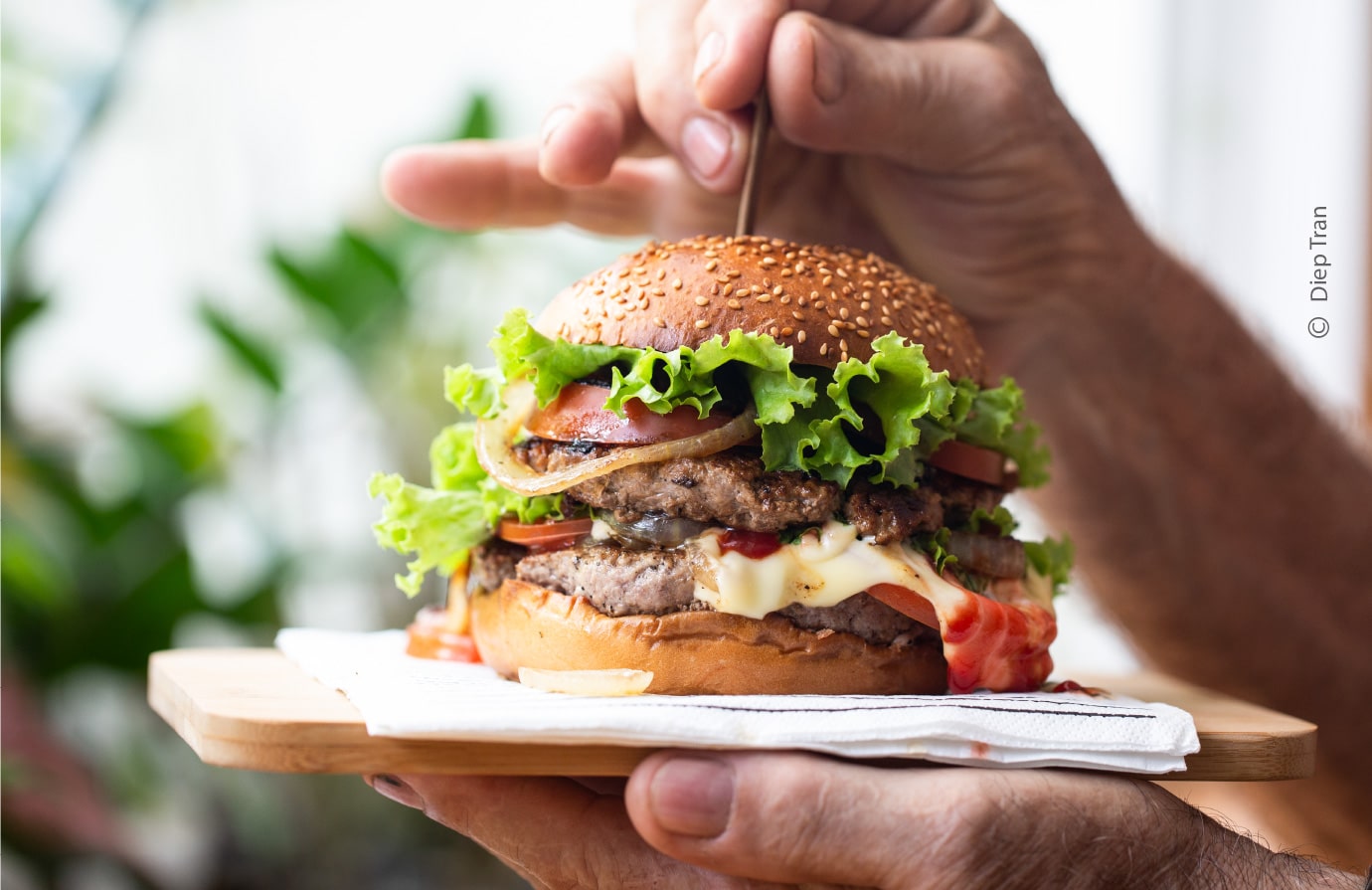
In this evocative food portrait, the photographer captures a moment of culinary nostalgia as her husband prepares a burger, an act that transports him back to his youth working in a burger shop. Drawn to the aesthetic appeal of the dish, the photographer requested he showcase his hands in the frame, resulting in a candid, intimate interaction. The image is award-worthy for its ability to elevate a simple domestic scene into a narrative of memory and connection, utilizing precise lighting and a shallow depth of field to focus the viewer's attention on the craftsmanship of the chef's hands.
Diep Tran
Born in Vietnam and currently based in Brisbane, Australia, Diep Tran finds inspiration in the beauty of everyday objects and the people within her life. Her photographic practice is deeply influenced by a Buddhist upbringing, which fosters a profound appreciation for the natural and man-made world. By exploring the interplay of light and shadow, Tran seeks to capture the essence of her subjects, reflecting a global perspective shaped by her extensive travels and observation of diverse cultures.
Resonance Score Breakdown
Transparency Note: The resonance score (11.6/20) is calculated based on social engagement metrics collected before the award announcement.
Expert Photography Reviews · 8
The Weight of Memory
I was chopping onions this morning, the same way my mother used to, when I suddenly stopped. The rhythm of the knife against the wood felt like a language I hadn't spoken in years. It is strange how our bodies hold onto things our minds have tucked away.
Read the reflection →The Architecture of Memory
Mycelium networks operate beneath the forest floor, a silent, sprawling web that connects disparate root systems into a single, communicative whole.
Read the reflection →Reviews & Comments
Share your thoughts about this award-winning photograph. Your reviews contribute to the community engagement score.
We look at these hands and we aren’t just seeing a burger being made; we’re watching a man travel back in time. Diep Tran didn’t just photograph a meal; she listened to the rhythm of his muscle memory. It’s a quiet, domestic prayer. When I see the way his fingers handle the bread, I feel a sudden, sharp ache for my own father’s kitchen. It’s a photograph that asks to be returned to, again and again.
Before the eye identifies the burger, something in the chest tightens. It’s the quiet weight of those hands—the way they hold the bun with a reverence that feels like a prayer. I’ve spent minutes watching the tension in his knuckles; it’s a visceral, aching reminder of how we build our pasts through labor. Returning to this, I don’t see food. I see the phantom muscle memory of a man trying to touch his own youth.
The shutter speed is slow, but the timing is sharp. You caught the hands mid-motion, the muscle memory of a burger joint ghosting through the frame. It’s intimate, almost voyeuristic. I love the way the light catches the grease and the grain of the meat. One tenth of a second later and the tension in those fingers vanishes. You didn’t just photograph a meal; you caught a man’s history. That’s the decisive moment right there.
The tactile focus here echoes the mid-century humanism of Doisneau, yet it’s the 100mm compression that truly isolates the labor. It’s a quiet nod to the industrial precision of Lewis Hine, stripped of the factory grime. I’m genuinely moved by how the shallow depth of field transforms a mundane burger into a relic of memory. It’s rare to see domesticity handled with such historical weight. You’ve managed to make the ordinary feel profoundly, achingly permanent.
The frame resolves into a precise 1:1 ratio of kinetic energy against static form. The chef’s hands create a dominant diagonal vector, slicing the negative space with calculated tension. By narrowing the depth of field to a sliver, Tran forces the eye toward the intersection of skin and steel. It’s a beautifully solved spatial equation. I’m genuinely struck by how the blurred background geometry anchors the foreground, turning a simple domestic act into a perfect, balanced equilibrium.
There’s a quiet intimacy here that’s hard to fake. You can tell he’s comfortable, not just posing for a lens, but sharing a memory through his craft. I love the way his hands move with such practiced, gentle purpose. It’s a gift when a subject lets you into their private rhythm like this. This face has a whole life in it, and honestly, it makes me miss my own kitchen back home. It’s beautiful.
There is a sacred stillness in these hands. They aren’t just assembling a meal; they’re tracing the geography of a memory. I’ve spent enough dawns waiting for the light to settle to recognize that quiet focus. It’s the same reverence I feel when the sun finally hits a mountain ridge. The soft, directional glow catches the skin, turning a domestic kitchen into a chapel. It’s deeply moving. I can almost hear the silence of his concentration.
The shutter speed drags just enough to suggest the motion of a kitchen in full swing. It’s a tight, 100mm close-up that cuts out the noise, leaving only the rhythm of the hands. I’m struck by the warmth; it feels like a memory playing on a loop. The shallow depth of field keeps the focus on the craft, not the clutter. The cut would’ve been a mistake. This is the frame the editor keeps.