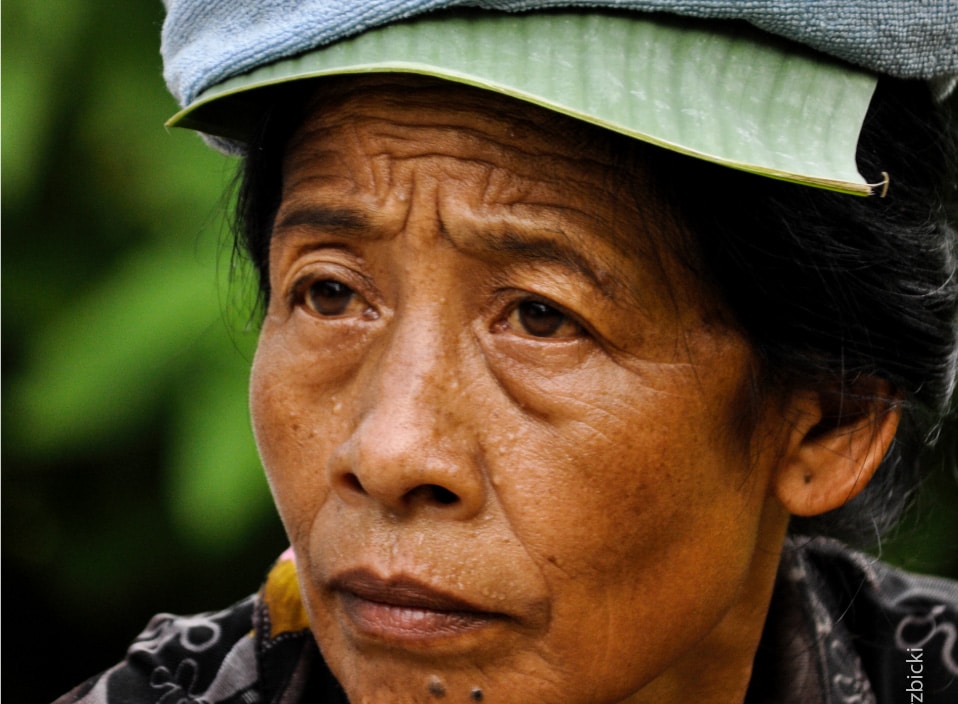
A Balinese Woman by Ryszard Wierzbicki
Captured amidst the lush, cultural heart of Ubud, this portrait of a Balinese woman serves as a poignant testament to the island's unique human spirit. The photographer utilized a 150mm focal length to isolate the subject against the vibrant backdrop, creating an intimate connection that highlights the grace and character of the local people. The image is award-worthy for its masterful balance of soft, natural light and the subject's serene expression, which together encapsulate the essence of Bali. By focusing on the authentic interaction between the photographer and the local community, the portrait transcends a simple snapshot to become a compelling narrative of cultural beauty.
Ryszard Wierzbicki
Born in Poland in 1963, Ryszard Wierzbicki transitioned from a diverse career in social sciences and marketing to pursue a life dedicated to global exploration and photography. After relocating to the United Kingdom in 2006, he shifted his focus toward documenting the cultures of South-East Asia while engaging in charitable work for orphans in Thailand and Burma. As the founder of travel and photography forums such as Instant Travelling and World Around, Wierzbicki combines his technical expertise with a deep-seated passion for storytelling, capturing the human experience through his lens with empathy and precision.
Resonance Score Breakdown
Transparency Note: The resonance score (11.7/20) is calculated based on social engagement metrics collected before the award announcement.
Expert Photography Reviews · 7
The Weight of Quiet
I keep a small, wooden comb in my drawer, its teeth worn smooth by decades of use. It belonged to a woman who never spoke much, yet her presence was a steady hum in the house, like the sound of water over river stones.
Read the reflection →The Architecture of Silence
We often mistake stillness for an absence, a hollow space waiting to be filled by the noise of our own intentions. But there is a weight to quietude that acts like soil—it is where the deepest roots of a person find their purchase.
Read the reflection →Reviews & Comments
Share your thoughts about this award-winning photograph. Your reviews contribute to the community engagement score.
The frame breathes. It’s a tight, 150mm close-up that forces us into her orbit, stripping away the Ubud noise until only her gaze remains. I’m struck by the stillness here; it’s a sequence paused at the perfect beat. The shallow depth of field isolates her grace, turning the background into a soft, cinematic blur. It’s the shot the editor keeps because it holds the weight of a thousand unfilmed scenes. I’d have stayed there all day.
There’s a quiet dignity here that’s hard to fake. You can tell she’s comfortable, not just posing for a lens, but sharing a moment of her day. It’s a gift when a subject lets you in like this. I find myself lingering on the softness in her eyes; this face has a whole life in it. She’s chosen to be seen, and that trust makes all the difference. It’s a truly beautiful, honest exchange.
It’s a relief to see a portrait where the light doesn’t have to fight the water column. Without the refractive index of salt water distorting her features or the blue-green shift stealing her skin tones, the clarity here is startling. I’m used to battling backscatter and lost reds, so seeing such crisp, warm detail in her eyes feels like a luxury. It’s a beautiful, dry-land stillness that I truly envy after a long, murky dive.
That 150mm lens pulls her close, but does it catch the pulse of the street? It’s a clean portrait, sure, but I’m looking for the chaos, the friction. Cartier-Bresson would’ve wanted the context of Ubud, not just the isolation. It’s technically sharp, yet it feels staged. I’d trade that soft light for one raw, unscripted blink. One tenth of a second later and the soul might have shifted. It’s pretty, but is it alive?
The 150mm compression here echoes the classic portraiture of Yousuf Karsh, yet it lacks his psychological tension. While the soft light recalls the pictorialist softness of Julia Margaret Cameron, it’s ultimately too safe. I’ve spent decades wading through ethnographic portraiture, and I’m still waiting for a gaze that challenges the lens rather than merely posing for it. It’s technically sound, sure, but it doesn’t push the conversation forward. I’m honestly just craving a bit more grit.
The blurred greenery behind her isn’t just a backdrop; it’s the humid, breathing pulse of Ubud. That soft, dappled light clinging to the foliage creates a painterly depth that feels almost tactile. I’m genuinely moved by how the bokeh mimics the organic chaos of the jungle, grounding her presence. She doesn’t just exist in this space; she’s woven into it. It’s a quiet, rhythmic dialogue between her stillness and the vibrant, living world she calls home.
We look at this woman and we don’t just see Bali; we hear the quiet rhythm of her life in Ubud. Wierzbicki didn’t just point a lens; he waited for her to share her silence. It’s in the way her eyes hold the light, soft and patient. I’ve spent hours staring at her gaze, and it feels like she’s waiting for us to finally listen. It’s a photograph that asks to be returned to.