Vikas by Lavi Dhurve
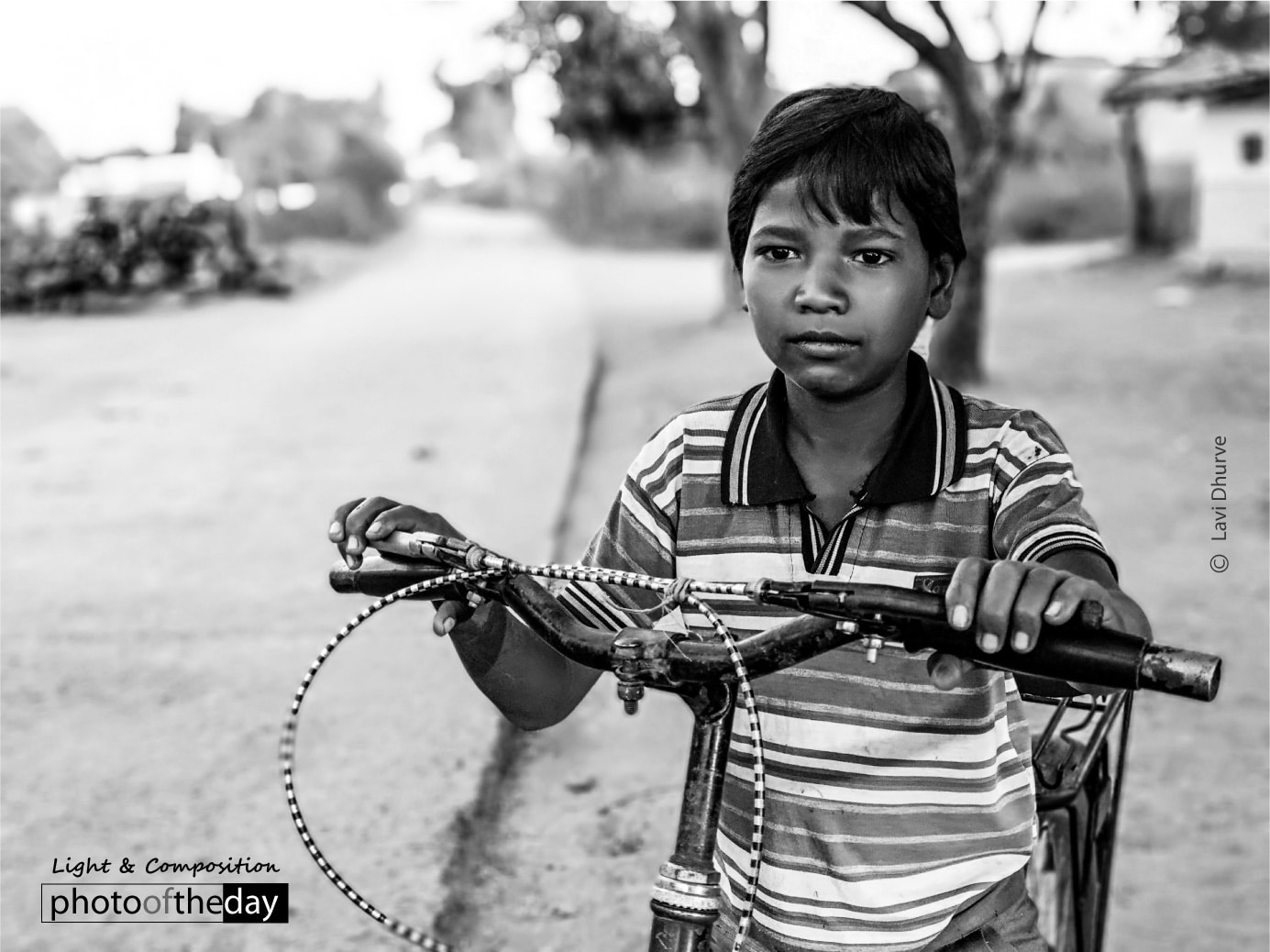
In this evocative portrait, the photographer captures twelve-year-old Vikas, a student living in a modest hut amidst the sprawling rice paddies on the outskirts of a village. The image was taken during a candid moment when Vikas visited the village to play with other children. By focusing on the boy’s presence against his rural environment, the photographer highlights the quiet dignity of village life. This portrait is award-worthy for its authentic emotional resonance and the photographer’s ability to find profound beauty in the everyday experiences of those living in the heart of India.
Lavi Dhurve
Hailing from a small village in Madhya Pradesh, the ‘Heart of India,’ Lavi Dhurve finds deep inspiration in the simplicity and beauty of rural life. Her work is a celebration of art, culture, and the human spirit, with a particular passion for documenting children and the natural splendor of sunrises and sunsets. Through her lens, she seeks to share the profound beauty she experiences in her surroundings, offering an intimate look at the people and places that define her world.
Resonance Score Breakdown
Transparency Note: The resonance score (11.7/20) is calculated based on social engagement metrics collected before the award announcement.
Expert Photography Reviews · 8
The Quiet Weight of Being
There is a particular kind of stillness that belongs only to the young, a state of being where the soul has not yet learned to rush. It is a quiet, unadorned presence, like a stone resting in a stream or a leaf waiting for the wind to decide its path.
Read the reflection →The Grit of Growing
The smell of rain hitting hot, dry earth always brings me back to the feeling of grit under my fingernails. It is a coarse, honest texture—the kind that stays with you long after you have washed your hands.
Read the reflection →Reviews & Comments
Share your thoughts about this award-winning photograph. Your reviews contribute to the community engagement score.
You waited for the right moment, and it shows. There’s a quiet gravity in Vikas’s eyes that stopped me cold. It’s not just a portrait of a boy in a rice paddy; it’s the weight of a life lived simply. You didn’t try to dress up his reality or force a smile. Because you let him just be, the truth of his world comes through. I can feel the heat of that afternoon. You’ve done good work here.
Vikas stands against the vast, muted earth. The frame breathes. It’s not the boy who commands the space, but the stillness surrounding him. I’ve felt this quiet before, in the fields at dusk. The horizon doesn’t crowd him; it holds him. Nothing here is accidental. The empty corner is not empty. It’s a pause. A rare, heavy silence. I find myself wanting to step into that dust and simply wait with him.
Shadow isn’t merely the absence of sun here; it’s the architecture of Vikas’s solitude. The darkness clinging to his features doesn’t hide him—it forces us to confront the weight of his gaze. I’ve stared at this boy’s eyes for an hour, and I’m unsettled by how much he knows of the void. It’s a heavy, honest portrait. Most photographers fear this depth, but Dhurve lets the silence linger, proving that true meaning hides in the dark.
We look at young Vikas and we understand something about the quiet weight of a childhood spent in the paddies. He isn’t just posing; he’s waiting, listening to the wind across the fields. I’ve spent hours staring into his eyes, and I feel a sudden, sharp ache for the simplicity he carries. Lavi didn’t just photograph a boy; he sat with him until the story emerged. It’s a portrait that asks to be returned to.
Before the eye identifies the boy, something in the chest tightens. Vikas’s gaze doesn’t just meet yours; it anchors you to the dust of Sarni. I’ve felt my own pulse slow against the vast, indifferent rice paddies behind him. It’s a quiet, heavy activation of memory—the ache of childhood solitude. When I return to this portrait a year later, that stillness remains, a persistent, haunting weight that follows me into sleep. It’s profoundly human.
Vikas doesn’t look like he’s posing for a stranger; he looks like he’s waiting for a friend. There’s a stillness in his eyes that only comes when a photographer puts the camera down long enough to be human first. I feel a sudden, sharp ache in my chest looking at him—this face has a whole life in it. You can tell he trusted Lavi. That’s the only way to get this kind of honesty.
The threshold between the boy and the hut’s rough, earthen wall creates a compelling datum. Lavi’s frame captures the way light rakes across the texture of the mud, emphasizing the mass of the structure against the boy’s slight frame. It’s a quiet study of habitation. I’m struck by how the fenestration—or lack thereof—defines his world. It’s not just a portrait; it’s a spatial dialogue between a child and the architecture that shelters him.
Vikas’s gaze echoes the unvarnished directness of August Sander’s portraits, yet he’s grounded in the specific, humid light of Madhya Pradesh. It’s a delicate balance; the composition avoids the romanticized poverty often found in colonial-era ethnographic studies. I’m genuinely struck by the way his silhouette cuts against the rice paddies—it’s a quiet, modern dignity I haven’t seen captured quite this way before. It’s not just a portrait; it’s a conversation with the history of the gaze itself.