Fading Green Window by Karan Zadoo
Captured in the remote, high-altitude desert of Spiti Valley, this photograph highlights the weathered, artistic charm of a fading green window in Kaza. The photographer utilized a shallow depth of field to isolate the texture and history embedded in the architecture, emphasizing the stark beauty of the Himalayan landscape. The image is award-worthy for its evocative simplicity and its ability to transport the viewer to a region where Buddhist culture and rugged terrain converge. It serves as a poignant study of stillness, capturing the quiet, enduring character of a structure set against the backdrop of one of India's most isolated regions.
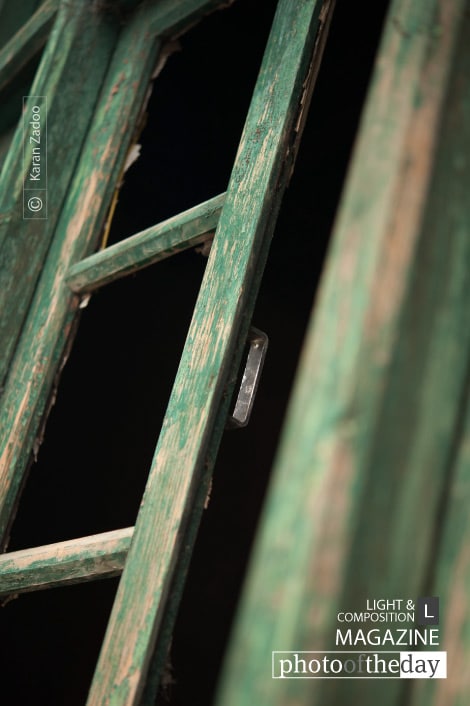
Exposure 1/320sec @ f/2.8 | ISO 200 | Focal Length 60mm
Karan Zadoo
Born in Srinagar and raised in New Delhi, Karan Zadoo transitioned from a career in advertising to the world of professional photography after discovering a profound connection to nature during his travels in the Himalayas. He specializes in documenting the diverse landscapes, food, and people of India, constantly evolving his craft through a deep fascination with the interplay of light and shadow. Zadoo remains dedicated to the art of storytelling, aiming to capture the authentic essence of life in India's small towns and villages through his lens.
Resonance Score Breakdown
Transparency Note: The resonance score (14.6/20) is calculated based on social engagement metrics collected before the award announcement.
Expert Photography Reviews · 4
The Weight of Paint
I spent this morning scraping old, chipped paint off my kitchen chair. It was a tedious job, but as the layers of blue flaked away, I found a glimpse of the original wood underneath. It felt like uncovering a secret.
Read the reflection →The Wisdom of Weathering
There is a quiet dignity in the way things surrender to time. We often rush to preserve, to paint over, to hold back the inevitable softening of edges. Yet, when we allow a surface to weather, we are witnessing a conversation between an object and the elements.
Read the reflection →Reviews & Comments
Share your thoughts about this award-winning photograph. Your reviews contribute to the community engagement score.
Before the eye identifies the peeling paint, something in the chest tightens. It’s the silence of Kaza, isn’t it? That fading green frame doesn’t just sit there; it demands a physiological stillness. I’ve returned to this window three times today, and each time, the shallow depth of field pulls my focus into a private, hollow ache. It’s a quiet, high-altitude loneliness that settles into my lungs, making me feel as fragile as that weathered wood.
That green paint peels like skin, revealing a history that refuses to be forgotten. It’s not just architecture; it’s a confrontation with the void of the Spiti Valley. I’ve stared at this frame until my eyes ached, feeling the cold, thin air of Kaza pressing against my own lungs. The shadows here don’t hide the decay; they anchor it. They demand we acknowledge that beauty, when stripped of its vanity, is merely a slow, inevitable surrender.
The green frame’s geometry dictates the picture plane. It’s a rigid anchor against the blur of the Spiti landscape. The shallow depth of field creates a necessary spatial tension, forcing the eye to reconcile the peeling paint with the soft, indistinct background. It’s a disciplined isolation. I’ve grown weary of sentimental decay, but the structural integrity here holds. The composition doesn’t collapse under the weight of its own stillness. It’s a rare, precise success.
That peeling, verdigris pigment—the colour of a bruised lime left to wither in the high-altitude sun—haunts me, echoing the dusty, muted palettes of Morandi’s still lifes. It’s a fragile, crumbling jade that doesn’t merely sit upon the wood; it breathes, shivering against the harsh, thin air of Kaza. I’ve found myself utterly transfixed by how the light bleeds into those cracks, turning decay into a sublime, chromatic meditation on time’s own slow, relentless erosion.