The Award Award Showcase The Gallery Publications Gears University Expeditions Dev-Lab About Us Career Learning & AI Future Curriculum Curiosity & Consciousness Sign In Submit Your Work →

The Inner Shadow by Tanmoy Saha

In The Inner Shadow, the photographer captures a poignant moment in Dhaka, where the silhouette of a rickshaw puller transcends mere physical form to represent the weight of human survival. By focusing on the interplay between the subject and his primary means of livelihood, the image explores the deep dependency and inner thoughts hidden within a simple shadow. The composition is award-worthy for its ability to transform an everyday urban scene into a profound visual metaphor, utilizing sharp contrast and deliberate framing to evoke empathy and contemplation regarding the human condition.
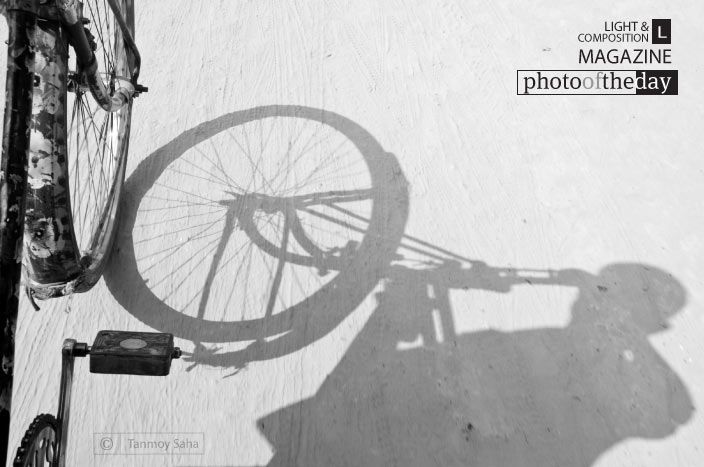
The Inner Shadow by Tanmoy Saha
Nikon D90 | Exposure 1/200sec @ f/14 | ISO 200 | Focal Length 26mm
Light & Composition Photo of the Day

Tanmoy Saha

REGISTERED PHOTOGRAPHER

Based in Dhaka, Bangladesh, Tanmoy Saha Turja is a dedicated photographer who began his creative journey in 2007. An Electronics and Telecommunication Engineering graduate, he balances his professional career in the audiovisual sector with a deep passion for portrait, landscape, and wildlife photography. Having honed his craft through formal training at the Dhaka University Photography Society and Pathshala, his evocative work has been showcased at the National Art Gallery in Bangladesh, reflecting his commitment to capturing the nuanced realities of his environment.

Current Location Dhaka, Bangladesh
12.3/20
RESONANCE
SCORE
196/500
SHARE
SUBMISSION
Award Reach | Reviews
15,553 views | 5 Reviews
Award Winner Photo of the Day
Award Date October 21, 2012
Value 11.0
Clarity 13.0
Composition 16.0
Style 12.0
Skill 12.0
Photograph Location
Dhaka, Bangladesh

Resonance Score Breakdown

Transparency in Award Scoring

Transparency Note: The resonance score (12.0/20) is calculated based on social engagement metrics collected before the award announcement.

Social Shares
5.0/5 points
1,484/1,000 Social Share
Page Views
5.0/5 points
15,553/2,500 Page View
Reviews
0.0/5 points
0/100 Review
Submissions
2.0/5 points
196/500 Submission
Jury Score: 64.0/80
Resonance Score: 12.0/20
Total Award Score: 76.0/100

Expert Photography Reviews · 5

Reflections on this Photograph
By Priya Kapoor

The Weight of Dust

The air in the heat of the afternoon tastes like dry earth and iron. It is a thick, gritty sensation that coats the back of the throat, reminding you that you are made of the same ground you walk upon.

Read the reflection →
By Clara Menezes

The Architecture of Weight

We carry our histories in the slope of our shoulders, a geography of burdens that no one else can see. It is a quiet, heavy architecture—the way a spine bows to the gravity of a long day, or how the feet learn the rhythm of the pavement until they become part of the road itself.

Read the reflection →

Reviews & Comments

Share your thoughts about this award-winning photograph. Your reviews contribute to the community engagement score.

5 responses to “The Inner Shadow by Tanmoy Saha”

  1. Dhaka’s heat doesn’t just burn; it erases. In this frame, the rickshaw puller’s silhouette isn’t a mere absence of light, but a heavy, ontological anchor. It’s where the man’s struggle finally finds its true, dark shape. I’ve stared at these shadows until my own pulse slowed, feeling the crushing weight of his labor. It’s a brutal, honest confrontation. Most photographers fear this depth, but here, the darkness finally learns how to think.

  2. Dhaka’s harsh noon light usually flattens everything, yet here it carves a profound silence. He stood in that relentless glare, waiting for the rickshaw puller to become a ghost of his own labor. I’ve felt that same heavy stillness in the streets, where the shadow isn’t just dark—it’s the man’s soul tethered to the iron. It’s haunting. He didn’t just capture a silhouette; he listened to the weight of a life lived in the sun.

  3. The frame’s geometry is rigid, yet it’s the negative space that dictates the narrative. Saha’s placement of the rickshaw puller creates a precarious fulcrum, balancing mass against the encroaching void. It’s a stark, architectural study of displacement. The high-contrast tonality forces the eye to navigate the silhouette’s sharp edges. I’ve found myself lingering on that precise intersection of shadow and pavement. It doesn’t just occupy the frame; it anchors the entire visual plane with cold, calculated precision.

  4. Most street photography in Dhaka relies on chaos, but this frame succeeds by stripping it away. The rickshaw puller’s shadow isn’t just a silhouette; it’s a heavy, ink-black anchor dragging against the pavement. I’ve seen thousands of these urban studies, yet this one lingers because the geometry of the wheels mirrors the man’s own hunched posture. It’s a quiet, crushing portrait of labor. Honestly, it makes my chest ache. That’s why it’ll still matter in thirty years.

  5. The rickshaw puller isn’t the subject. The wall is. Dhaka’s heat presses against the frame, yet the shadow offers a cool, dark relief. I’ve stared at this for an hour. It’s quiet. The vast, pale concrete doesn’t demand attention; it invites a breath. Nothing here is accidental. The empty corner is not empty. It’s a space for the man’s exhaustion to settle. I feel a sudden, sharp ache in my own lungs. Silence.

Leave a Reply

Your email address will not be published. Required fields are marked *