A Fish Called Wanda by Athena Constantinou
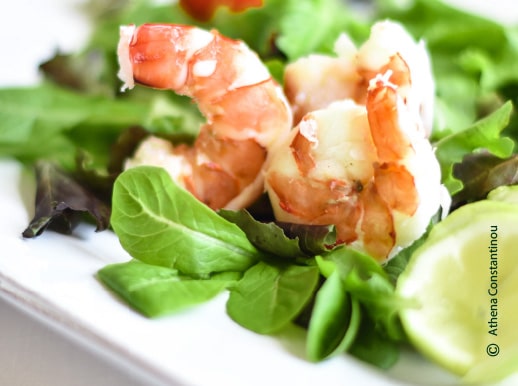
Captured in Nicosia, this image represents a deliberate departure from the photographer's signature dark, moody aesthetic. Tasked with mastering high-key lighting, the photographer navigated the challenges of an all-white environment to achieve a clean, luminous composition. By meticulously experimenting with various ISO and exposure settings, she successfully balanced the bright foreground and background to create a crisp, professional food photograph. This piece stands out for its technical precision and the photographer's willingness to step outside her comfort zone, demonstrating a sophisticated command of light that elevates a simple subject into a compelling, award-worthy visual narrative.
Athena Constantinou
Born in Cyprus with formative years spent in Athens and London, Athena Constantinou has established herself as a versatile food photographer, stylist, and cookbook author. A restless artist who draws inspiration from her extensive global travels, she is recognized for her ability to craft mouthwatering imagery that resonates with a large international audience. As a semi-finalist in the 2016 Pink Lady Food Photography competition, she continues to refine her craft, consistently pushing her technical standards to capture the intersection of culinary art and professional photography.
Resonance Score Breakdown
Transparency Note: The resonance score (13.0/20) is calculated based on social engagement metrics collected before the award announcement.
Expert Photography Reviews · 6
The Geometry of Sunday Lunch
My grandmother used to say that the way you set a table tells a story about how much you value the people sitting around it. I remember the Sunday afternoons in her kitchen in Nicosia, where the air was thick with the scent of lemon and oregano.
Read the reflection →The Architecture of Silence
We often mistake emptiness for a lack of substance, forgetting that the bowl must be hollow to hold the harvest. There is a profound, quiet dignity in the unadorned space—a white field where the eye can finally rest, unburdened by the clutter of the day.
Read the reflection →Reviews & Comments
Share your thoughts about this award-winning photograph. Your reviews contribute to the community engagement score.
Before the eye identifies the fish, a sudden, sterile chill settles in the chest. It’s a clinical brightness that forces a shallow, held-breath response. I’ve spent years avoiding such stark, high-key environments, yet here, the light feels almost surgical. It’s unsettling. When I return to it, the fish’s stillness feels less like a meal and more like a quiet, suspended grief. It’s a strange, cold beauty that lingers long after I’ve looked away.
We look at this fish and we don’t just see a meal; we see a life silenced for our table. Athena has stripped away the shadows, leaving nowhere for the subject to hide. It’s clinical, yes, but there’s a quiet dignity in that stark, white light. I feel a sudden, sharp pang of melancholy looking at those glassy eyes. It’s a portrait of an ending, and honestly, it’s a photograph that asks to be returned to.
High-key work is often just an excuse for lazy shadows, yet Constantinou has managed to keep the fish from vanishing into the ether. It’s a clean, clinical exercise in restraint. I’ve spent enough time squinting at white-on-white compositions to know the frustration involved. She clearly didn’t settle for the first exposure. It’s a cold, precise bit of craft, and honestly, it makes me crave a decent lunch. A rare, disciplined effort in a bright room.
The focal plane here is razor-thin, slicing through the fish’s scales with clinical precision. By avoiding the diffraction limit, Constantinou captures microscopic textures the naked eye simply misses. The bokeh, a function of a wide aperture, renders the white background into a soft, luminous void. It’s breathtaking. I’ve spent years studying optics, yet the way light dances across those iridescent surfaces still makes my heart race. She’s finally pushed her glass to its absolute limit.
White on white. It’s a dangerous game. Most lose their way in the glare. Constantinou doesn’t. She finds the edge where the fish meets the plate. It’s quiet. I’ve spent minutes just breathing in the stillness of that porcelain rim. Nothing here is accidental. The empty corner is not empty. It’s a breath held in the light. I’d forgotten how much a single, silver scale can anchor a world. It’s enough. It’s everything.
High-key lighting often collapses into a featureless void, yet here the spatial tension remains intact. The fish’s silhouette acts as a sharp fulcrum, anchoring the frame against the aggressive luminosity of the background. It’s a clinical exercise in restraint. I’m genuinely unsettled by how the negative space threatens to consume the subject entirely. The composition holds, but only just. It’s a precarious balance, one that demands total visual discipline to prevent the frame from dissolving.