Old Town of Bright Colors by Marissa Tejada
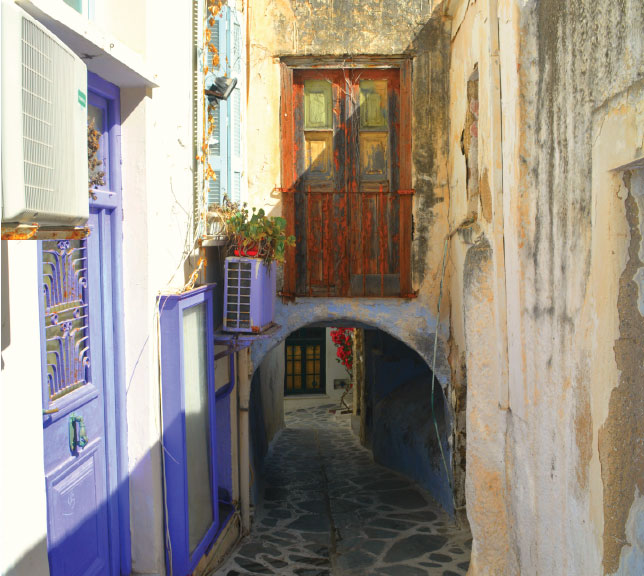
Captured within the winding, cobbled labyrinth of Naxos Island’s historic Old Town, this image celebrates a vibrant aesthetic array of island colors set against ancient stone walls. The photographer utilized a wide 18mm focal length to encompass the narrow, picturesque paths, balancing the bright Mediterranean light with a precise f/8 aperture. This photograph is award-worthy for its evocative sense of place, masterfully documenting the timeless charm of a village that has stood for centuries. The composition invites the viewer to wander through the frame, highlighting the harmonious relationship between traditional architecture and the vivid, sun-drenched palette of the Greek islands.
Marissa Tejada
Born in Brooklyn and raised on Long Island, Marissa Tejada is an award-winning American freelance journalist and travel writer currently based in Athens, Greece. Her extensive career has spanned international news bureaus and television reporting across various global cities, eventually leading her to settle in Europe. This transition inspired her debut novel, Chasing Athens, and continues to fuel her creative pursuits as she documents her travel insights and photography through her blog, My Greece, My Travels.
Resonance Score Breakdown
Transparency Note: The resonance score (12.3/20) is calculated based on social engagement metrics collected before the award announcement.
Expert Photography Reviews · 5
The Weight of Walls
Stone holds heat long after the sun has retreated. It remembers the touch of hands that are no longer here, the weight of footsteps that have worn the path smooth. We build these labyrinths to keep the wind out, or perhaps to keep ourselves in.
Read the reflection →The Path That Leads Nowhere
I took a wrong turn while walking to the grocery store this morning. I usually stick to the main road, the one with the steady hum of traffic and the familiar shop windows. But today, I ducked into a narrow alleyway just to escape the wind.
Read the reflection →Reviews & Comments
Share your thoughts about this award-winning photograph. Your reviews contribute to the community engagement score.
At f/8, the Sigma 18-250mm sits comfortably within its sweet spot, avoiding the diffraction limit while maintaining sharp micro-contrast across the Naxos stone. It’s a crisp rendering of Mediterranean light. I’m genuinely moved by how the lens resolves the texture of these ancient walls; it’s as if I can feel the grit beneath my own fingertips. The chromatic aberration is remarkably well-controlled here, allowing those vibrant island pigments to sing without bleeding into the shadows.
1/250sec at f/8, 18mm, ISO 120. It’s a safe, clinical approach to Naxos. Stopping down to f/8 was the right call; it keeps the stone textures sharp across the frame. I’ve seen enough soft travel shots to appreciate the discipline here. Still, the Sigma 18-250mm lens is a compromise, and the corners show it. It’s technically competent, but frankly, the lack of micro-contrast makes me miss the bite of a prime lens. It’s precise, yet cold.
It’s a pleasant enough stroll through Naxos, though one wonders if the shutter was clicked on the first pass. The light is a bit flat, suggesting a midday arrival rather than a dedicated vigil. I’ve spent enough hours shivering in Mediterranean shadows to know that true color requires patience, not just a wide lens. It’s pretty, certainly, but I’m left wanting the grit of a photographer who actually stayed until the tourists vanished.
We walk these narrow Naxos alleys and we don’t just see stone; we hear the ghosts of conversations held in the shade. The vibrant colors aren’t just paint; they’re the skin of a village that’s been listening to the sea for centuries. I feel a sudden, sharp ache for a home I’ve never known. It’s a portrait of a place that’s still breathing, waiting for us to stop and finally listen to its story.
Of the thousands of travel shots I’ve reviewed, most are just postcards. What separates this from the rest is how the 18mm lens forces the viewer into the claustrophobic, sun-drenched intimacy of Naxos. It’s not just a street scene; it’s a tactile memory of heat on stone. I’d walk those alleys forever. It earns its place because it captures a vanishing, quiet humanity that will still feel honest and vital thirty years from now.