The Last Click by Naba Kumar Mondal
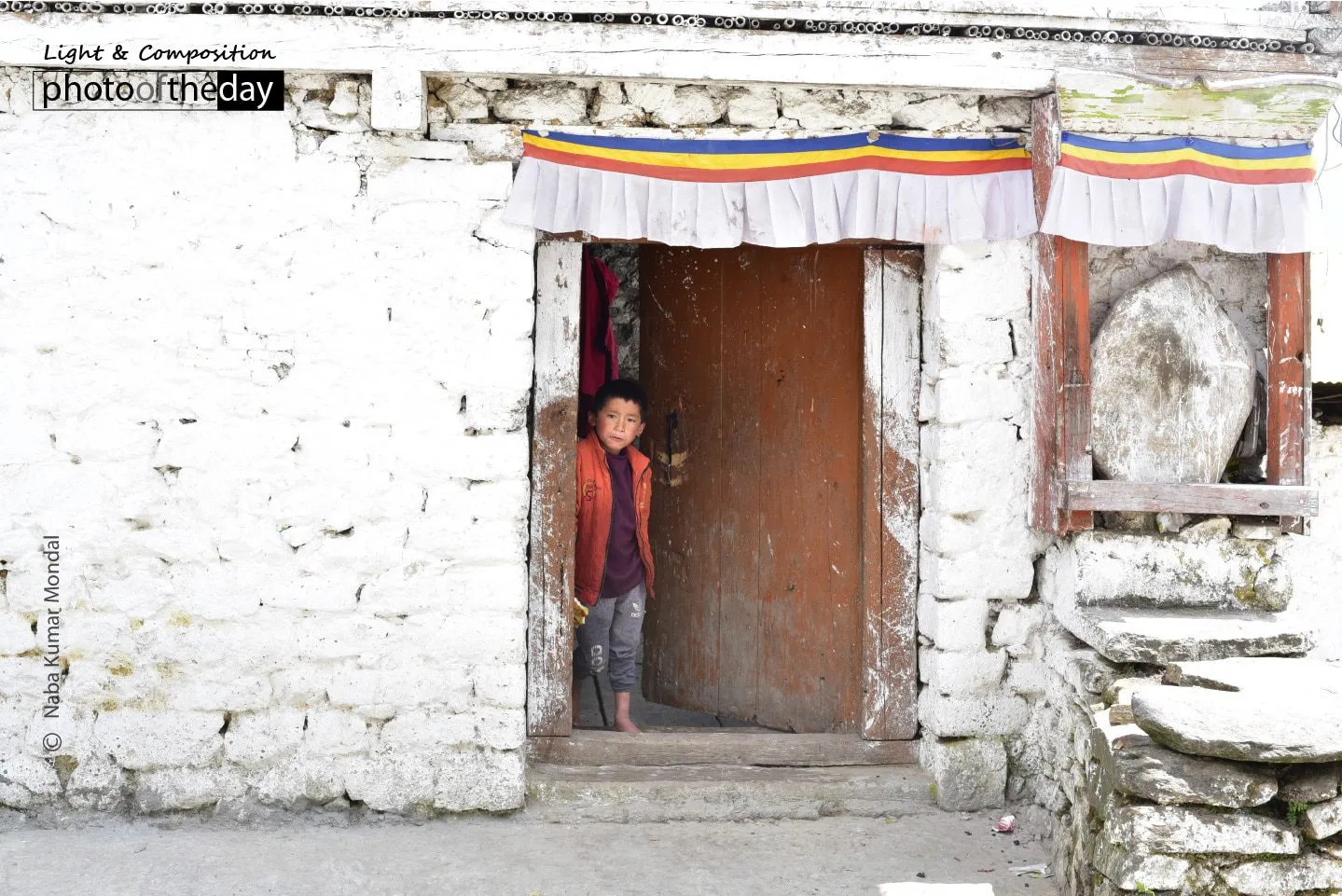
Captured at the serene Tawang Monastery in India, this poignant portrait emerged from a moment of profound silent communication. While documenting the monastery's details, the photographer encountered a young boy whose steady, inquisitive gaze challenged the intrusion of the camera into a space of solitude. The image, titled 'The Last Click,' encapsulates the tension between the observer and the observed, capturing a raw, questioning expression that transcends language. This photograph is award-worthy for its ability to transform a fleeting, uncomfortable encounter into a powerful narrative of human connection and the ethical complexities of documentary photography.
Naba Kumar Mondal
Following a distinguished corporate career as an electrical engineer in India, Naba Kumar Mondal transitioned into the world of professional photography to pursue his creative passions. Based in Delhi, he travels extensively to document the vibrant colors, traditions, and diverse cultures that define the human experience. Mondal is deeply committed to storytelling and creative photography, viewing his craft as a pursuit driven by artistic passion and a desire to frame the essence of life's many fragrances.
Resonance Score Breakdown
Transparency Note: The resonance score (3.1/20) is calculated based on social engagement metrics collected before the award announcement.
Expert Photography Reviews · 4
The Weight of a Witness
The smell of damp wool and old incense clings to the back of my throat, a heavy, velvet scent that reminds me of winters spent huddled near a hearth. It is the smell of stillness, of air that has been breathed by many before it reached my lungs.
Read the reflection →The Weight of a Gaze
There is a particular kind of stillness that arrives when two strangers meet in silence. It is not the absence of sound, but a sudden thickening of the air, as if the world has paused to see if we are truly present.
Read the reflection →Reviews & Comments
Share your thoughts about this award-winning photograph. Your reviews contribute to the community engagement score.
The boy’s face anchors the frame at a precise golden ratio intersection, creating a powerful vertical axis against the monastery’s blurred, rhythmic architecture. The negative space in the upper-left quadrant perfectly balances the heavy, textured mass of his robes. It’s a beautifully solved spatial equation. I’m genuinely struck by how the geometry forces our eyes to collide with his gaze. It’s not just a portrait; it’s a masterclass in visual equilibrium that demands our full attention.
f/2.8 at 50mm, 1/125s, ISO 400. A standard portrait configuration, yet it’s effective here. The shallow depth of field isolates the boy’s gaze, forcing the viewer into a confrontation. It’s a sharp, clinical choice that doesn’t hide behind bokeh. I’ve seen too many portraits ruined by excessive glass, but this holds its ground. The technical restraint is correct. It’s rare to see a photographer actually respect the subject’s space. I find that refreshing.
Most portraits I review are mere transactions, but this one lingers. The boy’s gaze isn’t just looking at a lens; it’s interrogating the photographer’s right to be there. I’ve seen thousands of monastic shots, yet this one avoids the usual exoticism. It’s the slight tilt of his head that gets me—it feels like he’s waiting for an apology. That tension is why it’ll still matter in thirty years. It’s honest, uncomfortable, and entirely necessary.
You didn’t just take a picture; you held your ground. That boy’s gaze isn’t just looking at a lens, it’s looking right through you, questioning why you’re there. I’ve felt that exact weight in the field, that moment where the camera feels like a heavy, intrusive burden. You waited, and because you did, you caught his raw, silent challenge. It’s uncomfortable, and that’s exactly why it works. There’s something deeply honest happening here. You earned this.