Paint with Light by Minh Nghia Le
Captured from a cable car ascending toward the Niederwald Monument, this image showcases the rolling vineyards of Rudesheim, Germany. The photographer utilized the dramatic, cloudy sky to cast shifting shadows across the landscape, effectively 'painting' the terrain with light and texture to create a profound sense of depth. This deliberate use of natural light, combined with the sweeping perspective over the Rhein river valley, transforms a scenic travel moment into a compelling landscape study. The work is award-worthy for its masterful balance of atmospheric conditions and composition, turning a standard vista into a dynamic, painterly exploration of the German countryside.
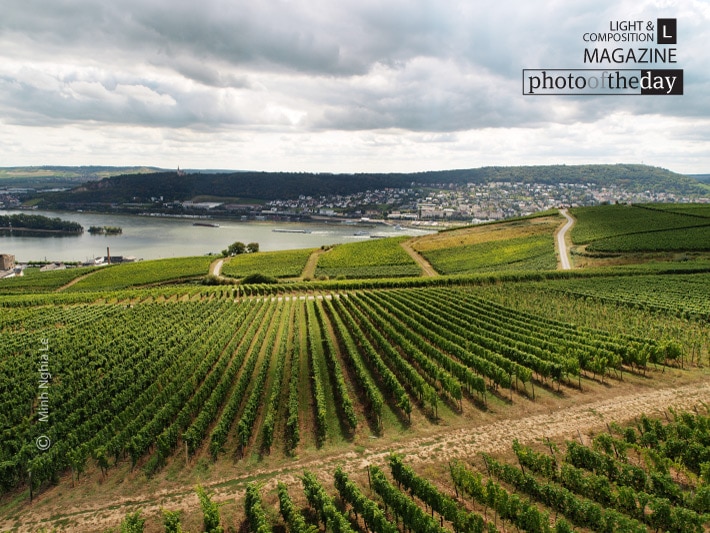
Exposure 1/320sec @ f/8 | ISO 100 | Focal Length 12mm
Minh Nghia Le
Based in Singapore, Minh Nghia Le is a dedicated photographer who balances a professional career with a long-standing passion for the craft. His artistic practice is deeply rooted in street photography and portraiture, disciplines that inform his evocative approach to travel and wedding imagery. Viewing photography as a vital language for personal expression, he strives to document his unique perspective on the world. Alongside his wife and fellow photographer, Mai Phuong Duong, he continues to refine his visual narrative through a thoughtful and observant lens.
Resonance Score Breakdown
Transparency Note: The resonance score (13.5/20) is calculated based on social engagement metrics collected before the award announcement.
Expert Photography Reviews · 5
The Hum of the Earth
The smell of damp earth after a long, heavy rain is a language my skin understands perfectly. It is a thick, metallic scent that clings to the back of my throat, tasting faintly of minerals and dormant roots.
Read the reflection →The Earth’s Quiet Breath
The land has a memory that outlasts the seasons, a slow, rhythmic pulse buried deep beneath the roots of the vine. We often mistake the earth for something static, a stage upon which we play out our brief, hurried dramas, but it is constantly in conversation with the sky.
Read the reflection →Reviews & Comments
Share your thoughts about this award-winning photograph. Your reviews contribute to the community engagement score.
At f/8, the 12mm focal length hits the sweet spot of the Zuiko’s MTF curve, rendering the Rudesheim vines with surgical precision. The diffraction limit hasn’t yet softened the micro-contrast, allowing the light to dance across the topography. It’s a rare pleasure to see such clarity in a wide-angle capture. Honestly, the way the light renders those shifting shadows makes my heart skip a beat; it’s physics turned into pure, atmospheric poetry. I’m genuinely moved.
We look at these Rudesheim vineyards and we don’t just see land; we see the labor of generations. Minh Nghia Le caught the light dancing over the vines like a conversation between the sun and the soil. It’s a portrait of a place that has listened to the wind for centuries. I feel a quiet ache in my chest looking at it. It’s a photograph that asks to be returned to, again and again.
One suspects the cable car didn’t stop for the light. It’s a brisk, opportunistic frame, isn’t it? While the shadows across the Rudesheim vines are pleasant enough, I find myself wishing the photographer had climbed the hill instead of riding it. There’s a certain comfort in the glass, but the landscape doesn’t quite feel earned. I’ve spent enough shivering hours on those slopes to know that true depth requires a bit more sweat than this.
Most landscapes from Rudesheim are postcards, but this one avoids the trap by letting the shadows do the heavy lifting. I’ve seen thousands of vineyard shots, yet the way the light carves texture into those slopes makes me feel like I’m actually shivering in that cable car. It’s the contrast between the sharp, dark furrows and the soft, diffused sky that gives this longevity. It’s a rare, honest study of terrain that’ll still matter in thirty years.
1/320sec at f/8, ISO 100, 12mm. The Olympus E520’s sensor is pushed to its limit here. Stopping down to f/8 was the correct call to maximize the Zuiko’s sharpness across the frame. It’s a clinical, precise capture of the Rudesheim slopes. I’ve spent years looking at soft, lazy landscapes, so seeing this level of edge-to-edge discipline actually makes me relax. The technical execution is sound. It doesn’t rely on luck; it relies on optics.