A Side Wall by Siew Bee Lim
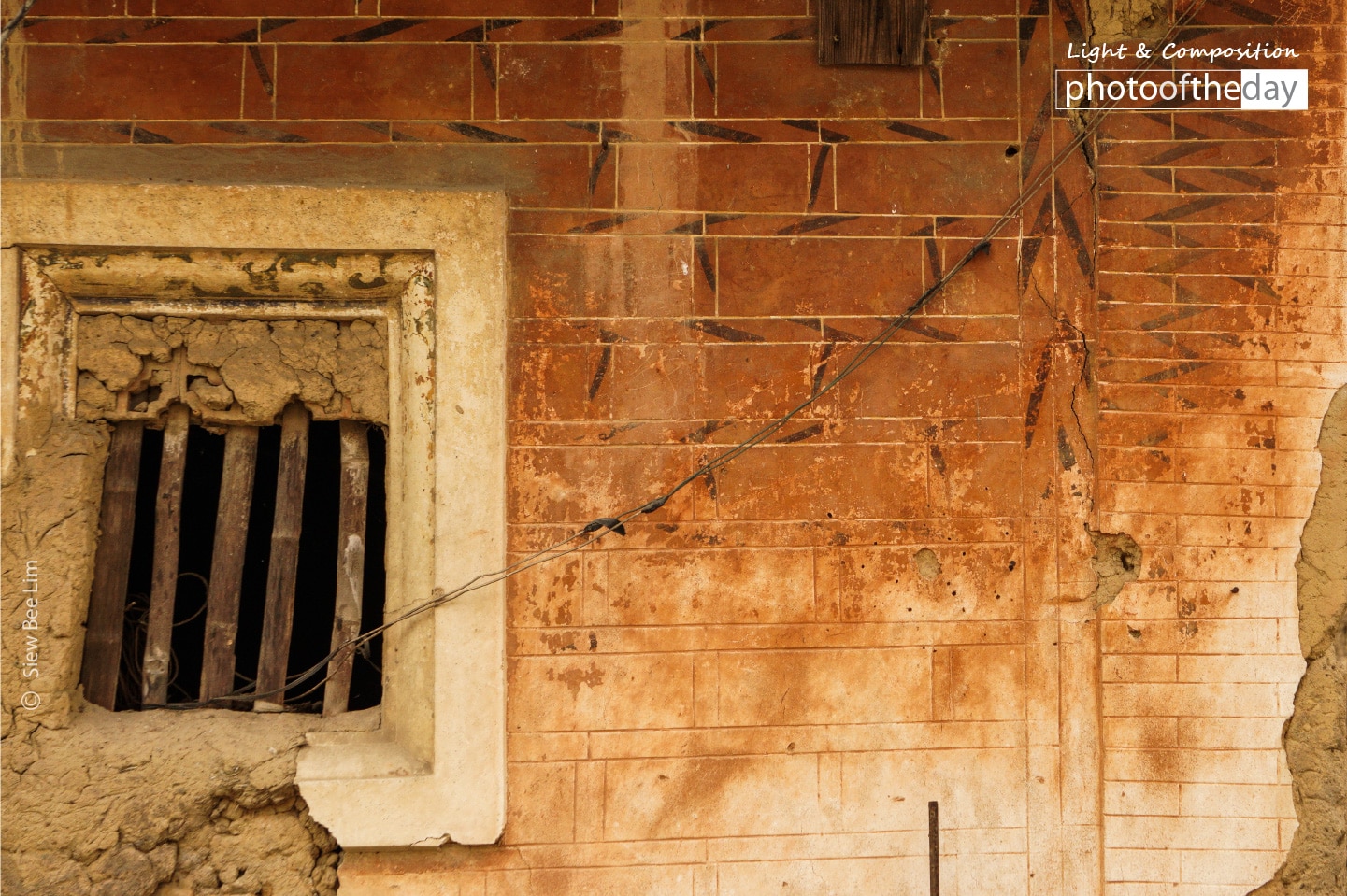
During a tour of Fujian, the photographer encountered a striking old house in a village near Quanzhou. Drawn to the texture of the structure, she captured a side wall constructed from yellow soil and accented with the distinct red brick patterns characteristic of local Quanzhou culture. The image serves as a quiet study of traditional architecture, emphasizing the interplay of earth tones and geometric masonry. This photograph is award-worthy for its keen eye for cultural heritage and its ability to transform a simple, weathered wall into a compelling composition that speaks to the history and craftsmanship of the region.
Siew Bee Lim
Born in Singapore in 1965, Siew Bee Lim is a programmer who rediscovered her passion for photography later in life. Though she initially explored the craft through darkroom techniques during her early career, she has since turned to the Light & Composition platform to formalize her artistic education. Drawing inspiration from her lifelong appreciation for Chinese painting and literature, she seeks to refine her creative vision and technical execution through dedicated study and a renewed commitment to the photographic arts.
Resonance Score Breakdown
Transparency Note: The resonance score (11.7/20) is calculated based on social engagement metrics collected before the award announcement.
Expert Photography Reviews · 5
The Weight of Time
I remember sitting in a small cafe in Luang Prabang, watching an old man repair a stone fence near the river. He didn’t use mortar or modern tools; he just fit the rocks together by feel, as if they were pieces of a puzzle he had been solving for decades.
Read the reflection →The Integrity of Earth
Seneca once observed that we are like the stones of a building; if one is removed, the whole structure feels the shift, yet the individual stone remains defined by its place and its burden.
Read the reflection →Reviews & Comments
Share your thoughts about this award-winning photograph. Your reviews contribute to the community engagement score.
There’s a quiet dignity in these weathered bricks, but I find myself searching for a pulse. It’s a beautiful study of texture and geometry, sure, but it’s lonely. I’ve spent my life looking for the human hand that laid these stones or the family that leaned against this wall. Without a person to anchor it, the history feels cold. It’s technically sharp, but it doesn’t invite me in. I’m left wanting a soul.
The interplay of ochre earth and Quanzhou’s red brick geometry echoes the tactile obsession of Aaron Siskind’s wall studies, yet it’s grounded in a specific vernacular tradition. I’ve spent decades cataloging such textures, but the way Lim captures the weathering here—it’s genuinely startling. It avoids the trap of mere documentation, instead finding a rhythmic, almost painterly abstraction. It’s a rare moment where the weight of architectural history feels light, breathing, and entirely, refreshingly new.
The frame breathes. It’s a static tracking shot of history, where the yellow soil meets the rhythmic pulse of red brick. I’m struck by the silence here; it’s the kind of stillness that makes you hold your breath in a theater. The composition doesn’t need a pan or a zoom. It’s a perfect, locked-off shot. The editor would never cut away. It’s a rare, honest moment where the architecture finally stops running.
The masonry here isn’t just a surface; it’s a dialogue between earth and kiln. That red brick datum cutting through the yellow soil creates a rhythm that feels tactile, almost rhythmic. I’ve spent hours tracing such patterns in Fujian, and honestly, it makes me ache for the humidity of those narrow alleys. It’s a quiet study, sure, but it captures the weight of the wall so well you can practically feel the cooling shadow against your palm.
The jury’s obsession with clarity here feels stifling. Lim’s wall is a tactile ghost, yet the lens insists on a clinical sharpness that flattens the history of that yellow soil. I’d have preferred a long-exposure blur, letting the texture bleed into the light, closer to Sugimoto’s theatres than this rigid documentation. Why resolve every brick? It’s a missed opportunity to let the architecture dissolve into the atmosphere. I’m left craving a little more chaos.