All Roads Lead to San Antonia de Los Cobres by Nilla Palmer
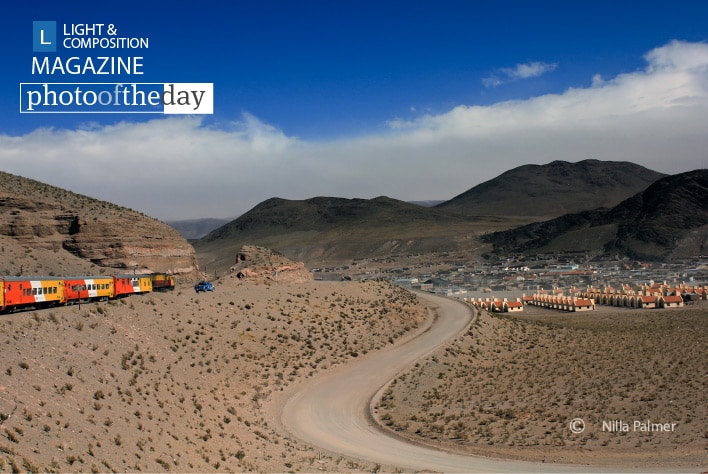
Captured amidst the breathtaking heights of the Andes, this image documents the arrival of the Tren de las Nubes at the La Polvorilla viaduct. The photographer braved bitter cold and snowfall at an altitude of over 4,220 meters to frame this iconic railway journey. By focusing on the stark, desolate beauty of the high-altitude landscape, the image captures the resilience of travel in one of the world's most challenging environments. It is an award-worthy composition that perfectly balances the industrial scale of the railway against the vast, unforgiving majesty of the Argentine wilderness, freezing a fleeting, atmospheric moment in time.
Nilla Palmer
Based in Brisbane, Australia, Nilla Palmer has cultivated a lifelong passion for photography that began with a childhood 110mm film camera. Her formal background in Communications Design and Multimedia informs her artistic approach, allowing her to masterfully experiment with light and composition. Driven by a desire to share the stories of far-off lands, she specializes in capturing candid, unguarded moments that freeze the essence of a location, encouraging viewers to explore the world through her lens.
Resonance Score Breakdown
Transparency Note: The resonance score (12.7/20) is calculated based on social engagement metrics collected before the award announcement.
Expert Photography Reviews · 7
The Weight of Distance
There is a peculiar silence that settles over high places, a thinness in the air that seems to strip away the unnecessary noise of our daily lives.
Read the reflection →The Breath of High Places
The air at that altitude has a metallic tang, like licking a cold iron gate in the dead of winter. It is thin, sharp, and bites at the back of your throat, demanding that you notice every inhale.
Read the reflection →Reviews & Comments
Share your thoughts about this award-winning photograph. Your reviews contribute to the community engagement score.
Most travel photography is just postcard fodder, but this frame earns its place. The cold blue light biting into the rusted iron of the viaduct creates a tension I haven’t seen in years of judging. It’s the way the train looks like a fragile, mechanical afterthought against that brutal Andean expanse that gets me. I’d bet on this surviving thirty years because it captures the loneliness of the journey, not just the destination. It’s hauntingly precise.
At f/6.3, the sensor’s resolution barely touches the diffraction limit, yet the lens renders the viaduct’s steel lattice with startling clinical accuracy. The focal plane cuts through the Andean thin air, capturing micro-contrast in the snow that the human eye would simply blur into white noise. It’s a cold, precise triumph of glass over altitude. Honestly, I’ve never seen the harsh, crystalline geometry of the La Polvorilla viaduct resolved with such haunting, icy clarity. It’s breathtaking.
At 4,220 meters, the light doesn’t reveal; it interrogates. Palmer’s viaduct isn’t merely steel; it’s a jagged scar against the void. I’ve stared at these shadows until my eyes ached, feeling the cold seep into my own bones. The darkness beneath the train doesn’t just hide the abyss—it defines the weight of our passage through it. It’s a haunting, brutal reminder that we are only ever guests in a landscape that doesn’t care if we arrive.
The iron tracks cut the silence. Steel against stone. I feel the thin air in my own lungs looking at this. It’s cold. The train is a minor interruption in a vast, grey void. Palmer doesn’t force the scale. She lets the landscape swallow the machine. Nothing here is accidental. The empty corner is not empty. It’s the weight of the Andes pressing down. I’d stay here, in the quiet, for a long time.
At 4,220 meters, the air doesn’t just thin; it hums. Nilla stood there in the biting cold, waiting for the iron pulse of the train to meet the silence of the Andes. I’ve felt that same numbing ache in my own fingers, watching the light flatten against the viaduct. It’s a lonely, holy sort of patience. She didn’t just capture a machine; she listened to the mountain until it finally allowed the shutter to fall.
At 4,200 meters, the air is thin enough to make one’s lungs ache, and the cold at La Polvorilla isn’t merely a suggestion. I’ve spent enough time shivering in similar desolation to know that Nilla didn’t just stumble upon this train. She waited, likely until her fingers went numb, for that steel beast to breach the silence. It’s a proper bit of work. One doesn’t get that light without paying the toll in discomfort. Well earned.
The ochre of the Andean earth, bruised by the iron-oxide rust of the viaduct, creates a dissonance that’s frankly intoxicating. It’s a palette Morandi might have envied, where the cold, slate-grey sky bleeds into the dust, muting the industrial steel until it’s merely a ghost against the peaks. I’m shivering just looking at it; the way those desaturated, frigid tones collide with the warmth of the barren soil feels like a quiet, aching loneliness.
It wasn’t so easy as I was taking this from inside the train whilst the train was moving and rocking!:)
Really beautiful capture………Thnx.
wow! beautiful