Seasons Union by Moslem Azimi
Seasons Union captures the breathtaking diversity of the Kurdish landscape, where the photographer successfully frames the transition of all four seasons within a single composition. From the vibrant yellow grasses and blue skies of summer to the colorful foliage of autumn, the lush greens of spring, and the snow-capped peaks of winter, the image serves as a testament to the region's unique geographical harmony. This photograph is award-worthy for its remarkable ability to condense an entire climatic cycle into one frame, showcasing the photographer’s keen eye for natural patterns and the spectacular, multifaceted beauty of the Iranian wilderness.
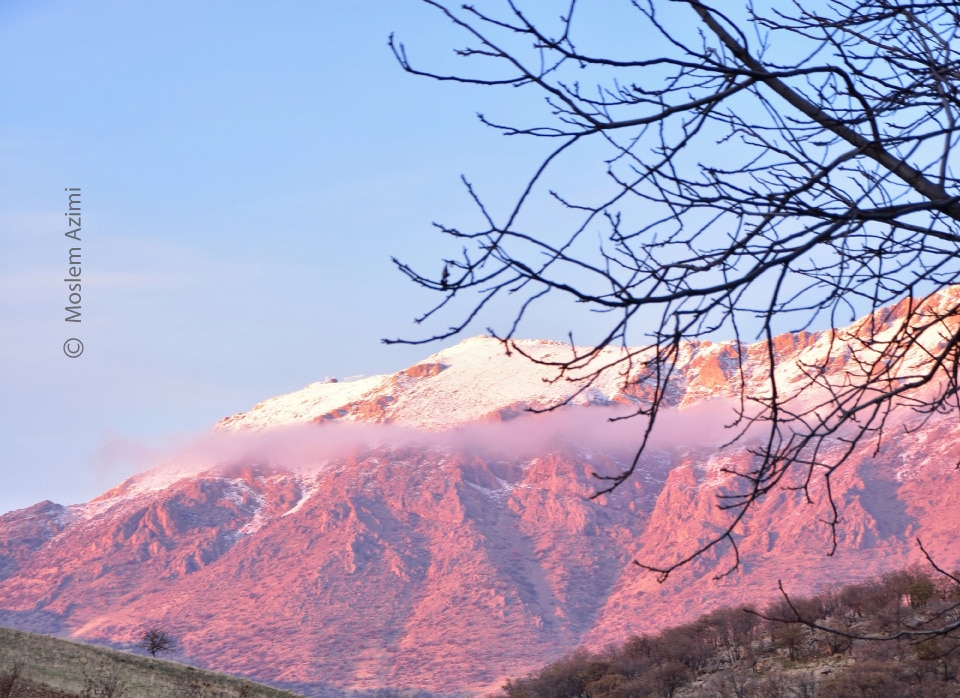
Exposure 1/15sec @ f/6.3 | ISO 100 | Focal Length 35mm
Moslem Azimi
Moslem Azimi is a self-taught photographer based in Javanroud, Iran, with a deep-rooted Kurdish heritage. Holding a Bachelor of Arts in English Translation, he pursued photography independently, driven by a passion to document the traditions, culture, and daily life of the Kurdish people. His work has gained recognition through various national and international exhibitions, reflecting his commitment to preserving the essence of his community through a lens that balances cultural storytelling with a keen appreciation for the natural world.
Resonance Score Breakdown
Transparency Note: The resonance score (9.9/20) is calculated based on social engagement metrics collected before the award announcement.
Expert Photography Reviews · 5
The Weight of Passing Time
The blue wool sweater my father wore every winter for a decade is gone. It was not discarded; it simply wore thin at the elbows and frayed at the cuffs until it became a ghost of itself, eventually vanishing into the cycle of things that are no longer held.
Read the reflection →The Circle of Becoming
Seneca once observed that we are like travelers on a ship; whether we are sitting or walking, we are always moving toward the same destination.
Read the reflection →Reviews & Comments
Share your thoughts about this award-winning photograph. Your reviews contribute to the community engagement score.
Geography isn’t street photography. Azimi’s shot is a beautiful landscape, sure, but where’s the pulse? I’m looking for the human friction, the chaos of Javanroud. Cartier-Bresson would’ve waited for a shepherd to cross that divide. Instead, it’s static. It’s technically clean, but it doesn’t breathe. I crave that jagged, unrepeatable tension—the split second where life actually happens. It’s a pretty postcard, but it’s missing the heartbeat of the street. I’m left wanting more grit.
Most landscapes I review this year are merely pretty, but this one actually earns its longevity. It’s rare to find a frame that forces the eye to reconcile four distinct climates without feeling cluttered. The way the snow-dusted peaks anchor the vibrant, chaotic foreground is what keeps me coming back. I’ve stared at this for twenty minutes, and honestly, it still makes me want to pack a bag and go to Javanroud. It’s a rare, enduring achievement.
It’s a frantic geography, isn’t it? Azimi tries to force the seasons into a claustrophobic truce, yet the shadows don’t hold. They’re too thin, too afraid of the light’s aggressive saturation. I’ve stared at these peaks, and I feel a profound, cold exhaustion. By refusing to let the darkness swallow the edges, the photographer loses the silence. It’s a loud, decorative surface. Where the shadow fails to think, the landscape simply ceases to exist.
The frame divides into four distinct quadrants, creating a rigid grid of chromatic variance. The diagonal vectors converge toward the center, forcing the eye to reconcile disparate light values. It’s a complex spatial equation where the 1:1:1:1 ratio of seasonal zones balances perfectly against the vertical axis of the peaks. I’m genuinely struck by how the geometry holds this chaotic transition together. It’s not just nature; it’s a perfectly solved, four-part equilibrium of visual mass.
The jagged, snow-dusted peaks press against the vibrant, sun-drenched grasses like a heavy velvet curtain. It’s a landscape that breathes, yet I’m struck by the absence of a human anchor. Without a figure to inhabit these shifting seasons, the geography feels like an empty stage. I’d love to see someone standing amidst that transition; their presence would ground this vast, fleeting climate. It’s beautiful, certainly, but it’s a portrait waiting for its soul to arrive.