Terek Sandpiper by Saniar Rahman Rahul
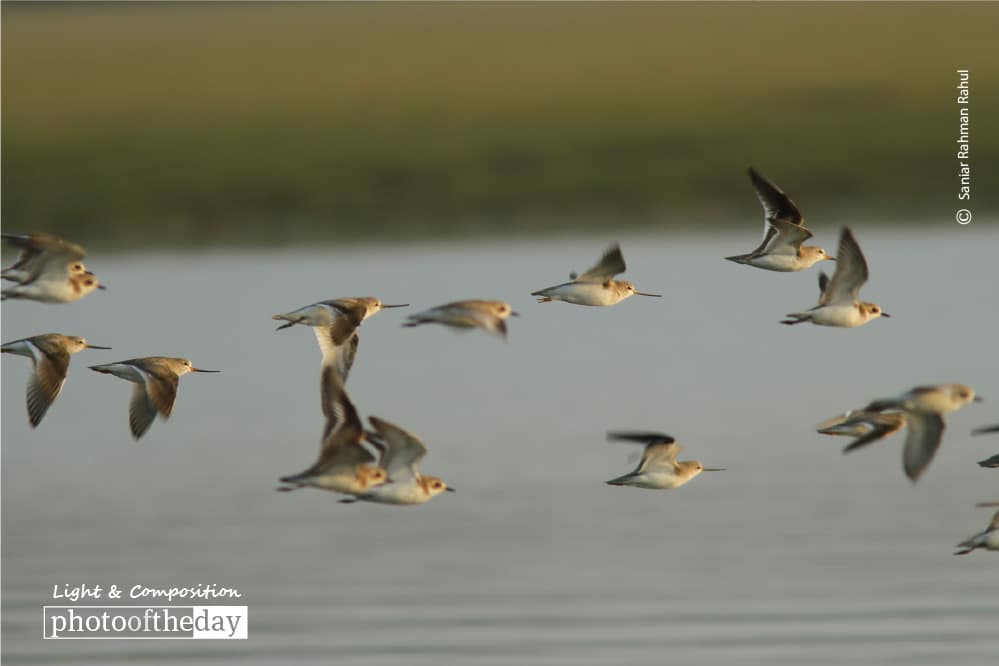
Captured on the shores of Hatiya Island, Bangladesh, this photograph highlights the Terek Sandpiper, a small, migratory wader known for its extensive journey from the Siberian taiga to tropical coasts. The photographer skillfully documents the bird in its natural habitat, capturing the delicate details of its plumage and the quiet intensity of its presence. The image stands out for its sharp focus and natural composition, offering a compelling glimpse into the life of this unique species. By isolating the subject against the coastal environment, the photographer emphasizes both the fragility and the resilience of migratory wildlife, earning recognition for its technical precision and aesthetic grace.
Saniar Rahman Rahul
Based in Dhaka, Bangladesh, Saniar Rahman Rahul is an accomplished Art Director at Grey Worldwide with a deep-rooted passion for visual storytelling. His journey into photography began in childhood, inspired by his father, and was later refined through his extensive professional background in graphic design and advertising. Since winning his first major award in 2010, Rahul has balanced a successful career in the global advertising industry with a dedicated pursuit of wildlife and nature photography, consistently demonstrating a keen eye for detail and a sophisticated approach to composition.
Resonance Score Breakdown
Transparency Note: The resonance score (13.0/20) is calculated based on social engagement metrics collected before the award announcement.
Expert Photography Reviews · 6
The Salt on the Skin
The taste of the sea is not just salt; it is the sharp, metallic tang of distance. I remember standing on a shoreline where the wind felt like wet wool against my cheeks, heavy and insistent.
Read the reflection →The Weight of the Journey
There is a quiet dignity in the traveler who carries only what is necessary. We often measure our lives by the weight of what we accumulate, yet the most profound journeys are those stripped down to the essential.
Read the reflection →Reviews & Comments
Share your thoughts about this award-winning photograph. Your reviews contribute to the community engagement score.
The shutter speed caught the exact millisecond the sandpiper’s rhythm synced with the tide. It’s a perfect tracking shot, frozen. The bird isn’t just standing; it’s waiting for the next beat of the ocean. I’ve spent hours watching migratory footage, but this frame holds a tension no video could replicate. The focus is razor-sharp, isolating the subject against the Hatiya coast. It’s the kind of frame an editor keeps because the cut would’ve been a mistake.
Before the eye identifies the sandpiper, a sudden stillness settles in the chest. It’s the weight of that immense, lonely migration pressing against the ribs. I’ve spent minutes tracing the curve of its beak, feeling a strange, hollow ache for the Siberian taiga it left behind. When I return to this frame, the bird’s quiet resilience anchors me. It doesn’t just exist; it demands I breathe in rhythm with its fragile, salt-sprayed solitude.
You waited in the mud of Hatiya, didn’t you? I can feel the stillness you held while this sandpiper navigated the tide. It’s not just a sharp shot of a bird; it’s the weight of that long journey from Siberia etched into its posture. And that’s what gets me. You didn’t just document a creature; you respected its exhaustion. There’s something honest happening here. You caught the quiet pulse of a life just passing through.
To capture a Terek Sandpiper this close on the Hatiya shoreline, you’ve either spent days belly-down in the mud or you’ve pushed the bird into a corner. I’ve spent enough time in the salt marshes to know that these waders don’t just pose for portraits. The detail in the plumage is sharp, but I find myself wondering if the bird was allowed to forage in peace. It’s a beautiful frame, but was it earned?
The Terek Sandpiper stands isolated on the Hatiya mudflats, yet I find myself distracted by the void surrounding it. Why must we strip the migratory journey of its context to satisfy a clean, aesthetic frame? It’s technically sharp, sure, but it feels lonely in a way that ignores the human presence on these shores. Does the bird’s resilience matter if we erase the landscape it actually inhabits? I’m left feeling cold by this clinical detachment.
One suspects the tide in Hatiya doesn’t offer many second chances. To capture a Terek Sandpiper with such clinical sharpness, one must have spent hours belly-down in the silt, ignoring the damp creeping into one’s bones. I’ve spent enough mornings in the mud to know that focus like this isn’t luck; it’s a tax paid in patience. It’s a quiet, shivering triumph. I find myself genuinely envious of the stillness required to earn this shot.