The Fruit of Love by Bawar Mohammad
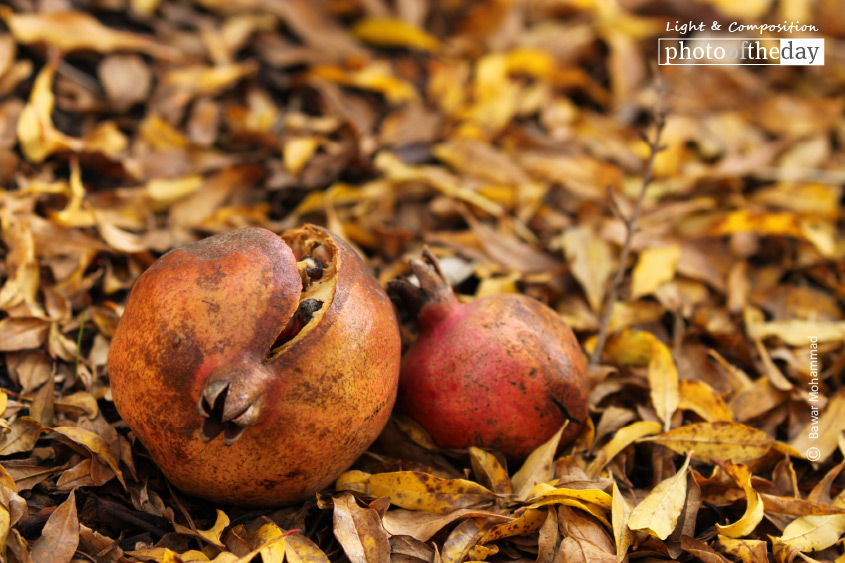
Captured in the lush region of Hawraman, this photograph showcases the celebrated Hawraman pomegranate, renowned for its exceptional quality and flavor. The photographer utilized a 70-200mm lens at a 70mm focal length to isolate the fruit, employing a shallow depth of field at f/4 to emphasize its rich texture against a soft background. By focusing on the intricate details of the pomegranate, the image elevates a simple agricultural subject into a vibrant study of nature's bounty. This work stands out for its clarity and composition, effectively highlighting the cultural and aesthetic significance of this iconic regional harvest.
Bawar Mohammad
Born in 1985 in Duhok, Kurdistan, Bawar Mohammad is a computer science graduate who transitioned into a dedicated career as a journalist and freelance photographer. Based in Duhok, he contributes his expertise to the directorate-general of culture and arts while documenting the diverse landscapes, people, and artistic traditions of Kurdistan. Driven by a passion to share his nation's cultural heritage with a global audience, he actively seeks international collaborations to expand the reach of his evocative, nature-focused photography.
Resonance Score Breakdown
Transparency Note: The resonance score (12.4/20) is calculated based on social engagement metrics collected before the award announcement.
Expert Photography Reviews · 7
The Weight of the Harvest
There is a specific weight to a bowl of fruit left on a table after the house has gone quiet. It is not the weight of the harvest, but the weight of the intention that brought it there.
Read the reflection →The Weight of the Harvest
There is a quiet, ancient gravity to the act of holding something that has spent months gathering the sun. We often forget that a fruit is essentially a vessel, a sealed container of light and rain, waiting for the precise moment when it is heavy enough to let go of the branch.
Read the reflection →Reviews & Comments
Share your thoughts about this award-winning photograph. Your reviews contribute to the community engagement score.
The pomegranate’s skin, a bruised, arterial crimson reminiscent of a late Titian, pulses with a carnal intensity that makes one’s own pulse quicken. It’s not merely fruit; it’s a visceral, saturated rupture against the soft, verdant blur of Hawraman, echoing the quiet, dusty stillness of a Morandi study. I’m utterly captivated by how the light catches those leathery, cracked fissures, turning a simple harvest into a lush, stained-glass meditation on the fragility of life itself.
A pomegranate is a stubborn subject, yet here it’s rendered with a quiet, tactile authority. One wonders how many hours Bawar spent in the Hawraman orchards waiting for the light to settle just so on that skin. It’s a clean, honest study. I’ve spent enough mornings shivering in damp fields to recognize the patience required to isolate such texture. It’s not a lucky snap; it’s a harvest earned through genuine, disciplined stillness. A fine effort.
In Hawraman, the pomegranate isn’t just fruit; it’s a lineage. We look at these split, ruby seeds and we’re seeing the labor of generations. Bawar Mohammad didn’t just photograph a harvest; he listened to the soil. I feel a sudden, sharp ache for the orchards of my own youth when I see that glistening, fragile interior. It’s a portrait of a landscape’s heartbeat, captured with such tenderness that it feels like a secret shared between friends.
The pomegranate’s geometry dominates the frame. Its spherical mass creates a rigid fulcrum, forcing the eye to navigate the intricate, fractured skin. The shallow depth of field isolates the subject, yet the background blur lacks the necessary tension to anchor the composition. It’s technically precise, but it doesn’t quite hold the weight of the frame. I’ve grown tired of such predictable isolation. The structure is sound, but the visual architecture remains fundamentally static.
Most close-ups of fruit are just catalog fodder, but this pomegranate feels heavy with history. By isolating the ruptured skin against that soft, blurred Hawraman green, Bawar forces us to confront the raw, visceral reality of the harvest. It’s not just a study of texture; it’s a quiet, aching portrait of a region’s soul. I’ve seen thousands of macro shots, but this one actually makes me hungry for a place I’ve never been. It’ll endure.
At f/4, the focal plane is razor-thin, isolating the pomegranate’s leathery epidermis with clinical precision. The 70mm compression renders the bokeh as a soft, buttery gradient, yet it’s the micro-contrast on the fruit’s skin that truly arrests me. I’ve spent years studying optics, but the way the light catches those minute, jagged fissures—it’s genuinely breathtaking. The lens has resolved textures the naked eye would miss, turning a simple harvest into a profound, crystalline optical event.
The pomegranate skin pulls tight. It’s a map of Hawraman. I’ve spent minutes watching the light settle into those deep, bruised fissures. The background doesn’t exist. It’s just a soft, green breath behind the fruit. I feel a sudden, sharp ache for the quiet of that orchard. Nothing here is accidental. The empty corner is not empty. It’s a pause. A place for the eye to rest before the harvest begins. It’s enough.