Coconut Selector by Ryszard Wierzbicki
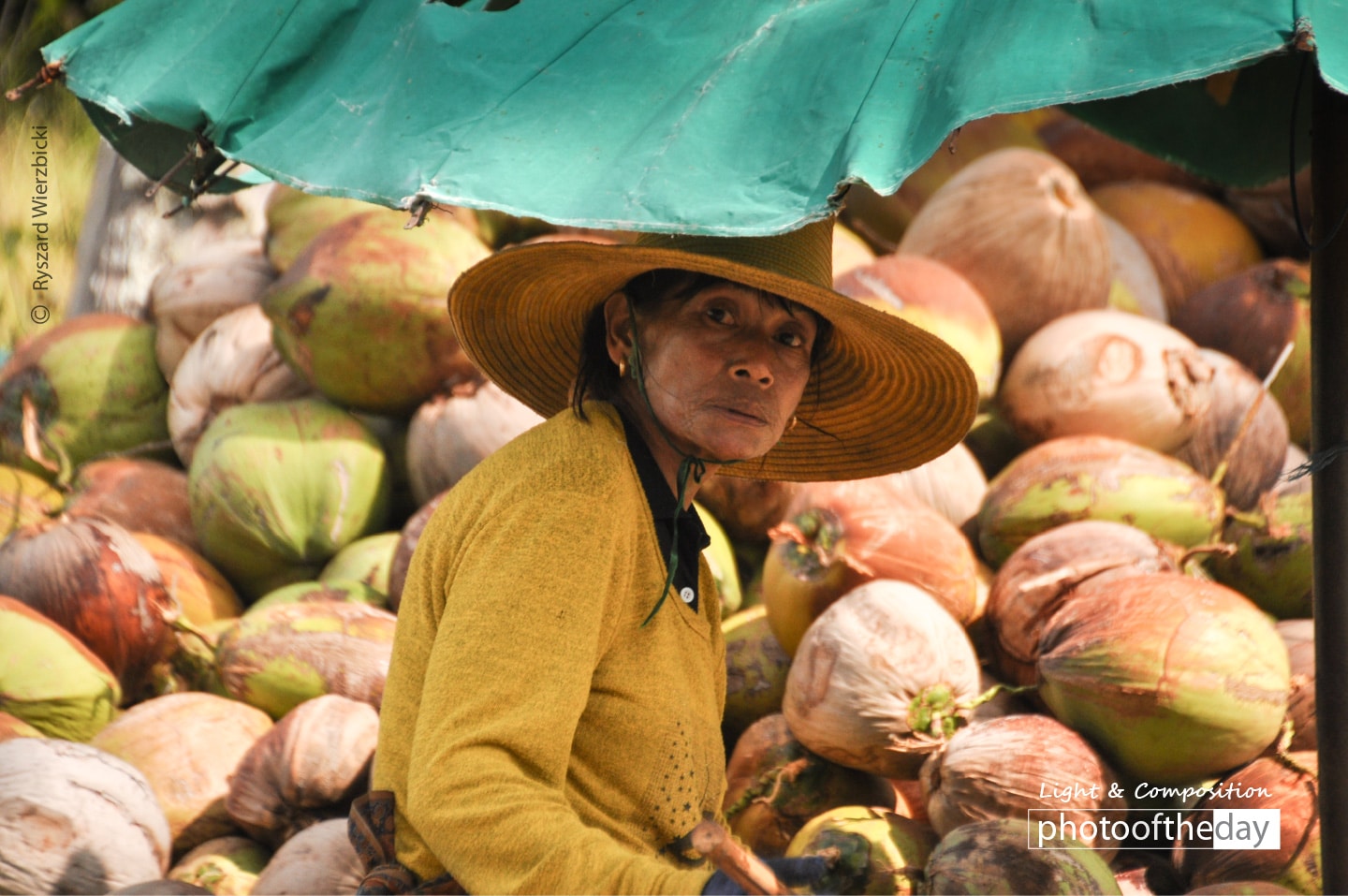
In the quiet, rarely visited region of Khanom, Thailand, the photographer captured a poignant moment of daily labor. Amidst the sweltering 35-degree heat, a local woman meticulously sorts coconuts by size for sale, a task performed with quiet resilience. Guided by a local resident, the photographer was drawn to the authenticity of this scene, far removed from the typical tourist path. The image is award-worthy for its candid portrayal of human industry and the stark, honest connection between the subject and her environment, elevated by the photographer's keen eye for the dignity found in everyday work.
Ryszard Wierzbicki
Born in 1963, Ryszard Wierzbicki is a Polish-born photographer and traveler currently based in Swindon, United Kingdom. After a diverse career spanning social education and marketing, he transitioned into a life of exploration, focusing his lens on the landscapes and cultures of South-East Asia. Beyond his photography, he is an active volunteer for orphan charities and the founder of several travel and photography forums, reflecting his deep commitment to documenting the world with empathy and a spirit of adventure.
Resonance Score Breakdown
Transparency Note: The resonance score (12.2/20) is calculated based on social engagement metrics collected before the award announcement.
Expert Photography Reviews · 7
The Weight of the Harvest
We often mistake stillness for an absence of motion, forgetting that the earth is always turning beneath our feet, heavy with the quiet labor of existence. To hold a thing in one’s hands—a fruit, a stone, a memory—is to measure its worth against the sun.
Read the reflection →The Weight of the Harvest
In the high canopy of a tropical forest, the coconut palm does not rush its fruit; it follows a slow, rhythmic cycle of maturation, drawing minerals from the soil and sunlight from the air until the husk reaches its final, heavy density.
Read the reflection →Reviews & Comments
Share your thoughts about this award-winning photograph. Your reviews contribute to the community engagement score.
Of the thousands of candid shots I’ve reviewed, most vanish because they lack a pulse. Wierzbicki’s work survives because of the woman’s hands. They aren’t just sorting coconuts; they’re mapping a life of relentless, rhythmic labor. I felt a genuine ache in my own shoulders looking at her posture. It’s the weight of the fruit against the heat that anchors this piece. It’s not just a scene; it’s a document of endurance that will matter in thirty years.
There’s a quiet dignity in how she handles those coconuts, but I can’t help but wonder if the photographer’s presence disrupted the rhythm of her labor. It’s a clean composition, yet I’m left questioning the proximity. Did he wait long enough to become part of the background, or was this interaction forced? I’ve spent weeks in blinds just to avoid being noticed; I wish he’d shown that same restraint here. It’s a beautiful scene, but was it earned?
In the sweltering heat of Khanom, we find a woman defined by the rhythm of her labor. She doesn’t just sort coconuts; she negotiates with the earth. I’ve spent my life listening to stories, and here, the silence is heavy with dignity. It’s a quiet, honest exchange between the subject and the sun. Looking at her hands, I feel a sudden, sharp ache for the simplicity of her purpose. It’s a photograph that asks to be returned to.
The lens resolves the fibrous texture of those husks with clinical precision, pushing right against the diffraction limit. It’s a masterclass in managing the focal plane amidst such harsh, tropical light. I’m genuinely moved by how the micro-contrast renders the sweat on her brow; it’s a visceral, optical honesty that feels almost tactile. The bokeh, a function of a wide aperture, isolates her industry beautifully. It’s rare to see such technical rigor applied to such quiet, human labor.
The heat in Khanom is palpable, but it’s the hands that get me. She’s sorting those coconuts with a rhythm that feels ancient. Wierzbicki didn’t blink. If he’d fired a fraction later, the geometry of the pile would’ve shifted, losing that raw, industrial tension. It’s a Winogrand-style observation of labor. You can feel the humidity clinging to the frame. He caught the exact heartbeat of the work. It’s honest, it’s sharp, and it’s perfectly timed.
Before the eye identifies the coconuts, something in the chest tightens. It’s the heat—you can almost feel the humidity pressing against your skin. I’ve returned to this frame three times today, and each time, the woman’s posture triggers a strange, rhythmic fatigue in my own shoulders. It isn’t just labor; it’s the weight of a life measured in husks. When I close my eyes, I still feel that sweltering, quiet stillness clinging to me.
The heat in Khanom isn’t just atmospheric; it’s a physical weight pressing against the frame. Wierzbicki understands that labor is defined by what we hide. Those deep, ink-stained pockets of shade beneath the coconut piles don’t just conceal—they anchor the woman’s exhaustion. I’ve stared at her hands for an hour, and I’m unsettled by how the darkness swallows her effort. It’s a brutal, honest geometry. We aren’t watching a worker; we’re watching time being sorted into dust.