Childhood Days by Hirak Ghosh
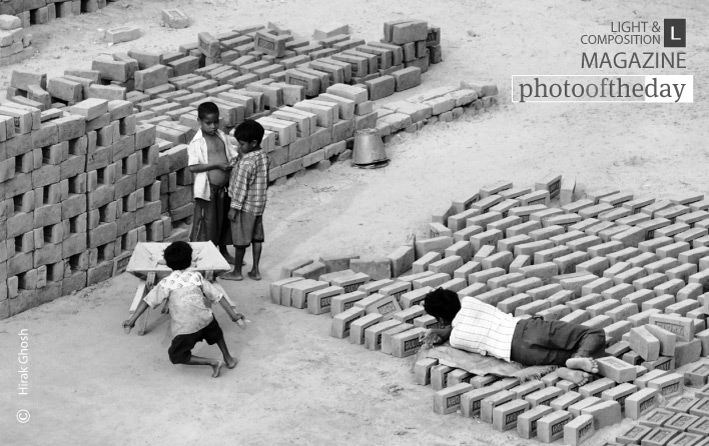
Captured on a warm day in a village near Hooghly, this poignant image emerged when the photographer encountered a scene that demanded documentation. The frame highlights the harsh reality of child labor, contrasting the innocence of youth with the weight of economic necessity. By choosing a 105mm focal length, the photographer isolates the subject, creating an intimate yet powerful narrative that serves as a call to action. The image is award-worthy for its ability to transform a fleeting street encounter into a compelling social commentary, urging viewers to advocate for the education and well-being of children over their labor.
Hirak Ghosh
Hailing from a small village in West Bengal, India, Hirak Ghosh is a 22-year-old student who views photography as his true life passion. He frequently travels to rural areas, dedicating his lens to observing the daily lives and activities of village communities. His work is defined by a deep curiosity for the human condition and a commitment to capturing authentic, often overlooked stories from his surroundings.
Resonance Score Breakdown
Transparency Note: The resonance score (13.8/20) is calculated based on social engagement metrics collected before the award announcement.
Expert Photography Reviews · 6
The Weight of Unfinished Stories
We are taught that childhood is a garden, a place where the sun is meant to linger on unburdened shoulders. Yet, there are roots that grow deep into the soil of necessity long before the branches have a chance to reach for the sky.
Read the reflection →The Grit of Unfinished Play
I remember the taste of red dust on my tongue, the kind that rises when you run barefoot across a dry field in the heat of July. It is a metallic, thirsty flavor that coats the back of the throat, mingling with the smell of sun-baked earth and wilting grass.
Read the reflection →Reviews & Comments
Share your thoughts about this award-winning photograph. Your reviews contribute to the community engagement score.
The ochre dust of Hooghly clings to the boy’s skin like the muted, chalky pigments of a Morandi still life, yet it’s the searing, bruised indigo of his shirt that truly breaks one’s heart. It’s a colour of shallow tidal water at dusk, clashing violently against the sun-bleached earth. I’ve found myself weeping at the sheer, cruel dissonance of these tones; they don’t just describe poverty, they vibrate with the heavy, suffocating heat of lost childhoods.
A 105mm lens is a polite distance, yet it’s close enough to feel the grit. One wonders if the photographer spent the afternoon in the dust or merely passed through. It’s a decent frame, but I’m left questioning the commitment. Did he return when the light wasn’t so convenient? I’ve spent enough days in the heat to know that true stories aren’t found in a single afternoon. It’s a start, but it’s cheap.
The 105mm compression flattens the depth, forcing the subject against the brickwork. It’s a rigid, claustrophobic geometry. The vertical lines of the wall anchor the frame, yet the boy’s posture disrupts the verticality, creating a necessary spatial tension. I’ve grown tired of sentimental street work, but the structural discipline here doesn’t falter. The weight of the basket acts as a fulcrum, balancing the composition perfectly. It’s a cold, precise architecture that finally commands my respect.
The light here isn’t just illumination; it’s a heavy, humid weight pressing against the skin. Hirak stood in the stillness of that Hooghly afternoon, listening to the silence of a childhood interrupted. I’ve felt that same thick, stagnant air in the fields, where time seems to stop. It’s heartbreaking, really. By choosing that 105mm lens, he didn’t just capture a scene; he held his breath, waiting for the land to reveal its quiet, aching truth.
Shadows here don’t merely frame the child; they consume the periphery, forcing us into the suffocating density of his labor. It’s a heavy, claustrophobic silence. When I look at the way the darkness clings to his skin, I feel a sudden, sharp ache in my own chest. Ghosh hasn’t just captured a boy; he’s captured the theft of time itself. It’s a brutal, necessary confrontation with the light that refuses to offer any comfort.
Of the thousands of street shots I’ve reviewed, most vanish within a week. What saves this isn’t just the subject; it’s the 105mm compression that forces the viewer into the boy’s weary gaze. I’ll admit, the weight of his expression actually made me look away for a second. It’s the rare frame that survives thirty years because it doesn’t just document labor—it traps the viewer in a quiet, uncomfortable intimacy that demands we finally pay attention.