Age Knows No Limit by Afnan Naser Chowdhury
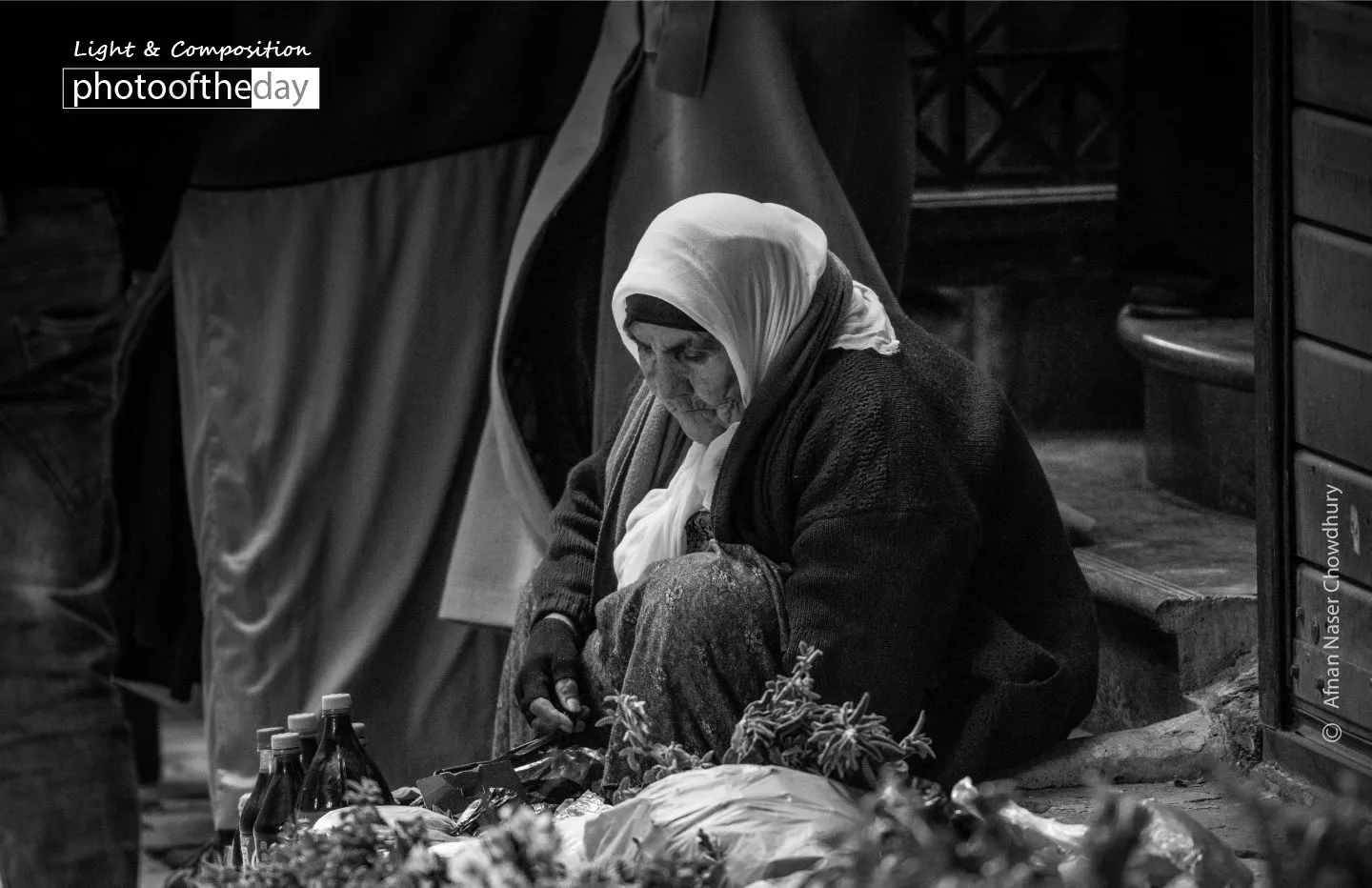
Captured within the bustling street markets of Jerusalem’s Muslim Quarter, this poignant portrait serves as a testament to the resilience of the human spirit. The photographer utilized a wide aperture to isolate the subject against the textured, historic backdrop, emphasizing the dignity and unwavering dedication of the individual. By documenting the strength of those facing profound hardship, the image transcends mere street photography to become a powerful narrative on endurance and cultural heritage. Its ability to evoke deep empathy while maintaining a striking, authentic composition makes this a truly award-worthy piece of visual storytelling.
Afnan Naser Chowdhury
Based in Virginia, Afnan Naser Chowdhury discovered his passion for photography while pursuing his Bachelor’s degree at North South University. With a lifelong appreciation for nature and painting, he brings a unique, artistic perspective to his work. Beyond his photographic pursuits, he is a dedicated technology enthusiast who enjoys exploring the latest digital innovations and connecting with fellow creatives within the international photography community.
Resonance Score Breakdown
Transparency Note: The resonance score (12.9/20) is calculated based on social engagement metrics collected before the award announcement.
Expert Photography Reviews · 4
The Weight of Years
I was at the grocery store this morning, struggling to reach a box of tea on the top shelf. An older woman standing nearby saw me stretching and just reached up, grabbed it, and handed it to me with a small, knowing smile.
Read the reflection →The Weight of Unspoken Years
Why do we assume that the passage of time is a subtraction, a slow erosion of the self until only a ghost remains? We look at the lines etched into a face and call them maps of what has been lost, yet perhaps they are actually the architecture of what has been gained.
Read the reflection →Reviews & Comments
Share your thoughts about this award-winning photograph. Your reviews contribute to the community engagement score.
The shallow depth of field isolates this man against the stone, but does it strip him of his context? I find myself wincing at the romanticization of his struggle. Why must his dignity be framed through the lens of our pity? By blurring the market, Chowdhury turns a living, breathing Jerusalem into a mere aesthetic backdrop. Is this man a person, or just a prop for a narrative of endurance we’ve already decided to consume?
There’s a stillness here that reminds me of waiting in a blind for a snow leopard. You can’t force that kind of presence; it’s earned through quiet observation, not intrusion. I’m genuinely moved by the way the subject’s gaze anchors the frame. It’s an honest encounter, devoid of the frantic, invasive energy I see in so much modern work. Chowdhury didn’t extract this moment; he simply let it exist. That’s rare, and it’s beautiful.
You waited for that light to hit his face, and it shows. There’s a weight in his eyes that I’ve seen in too many places, but you didn’t look away. Because you held that shutter at 1/15th, you caught the stillness in a chaotic market. It’s not just a portrait; it’s a conversation. I felt a lump in my throat looking at his hands. You didn’t just take a picture; you felt his endurance.
At 1/15th of a second, Chowdhury flirts with the threshold of legibility. It’s a relief to see the background dissolve into a painterly smear rather than a clinical, sharp distraction. I’m genuinely moved by how the motion blur softens the weight of the market’s history. Why resolve the stone when the atmosphere is what truly lingers? This approach is closer to Hiroshi Sugimoto’s long-exposure theatres than to conventional street photography. It’s beautifully, intentionally imprecise.