Loneliness by Samira Rahmati
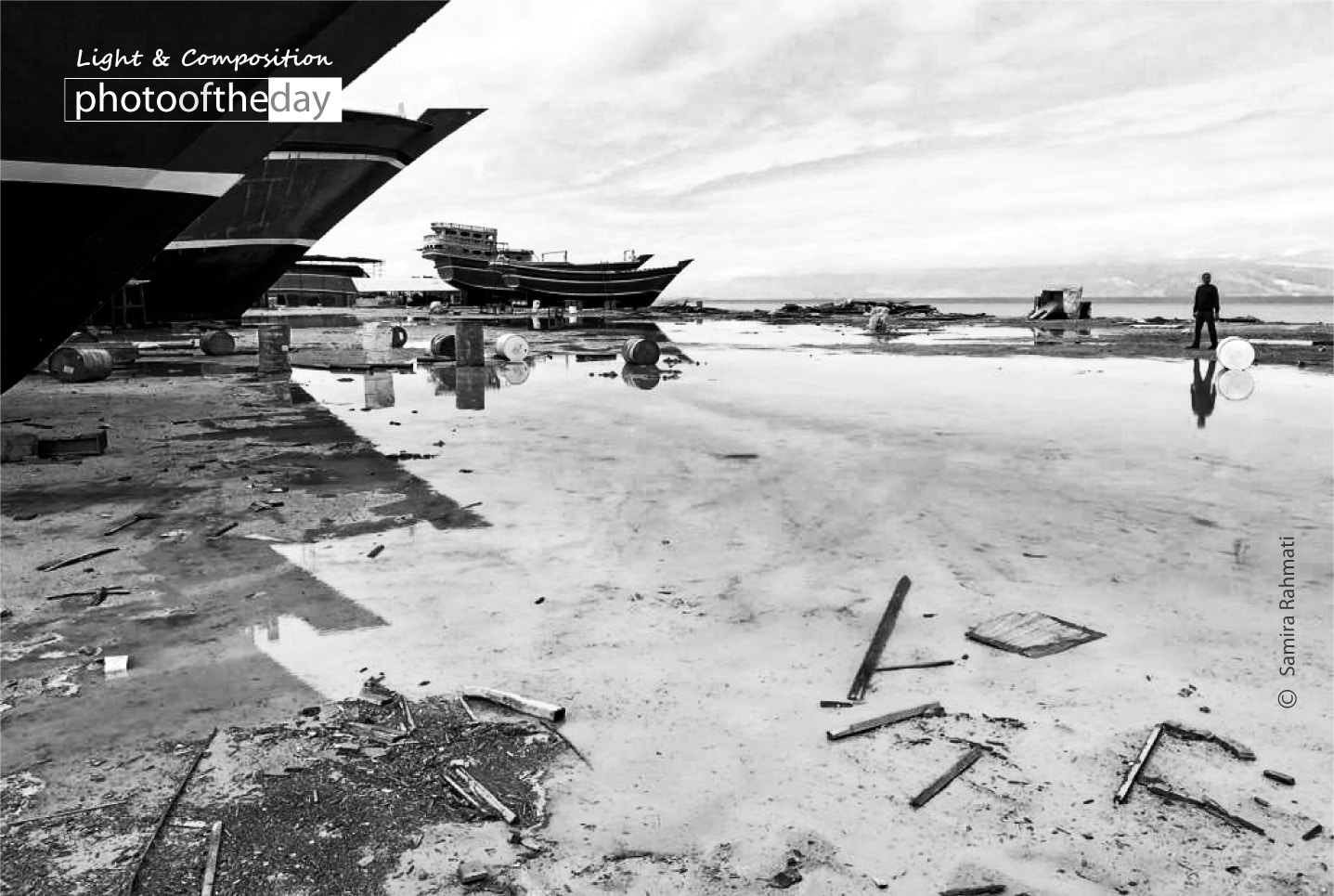
Captured in the haunting shipyard of Gouran, Qeshm, this photograph evokes the profound isolation of vessels left to decay. The photographer frames a wooden ship against the stark landscape, drawing a parallel to the imagery of a forgotten Noah's Ark. By focusing on the weathered textures and the quiet, desolate atmosphere of the shipyard, the image transforms a site of industrial decline into a poignant meditation on mortality and solitude. Its award-worthy quality lies in the evocative composition and the ability to find a deep, narrative stillness within a place of abandonment.
Samira Rahmati
Born in Iran and based in Tehran, Samira Rahmati is an emerging photographer whose work bridges the gap between visual storytelling and cultural documentation. With an academic background in photography, Persian language, and literature, she currently contributes her talents to Young Hamshahri Magazine. Her photography serves as a lens into the heart of Iranian life, culture, and traditions, reflecting a deep-seated passion for capturing the essence of people and nature through a thoughtful, observant perspective.
Resonance Score Breakdown
Transparency Note: The resonance score (9.9/20) is calculated based on social engagement metrics collected before the award announcement.
Expert Photography Reviews · 4
The Weight of Salt and Time
I keep a small, rusted iron key in a velvet pouch, though I have long since forgotten which door it once opened. It is heavy for its size, cold to the touch, and carries the faint, metallic scent of a house that no longer exists.
Read the reflection →The Architecture of Silence
Seneca once remarked that we are often more frightened than hurt, and we suffer more in imagination than in reality. He understood that the mind is a restless architect, prone to building monuments out of our own absences and fears.
Read the reflection →Reviews & Comments
Share your thoughts about this award-winning photograph. Your reviews contribute to the community engagement score.
Gouran’s skeletal hulls don’t merely decay; they negotiate with the void. Rahmati understands that shadow isn’t a void, but the vessel’s final, silent argument against the sun. I’ve stared at these splintered ribs until my own pulse slowed to match their stillness. It’s a brutal, honest confrontation with entropy. When the light retreats from those weathered planks, it doesn’t leave emptiness. It leaves a heavy, lingering truth about what we abandon to the dark.
You stood in that shipyard and didn’t just look at the wood; you felt the weight of what’s been left behind. It’s quiet, isn’t it? I’ve spent enough time in places like Gouran to know that silence isn’t empty. It’s heavy. You waited for the light to hit those ribs just right, and I can feel the ache of that abandonment. There’s something honest happening here. You didn’t force the story. You let the ship tell it.
The hull’s diagonal thrust anchors the frame, creating a necessary spatial tension against the horizon. It’s a rigid geometry that prevents the decay from dissolving into mere sentiment. The negative space above the vessel provides the only relief from the heavy, weathered textures below. I’m genuinely unsettled by how the ship’s prow cuts the picture plane. It doesn’t just sit there; it demands the eye’s total submission to its stark, structural isolation. The frame holds.
Gouran’s shipyard is a graveyard, but Samira caught the ghost. That wooden hull looms like a stranded beast, and honestly, it makes my chest tighten. It’s not just decay; it’s the silence of a frame held perfectly still. One tenth of a second later and the light would’ve lost that sharp, biting edge against the sand. She didn’t hesitate. She saw the stillness, clicked, and trapped the isolation before the wind shifted. That’s the work.