A Rainy Day by Rahat Azim Chowdhury
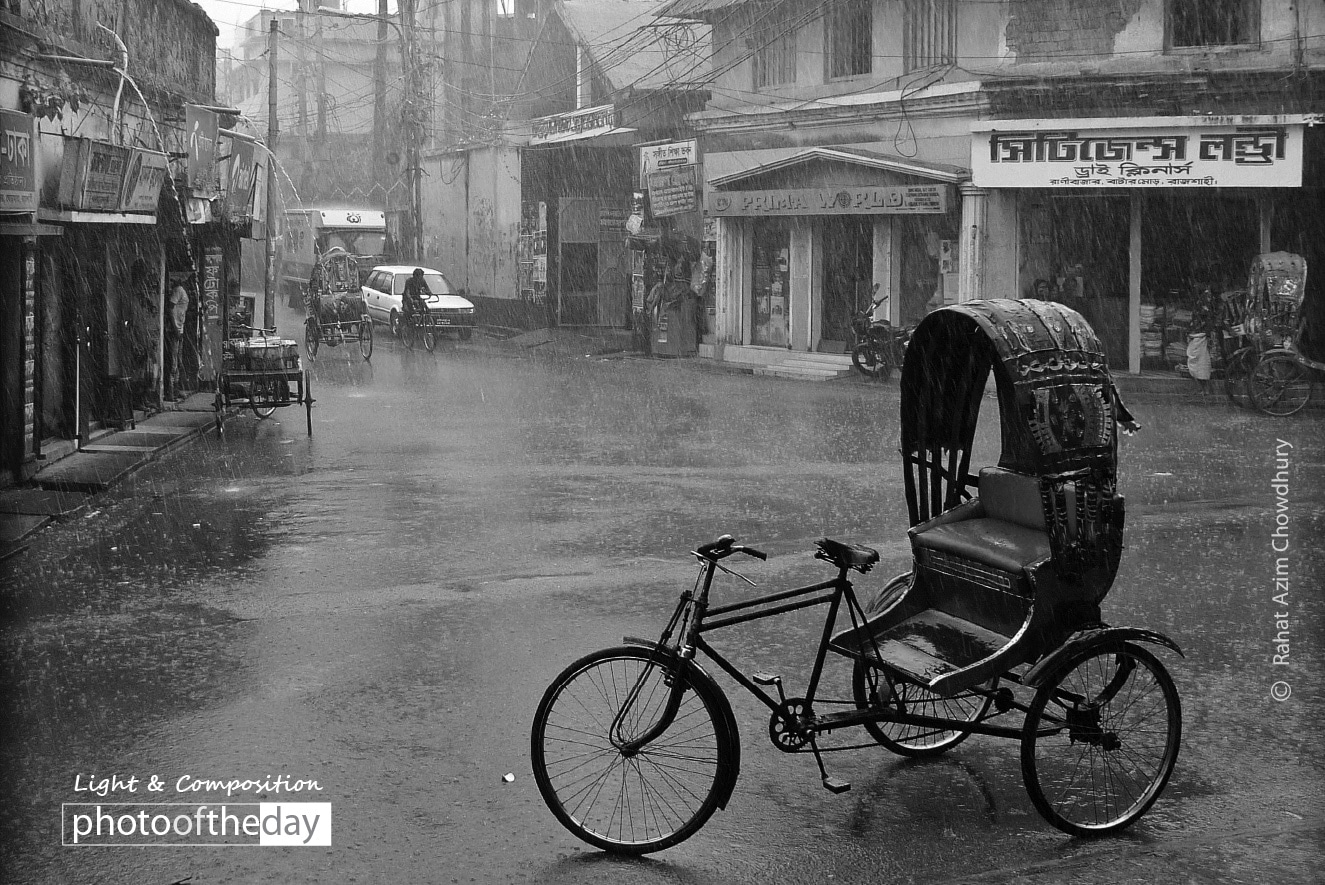
During a period of heavy, persistent rainfall in Rajshahi, the city’s bustling rhythm ground to a sudden, atmospheric halt. Seeking to document this transformation, the photographer focused on a lone rickshaw abandoned in the downpour. This composition captures a poignant sense of emptiness, juxtaposing the raw, relentless power of nature against the silenced, artificial landscape of urban life. The image is award-worthy for its evocative storytelling and its ability to find profound emotional resonance in a quiet, fleeting moment of urban stillness, effectively bridging the gap between documentary observation and artistic expression.
Rahat Azim Chowdhury
Born in 1984 and based in Dhaka, Bangladesh, Rahat Azim Chowdhury is a computer engineer who has cultivated a deep passion for photography. Inspired by peers and a commitment to self-directed learning, he has refined his craft through formal education at the PRISM Photography Institute and extensive study of global photographic works. His portfolio spans diverse genres, including street, documentary, and architectural photography, all unified by a desire to explore the social patterns and lifestyles of third-world nations. He remains dedicated to developing a unique visual signature that prioritizes artistic exploration over commercial gain.
Resonance Score Breakdown
Transparency Note: The resonance score (11.5/20) is calculated based on social engagement metrics collected before the award announcement.
Expert Photography Reviews · 7
The Watershed of Silence
When a heavy rain saturates the soil, the earth reaches a point of total intake; the pores of the ground fill until the land can no longer drink, and the water begins to move across the surface, seeking the lowest path.
Read the reflection →The Silence of the Storm
I remember sitting in a small cafe in Rajshahi when the sky simply gave up. It wasn't a gentle shower; it was a wall of grey that turned the streets into rivers and sent everyone scurrying for cover.
Read the reflection →Reviews & Comments
Share your thoughts about this award-winning photograph. Your reviews contribute to the community engagement score.
Rain doesn’t wash the world clean; it merely obscures the architecture of our indifference. In this rickshaw, abandoned to the deluge of Rani Bazar, I don’t see a quiet moment. I see a surrender. The shadows here aren’t hiding; they’re devouring the frame, forcing us to confront the void left by human absence. It’s haunting, really. I’ve stared at this darkness for an hour, and it’s finally stopped asking questions and started demanding an answer.
Before the eye identifies the rickshaw, a sudden stillness settles in the chest. The rain’s relentless gray creates a sensory deprivation that forces the pulse to slow. I’ve felt this specific, hollow ache before—the way a city’s silence feels heavier than its noise. Returning to it a year later, the dampness seems to seep into my own skin. It’s a lonely, beautiful suspension of time that follows me into sleep, long after the frame fades.
The rain didn’t just fall; it claimed Rani Bazar, turning the streets into a blurred, grey sanctuary. I feel a strange, cold shiver looking at that abandoned rickshaw, shivering in the deluge. It’s as if the city finally stopped holding its breath. He stood there in the downpour, waiting for the urban noise to dissolve into this singular, wet silence. It’s a rare, holy stillness that only reveals itself when we’re willing to get soaked.
You waited for the city to give up, and that’s where the truth hides. Most people run from the rain, but you stood there until the rickshaw became a ghost of the life it usually carries. It’s lonely, and honestly, it makes me shiver a bit. You didn’t force the mood; you just let the downpour strip away the noise. And that’s the hardest part of the job. You found the quiet heart of Rajshahi.
Rain turns a bustling Rajshahi street into a stage for a lonely rickshaw. It’s a classic trope, isn’t it? The abandoned vehicle suggests a narrative of hardship, yet I feel a prickle of discomfort. Why does the photographer romanticize this stillness while the driver remains invisible? Whose struggle becomes our aesthetic backdrop? I’d prefer to see the person behind the handlebars rather than this hollow, rain-slicked shell. Does the frame exclude the human cost for the sake of mood?
Rain turns the streets of Rajshahi into a smear of grey, and I’m genuinely drawn to how the rickshaw dissolves into the deluge. It’s closer to a Hiroshi Sugimoto long-exposure than standard documentary work. Why resolve the metal frame when the blur captures the weight of the monsoon better? Chowdhury chose to let the rain dictate the clarity, and it’s far more honest than a sharp, sterile shot. I love the surrender here.
Rain in Rajshahi isn’t just weather; it’s a curtain falling on the city’s pulse. That abandoned rickshaw? It’s a ghost in the downpour. I love how the frame holds its breath. If Chowdhury had waited another heartbeat, the rain’s texture would’ve blurred into static. He caught the silence before the street reclaimed it. It’s a lonely, sharp observation. One tenth of a second later and the mood dissolves. He nailed the timing. It’s pure, cold poetry.