Symbol of a Tradition by Hirak Ghosh
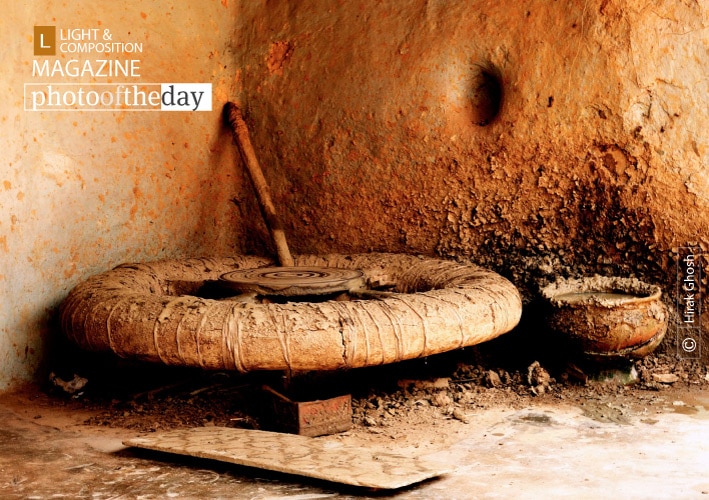
Captured in the historic village of Panchmura, West Bengal, this image documents the enduring legacy of traditional terracotta craftsmanship. The photographer focused on the potter’s wheel, an essential tool that serves as a profound symbol of Bengal’s ancient artistic heritage. By utilizing a deliberate exposure of 1/6 second, the photographer captured the essence of this manual process, highlighting the textures and cultural significance of the craft. The image is award-worthy for its evocative storytelling, transforming a simple functional object into a poignant tribute to the artisans who sustain these vital, centuries-old traditions through their daily labor.
Hirak Ghosh
Based in Hooghly, West Bengal, Hirak Ghosh is a dedicated student and emerging photographer whose work is deeply rooted in the rural landscapes of India. Driven by a profound passion for the medium, he frequently travels to remote villages to document the daily lives and activities of local communities. His photography serves as an intimate observation of human tradition, reflecting his commitment to capturing the authentic spirit and cultural heritage of his home region.
Resonance Score Breakdown
Transparency Note: The resonance score (11.7/20) is calculated based on social engagement metrics collected before the award announcement.
Expert Photography Reviews · 3
The Earth’s Slow Breath
To touch the clay is to hold the memory of the mountain before it was broken by the rain. We often forget that we are made of the same stubborn, yielding dust, shaped by the friction of living.
Read the reflection →The Earth Beneath My Nails
The smell of rain hitting dry, sun-baked clay is a scent that travels straight to the marrow of my bones. It is a heavy, metallic sweetness, the smell of the earth waking up from a long, thirsty sleep.
Read the reflection →Reviews & Comments
Share your thoughts about this award-winning photograph. Your reviews contribute to the community engagement score.
Most entries in this category rely on static, clinical documentation. Ghosh avoids that trap. By choosing a 1/6 second shutter speed, he turns the spinning clay into a blurred, rhythmic heartbeat. It’s the motion that makes this endure; it feels like the potter’s hands are still working right in front of me. I’ve seen thousands of craft photos, but this one captures the actual pulse of the tradition, not just the object itself. It’s hauntingly alive.
The wheel’s rotation creates a necessary blur, grounding the frame in kinetic energy. It’s a disciplined choice. The terracotta mass occupies the lower quadrant, providing a stable fulcrum against the radial motion. I’m genuinely struck by how the f/11 depth keeps the texture sharp while the motion persists. The composition doesn’t collapse under the weight of its own history. It holds. The negative space above the wheel is perfectly calibrated. It’s a rare, structural success.
The potter’s wheel spins, yet it’s the encroaching gloom that anchors the soul. Ghosh doesn’t merely document clay; he forces us to confront the friction between creation and the inevitable decay of time. That 1/6 second exposure blurs the motion into a ghostly, rhythmic pulse. I’ve stared at these shadows for an hour, and honestly, they feel like a heavy shroud over a dying ritual. It’s a haunting, beautiful resistance against the silence of history.