In the Workshop by Afnan Naser Chowdhury
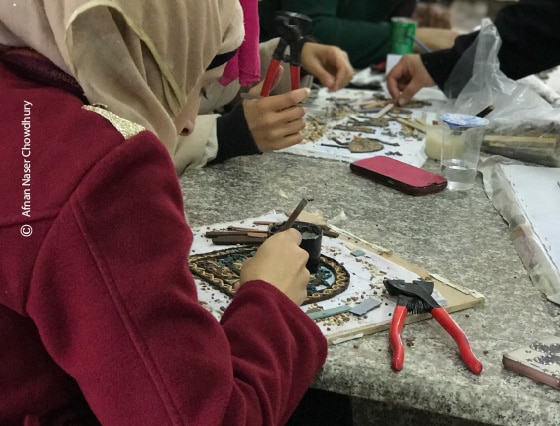
Captured within the heart of a traditional Jordanian workshop, this image offers an intimate glimpse into the region's renowned ceramic artistry. The photographer utilized a 70mm focal length to isolate the intricate details of the craft, balancing the ambient light to highlight the texture and sophistication of the clay works. By focusing on the artisan's environment, the image documents a cultural legacy that stands among the most refined in the Middle East. The composition is award-worthy for its ability to transform a functional workspace into a compelling visual narrative, emphasizing the quiet dignity of traditional craftsmanship.
Afnan Naser Chowdhury
Based in Virginia, Afnan Naser Chowdhury discovered his passion for photography while pursuing his Bachelor’s degree at North South University. His artistic vision is deeply rooted in a childhood fascination with nature and painting, which informs his current documentary approach. Beyond his photographic pursuits, he maintains a keen interest in technology and enjoys engaging with the global creative community, consistently seeking to bridge the gap between traditional craftsmanship and modern visual storytelling.
Resonance Score Breakdown
Transparency Note: The resonance score (12.8/20) is calculated based on social engagement metrics collected before the award announcement.
Expert Photography Reviews · 3
The Earth Under My Nails
There is a specific, cool dampness to river clay that stays in the creases of your palms long after you have washed them. It smells of deep, undisturbed places—a mixture of wet stone and the metallic tang of iron buried in the soil.
Read the reflection →The Weight of Clay
I keep a small, unglazed bowl on my desk, its rim chipped from a fall that happened years ago. It is heavy, dense with the earth it was pulled from, and it bears the faint, rhythmic indentations of fingers that worked it into shape long before I held it.
Read the reflection →Reviews & Comments
Share your thoughts about this award-winning photograph. Your reviews contribute to the community engagement score.
The 70mm compression flattens the workshop into a precise grid of clay and shadow. It’s a rigid architecture. The artisan’s hands anchor the lower quadrant, providing a necessary fulcrum against the chaotic texture of the shelves. I’m genuinely struck by how the negative space doesn’t collapse under the weight of the objects. The frame holds. It’s a disciplined study in spatial tension where every ceramic form occupies its designated coordinate with absolute, unyielding intent.
Before the eye identifies the clay, something in the chest settles. It’s the stillness of the workshop that catches me; I feel my own pulse slowing to match the artisan’s rhythm. When I return to this a year later, the dust motes suspended in that amber light still feel like a held breath. It’s a quiet, tactile ache. I’ve never touched that clay, yet my fingertips remember the grit of it. It’s hauntingly grounding.
The clay doesn’t merely sit here; it waits in the gloom, heavy with the artisan’s silence. Chowdhury understands that true craft isn’t found in the light, but in the murky recesses where the hands move unseen. I’ve stared at these shadows until my own pulse slowed to match the kiln’s heat. It’s a somber, tactile weight. When the darkness is this thick, you realize the workshop isn’t just a room—it’s a grave for time itself.