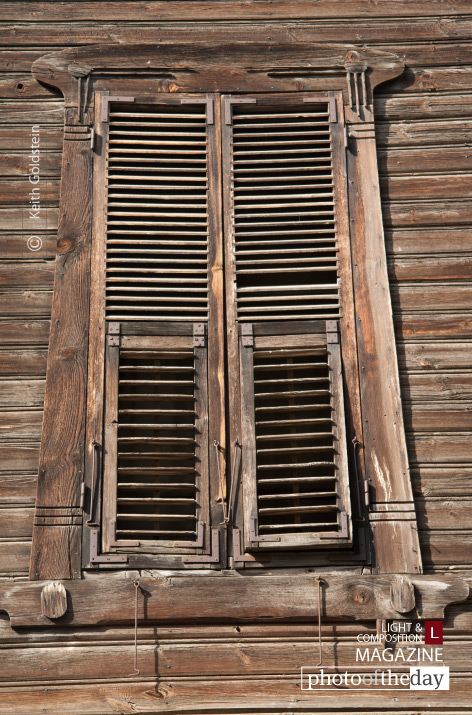
Window by Keith Goldstein
Captured on the quiet island of Heybeliada, this photograph focuses on the weathered, textured frame of an abandoned traditional wooden home. The photographer utilized a 64mm focal length to isolate the window, emphasizing the interplay of light and decay against the aged timber. By choosing a narrow aperture of f/8, the image achieves a sharp, deliberate clarity that highlights the passage of time. This piece is award-worthy for its evocative stillness and the photographer's ability to transform a simple architectural remnant into a poignant narrative of history and neglect, inviting the viewer to contemplate the stories held within the silent, peeling walls.
Keith Goldstein
Born in Brooklyn in 1957, Keith Goldstein is a seasoned fine art photographer based in the Hamilton Heights neighborhood of New York City. After earning his BFA from the School of Visual Arts and an MFA from the Cranbrook Academy of Art, he developed a deeply emotive approach to the medium, often favoring a minimalist kit to maintain creative freedom. With a career spanning over four decades, Goldstein has exhibited extensively and contributed his work to a diverse array of international publications, book covers, and corporate projects.
Resonance Score Breakdown
Transparency Note: The resonance score (11.4/20) is calculated based on social engagement metrics collected before the award announcement.
Expert Photography Reviews · 3
The Salt on the Wood
The smell of rain hitting parched, sun-baked timber is a scent that travels straight to the marrow. It is a sharp, metallic sweetness, like iron filings mixed with dust.
Read the reflection →The Wisdom of Weathered Wood
There is a quiet dignity in things that have been left behind. When a structure is no longer asked to shelter, it begins to return to the earth, shedding its layers like a tree losing its leaves to the coming winter.
Read the reflection →Reviews & Comments
Share your thoughts about this award-winning photograph. Your reviews contribute to the community engagement score.
1/60sec at f/8, ISO 100, 64mm. It’s a calculated choice. The f/8 aperture provides the necessary depth to render the wood grain’s decay with clinical precision. At 64mm, the compression flattens the frame against the wall, removing unnecessary spatial ambiguity. I’ve spent years looking at architectural studies, but the sheer tactile honesty here actually makes me pause. It’s technically sound. Goldstein didn’t waste the sensor’s potential. He understood the light and didn’t overcomplicate the math.
Most entries in this category rely on heavy-handed nostalgia, but Goldstein’s frame avoids that trap. By choosing f/8, he forces us to confront the wood’s decay with clinical precision rather than romanticizing it. I’ve seen thousands of windows, yet this one haunts me; it’s the way the light clings to the peeling paint that makes me feel the island’s isolation. It’s a quiet, brutal document of time that will still matter thirty years from now.
Decay isn’t merely aesthetic; it’s a philosophical confrontation. Goldstein’s window frame on Heybeliada doesn’t just age—it surrenders to the encroaching dark. I find myself shivering at the way the shadows swallow the timber’s grain, turning wood into a tomb for lost time. It’s a brutal, honest silence. When light hits that peeling paint, it doesn’t illuminate; it interrogates. It’s a heavy, necessary reminder that we’re all just waiting for the shadows to finally claim us.
Thank you!