Poverty by Ryszard Wierzbicki
Captured in the streets of Bodh Gaya, India, this poignant portrait documents the harsh reality of poverty. The photographer faced the profound ethical dilemma often encountered in street photography: the tension between documenting human suffering and the desire to intervene. Choosing to capture the moment, the photographer balanced the technical requirements of the shot with a compassionate response, offering a donation to the subject. The image is award-worthy for its raw emotional honesty and the photographer's ability to transform a difficult, fleeting encounter into a powerful narrative that invites the viewer to reflect on the human condition.
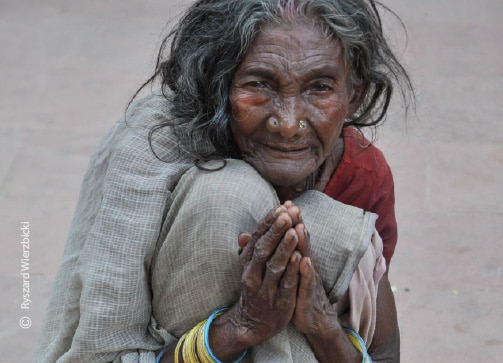
Ryszard Wierzbicki
Born in 1963, Ryszard Wierzbicki is a Polish-born photographer and traveler currently based in Swindon, United Kingdom. After a diverse professional career in social sciences, education, and marketing, he transitioned to a life dedicated to photography, travel, and scuba diving instruction. His work is deeply informed by his extensive explorations of South-East Asia and his commitment to humanitarian causes, including volunteering for orphanages. As the founder of the travel and photography forums Instant Travelling and World Around, he actively fosters a global community of explorers and visual storytellers.
Resonance Score Breakdown
Transparency Note: The resonance score (12.7/20) is calculated based on social engagement metrics collected before the award announcement.
Expert Photography Reviews · 4
The Weight of a Name
I keep a small, rusted key in a velvet pouch, though I have long since forgotten which door it once opened. It is heavy for its size, cold against the palm, and carries the phantom weight of a home that no longer exists.
Read the reflection →The Architecture of Neglect
We often speak of the city as a collection of buildings, but it is more accurately a ledger of our collective priorities.
Read the reflection →Reviews & Comments
Share your thoughts about this award-winning photograph. Your reviews contribute to the community engagement score.
Darkness here doesn’t merely frame the subject; it consumes the periphery, forcing us to confront the void where dignity is stripped away. Wierzbicki’s shadows aren’t empty—they’re heavy with the silence of Bodh Gaya. I’ve stared at this man’s eyes until I felt a cold, sharp ache in my own chest. It’s a brutal composition. By refusing to illuminate the background, the photographer demands we acknowledge that suffering isn’t a spectacle, but a weight we cannot escape.
You didn’t just take a picture; you stood there in the dust of Bodh Gaya and looked this person in the eye. I feel a knot in my stomach looking at their expression. It’s raw, and it’s heavy. You didn’t hide behind the lens or look away. And because you stayed, you caught a truth that hurts to see. You’ve done the hard work of being human first. That’s why this matters. I respect that.
Does a donation truly absolve the photographer of the power imbalance inherent in this frame? I look at this child’s hollowed gaze and feel a sharp, visceral discomfort. It’s too easy to aestheticize another’s hunger for a trophy. Why does the composition prioritize the texture of the subject’s suffering over their agency? If the photographer’s presence didn’t change the reality of this street, why does the image feel so staged for our consumption?
Wierzbicki’s choice to let the motion blur soften the subject’s gaze feels like a deliberate refusal to commodify suffering through clinical sharpness. It’s closer to the spectral presence in Sugimoto’s theatres than standard street reportage. I’m genuinely moved by the way the kinetic energy obscures the face; it’s an admission that we can’t fully resolve another’s trauma. Why demand total clarity when the blur captures the fleeting, uncomfortable reality of the encounter so much better?