Nature and Love by Moslem Azimi
Captured amidst the serene, snow-dusted landscapes of Kurdistan, this photograph highlights a poignant moment between a Kurdish couple traversing the rugged terrain. The photographer was drawn to the striking visual contrast between the pristine white snow and the vibrant, traditional attire of the subjects. By balancing the warm tones of the clothing against the cool, mountainous backdrop, the image achieves a harmonious composition that celebrates cultural identity within the natural world. This award-worthy shot succeeds through its evocative storytelling and the deliberate, artistic use of color to frame the beauty of a traditional lifestyle.
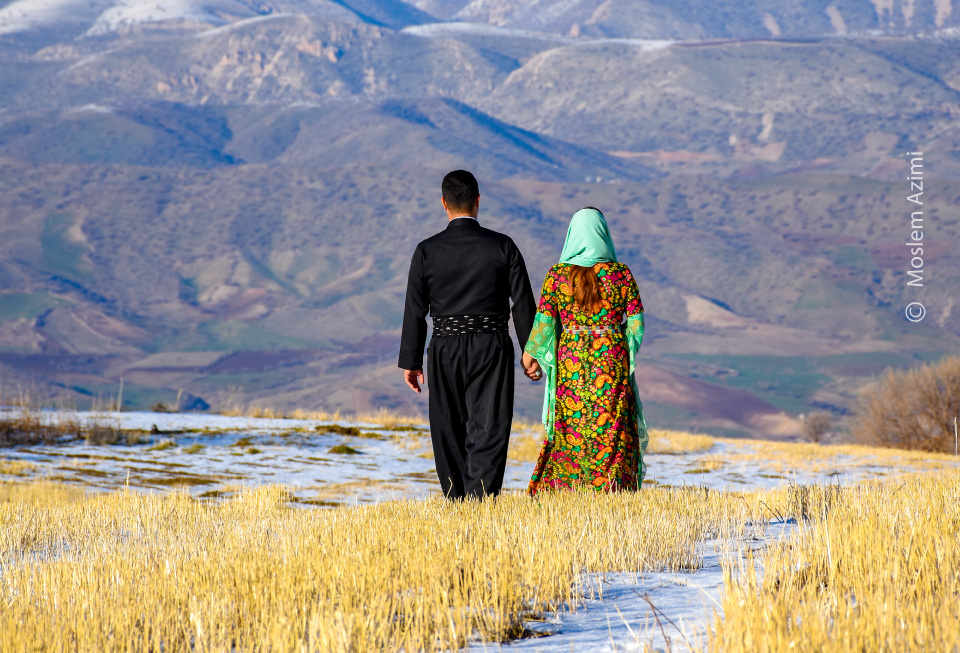
Exposure 1/640sec @ f/6.3 | ISO 100 | Focal Length 105mm
Moslem Azimi
Moslem Azimi is a self-taught photographer based in Javanrud, Iran, whose work serves as a dedicated visual archive of Kurdish culture and tradition. Although he holds a degree in English Translation, he has channeled his creative energy into documenting the lifestyle and heritage of his people through the lens. His evocative images have been featured in numerous national and international exhibitions, reflecting his commitment to preserving the unique spirit of the Kurdish community for a global audience.
Resonance Score Breakdown
Transparency Note: The resonance score (11.1/20) is calculated based on social engagement metrics collected before the award announcement.
Expert Photography Reviews · 7
The Warmth of Winter
Can a landscape ever truly be cold if it holds the weight of two souls walking in unison? We often mistake the biting air and the frozen earth for a sign of abandonment, as if the world has turned its back on us.
Read the reflection →The Weight of the Mountain
I often think about the way we carry our histories across landscapes that do not care for our names. There is a specific rhythm to walking through a place where the earth is older than the roads, a cadence that forces you to lean into the person beside you.
Read the reflection →Reviews & Comments
Share your thoughts about this award-winning photograph. Your reviews contribute to the community engagement score.
The cold air in Javanroud bites, yet there’s a warmth here that transcends the snow. I’ve spent enough hours waiting for the light to know when a soul has finally settled into the landscape. They’re walking through that flat, diffused winter glow, their vibrant clothes cutting through the silence of the mountains. It’s a quiet, sacred rhythm. Looking at them, I feel a sudden, sharp ache for the stillness I’ve lost in my own hurried life.
The snow here isn’t merely weather; it’s a vast, indifferent void threatening to swallow the vibrant, woven history of these two figures. Azimi forces a collision between the ephemeral warmth of human connection and the crushing, monochromatic silence of the mountains. I’ve stared at their colorful attire for an hour, feeling a sudden, sharp ache in my chest. It’s not a celebration of culture, but a desperate, beautiful defiance against the encroaching, absolute white of oblivion.
The chromatic tension here is exquisite, where the searing, saturated crimson of the woman’s shawl erupts against the glacial, bruised-violet shadows of the Kurdish snow like a Morandi still life suddenly ignited by a Turner sunset. It’s a visceral, shivering collision of temperatures that makes my own skin ache with the cold. One finds the harmony isn’t merely decorative; it’s a profound, rhythmic pulse of life asserting its warmth against the indifferent, crystalline silence of winter.
The snow in Javanroud doesn’t wait for anyone, and neither does the light. Azimi caught them perfectly. Those vibrant Kurdish reds against the brutal white chill? It’s electric. I’ve spent years chasing that exact tension. One tenth of a second later and the stride would’ve broken, the rhythm lost. It’s a rare, honest pulse of life in a frozen landscape. I felt my own breath hitch seeing it. That’s the decisive moment, right there.
The frame’s geometry relies on the stark contrast between the chromatic saturation of the subjects and the monochromatic void of the snow. It’s a calculated disruption of the picture plane. The horizontal axis of the mountain range provides a necessary fulcrum, anchoring the figures against the vast negative space. It’s rare to see such disciplined placement. I’m genuinely struck by how the composition refuses to collapse under the weight of its own narrative. It holds.
The frame holds its breath. A long, cold silence in the Zagros mountains. The vibrant reds against that brutal, snow-dusted white—it’s a perfect color grade. I’m struck by the rhythm of their stride; it’s a slow tracking shot that refuses to cut. Azimi caught the exact beat where the landscape stops being a backdrop and starts breathing with them. It’s a cinematic miracle. I’d keep this frame in the final edit forever. It’s pure, quiet tension.
The landscape here acts as a vast, unbuilt datum, stripping away the clutter of the city to reveal how humans inhabit the void. Those vibrant textiles aren’t just color; they’re a threshold between the warmth of human connection and the crushing scale of the mountains. It’s a rare, honest framing. I find myself shivering just looking at the way the light hits that snow, emphasizing the sheer mass of the terrain against their fragile, moving forms.