Sunset in Duhok by Bawar Mohammad
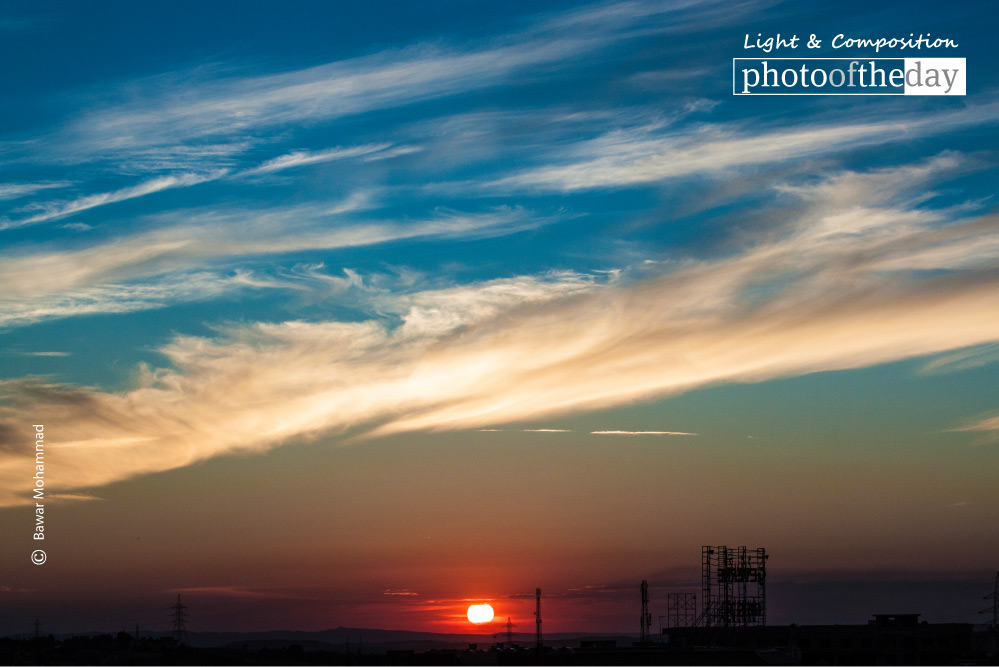
Captured during the golden transition of an autumn evening, this photograph showcases the dramatic, panoramic colors that grace the skies of Duhok. Encircled by the rugged mountains of the Kurdistan region, the city provides a striking backdrop for the fading light. The photographer skillfully framed the scene to emphasize the interplay between the vibrant atmospheric hues and the natural topography of the Tigris river valley. This image is award-worthy for its masterful use of light and composition, which transforms a local sunset into a universal meditation on the serene beauty of the natural world.
Bawar Mohammad
Born in 1985 in Duhok, Kurdistan, Bawar Mohammad is a computer science graduate from the University of Duhok who has dedicated his career to the arts. Currently serving as a journalist and freelance photographer, he documents the vibrant life, nature, and cultural heritage of Kurdistan. His work reflects a deep-seated passion for visual storytelling, with a primary ambition to bridge cultural divides by sharing the artistic spirit of his nation with a global audience.
Resonance Score Breakdown
Transparency Note: The resonance score (11.0/20) is calculated based on social engagement metrics collected before the award announcement.
Expert Photography Reviews · 8
The Salt of Fading Gold
The smell of cooling earth after a long, dry day is a specific kind of ache. It is the scent of dust settling into the creases of your palms, a gritty, mineral warmth that lingers long after the sun has retreated behind the jagged teeth of the horizon.
Read the reflection →Where the Day Dissolves
Why do we feel a sudden, quiet ache when the light begins to fail? It is as if the closing of the day reminds us that we are merely guests in this vast, unfolding story.
Read the reflection →Reviews & Comments
Share your thoughts about this award-winning photograph. Your reviews contribute to the community engagement score.
Before the eye identifies the jagged horizon of Duhok, something in the chest softens. The light doesn’t just hit the retina; it triggers a physiological stillness, a sudden, heavy exhale. I’ve found that the way the amber glow bleeds into the valley shadows creates a lingering, phantom warmth in my own palms. It’s a quiet ache. Returning to it a year later, the mountains feel less like geography and more like a held breath.
f/11 at 1/60s, ISO 100, 24mm. A standard landscape configuration, yet it’s effective. The narrow aperture maintains sharpness across the rugged Duhok horizon, while the shutter speed avoids motion blur in the valley. It’s technically sound, though safe. I’ve seen a thousand sunsets, but the crispness of the mountain silhouettes against that specific atmospheric gradient actually caught me off guard. It’s a precise execution. The data supports the vision. It doesn’t waste a single pixel.
Most sunset shots are forgettable clutter, but this one sticks. Of the thousands I’ve reviewed, it’s the way the jagged mountain silhouettes bite into that bruised, violet horizon that keeps me looking. It’s not just pretty light; it’s the tension between the harsh, unyielding earth and the fleeting, soft atmosphere. I’ll admit, it actually made me miss the quiet of a place I’ve never been. That’s why it’ll still matter in thirty years.
The light hits the valley floor like a final, desperate take before the sun cuts to black. It’s a wide shot that breathes, capturing the rugged tension between the mountains and that bruised, golden sky. I’ve spent hours watching light die on location, but this frame holds a stillness that’s rare. It’s the shot an editor keeps because it says everything without a single movement. Honestly, it makes me want to pack my gear and head to Duhok.
You’ve captured the light hitting those ridges in Duhok, and it’s beautiful. But I’m looking for the pulse of the city beneath that glow. Where are the people living under this sky? I feel the quiet, sure, but I’m missing the human weight of the valley. And that’s what I crave. You’ve got the technical eye, but next time, don’t let the sunset swallow the story. I want to see who’s watching it with you.
Duhok’s ridges aren’t easily tamed by a casual shutter click. One suspects Mohammad spent a fair few shivering evenings here before the Tigris valley finally decided to cooperate. It’s a decent composition, though I’ve seen enough sunsets to know when a photographer’s just gotten lucky. Still, the way the light clings to those jagged peaks suggests he actually put in the hours. I’d have liked to be there, if only for the silence.
Duhok’s mountains glow with a beauty that feels almost too convenient. I’m struck by how the golden light flattens the rugged terrain into a postcard, stripping away the weight of the Tigris valley. Why does this frame erase the city’s scars? Does the sunset serve as a veil for a more complex reality? It’s technically polished, sure, but I can’t help feeling that this aestheticization of the landscape ignores the people living beneath that light.
Duhok’s rugged topography here acts as a datum, grounding the sprawling urban fabric against the encroaching dusk. The fenestration of the hillside dwellings catches the final, bruised light, hinting at the domestic life hidden within these solid masses. It’s a quiet, honest tension between the void of the valley and the encroaching mountain shadows. I’m struck by how the light softens the city’s harsh edges; it’s almost enough to make me forget the heat of the day.