On a Rainy Day in Varanasi by Anindya Chakraborty
Caught in a sudden downpour during a first visit to Varanasi, the photographer found himself confined to his hotel, overlooking the usually vibrant and crowded ghats. Instead of waiting for the weather to clear, he seized the opportunity to document the rare, melancholic stillness of the riverfront. By focusing on the muted tones and the absence of the typical bustling crowds, he captured a poignant, atmospheric portrait of the city. This image is award-worthy for its ability to transform a travel inconvenience into a meditative study of mood, showcasing the photographer's keen eye for finding beauty in solitude and unexpected conditions.
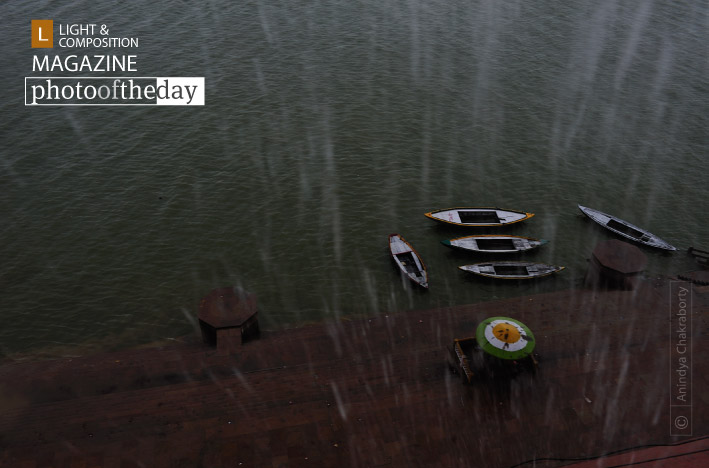
Exposure 1/40sec @ f/5.6 | ISO 200 | Focal Length 20-35mm
Faisal Khan
Faisal Khan, who was raised in Saudi Arabia, started taking photograph just a year ago. Along with travel and exploration, photography became another passion for him. It was his childhood dream to travel & live in many countries. Once he graduated with chemical engineering, he had the opportunity to work for long stints in many locations and have traveled around 30 countries. It was a great door for him to have in-depth contact with his religions, cultures, and lifestyles. At the same time this privilege to establish some strong relationships with friends around the world.Back in 2003, Faisal has embarked on a journey to self-discovery that led to a gradual shift in lifestyle and daily habits, made him drop 28kg of excess body weight, then it was followed by a focus on growing his spiritual dimension.
Resonance Score Breakdown
Transparency Note: The resonance score (12.5/20) is calculated based on social engagement metrics collected before the award announcement.
Expert Photography Reviews · 6
The Weight of Damp Air
The smell of wet stone always brings me back to the monsoon. It is a heavy, metallic scent that clings to the back of your throat, thick with the promise of water.
Read the reflection →The Architecture of Silence
We often mistake stillness for an ending, as if the world only breathes when it is shouting. But there is a secret language in the pause, a way the earth exhales when the noise of human ambition retreats.
Read the reflection →Reviews & Comments
Share your thoughts about this award-winning photograph. Your reviews contribute to the community engagement score.
I love this image. The low contrast, muted colors and blurred rain really adds to the atmosphere and makes you feel like you are there, in the moment. You feel the dullness of the scene, the lack of color and emptiness and I feel like I understand what you were feeling in the moment you took the photograph. Well done!
Most would have packed the gear away the moment the clouds opened. It’s a common enough impulse to seek shelter, but one that rarely yields anything worth keeping. Chakraborty stayed put, and I’ll admit, the damp, grey stillness of those empty ghats is rather haunting. He didn’t just wait for the rain to stop; he let the city’s mood soak into the sensor. It’s a rare, quiet victory earned by simply refusing to leave.
Varanasi isn’t a city here; it’s a drowning memory. By retreating into the rain, Chakraborty forces the ghats to surrender their frantic noise, leaving only the heavy, bruised charcoal of the monsoon. It’s a quiet violence. I’ve stared at these muted steps until my own pulse slowed to match the river’s lethargy. When a photographer stops chasing the sun and embraces this suffocating grey, they finally stop documenting and start thinking. It’s a beautiful, cold surrender.
The Ganges dissolves into a bruised, slate-grey wash, reminiscent of a Turner tempest, where the ochre of the ghats bleeds into the damp air like pigment on a wet canvas. It’s a melancholic, monochromatic symphony that aches in the chest; I’ve never felt such a profound, hushed stillness in Varanasi. The muted, rain-slicked tones don’t merely describe the scene, they inhabit the soul, turning a fleeting downpour into an eternal, atmospheric meditation on solitude.
The geometry of the ghats provides a rigid scaffolding that saves this frame from atmospheric drift. It’s the vertical alignment of the stone steps against the horizontal river that anchors the composition. The negative space isn’t empty; it’s a deliberate weight. I’ve rarely seen such cold, calculated stillness. It doesn’t rely on the usual Varanasi chaos. The frame holds because the architecture of the rain-slicked stairs forces the eye toward the center. It’s structurally sound.
Varanasi usually screams with life, but here, the rain has hushed the ghats into a grey, meditative prayer. Anindya didn’t fight the weather; he listened to the river’s quiet sigh. I’ve stood in that same damp air, feeling the world shrink to the rhythm of falling water. It’s a rare, heavy stillness that settles in your chest. He’s captured the city’s soul when it finally stops to breathe, and honestly, it’s hauntingly beautiful.
Most aerial shots of Varanasi are chaotic, frantic, and frankly exhausting. I’ve seen thousands of them, and they usually blur into a singular, noisy mess. What separates this from the field is the restraint. By embracing the rain, Chakraborty forces the viewer to confront the river’s silence. It’s haunting. I felt a genuine shiver looking at those muted, grey steps. It’s a rare, quiet document that will still matter in thirty years because it captures stillness.
Lovely shot Anindya!