A Symbol of Victory by Yasef Imroze
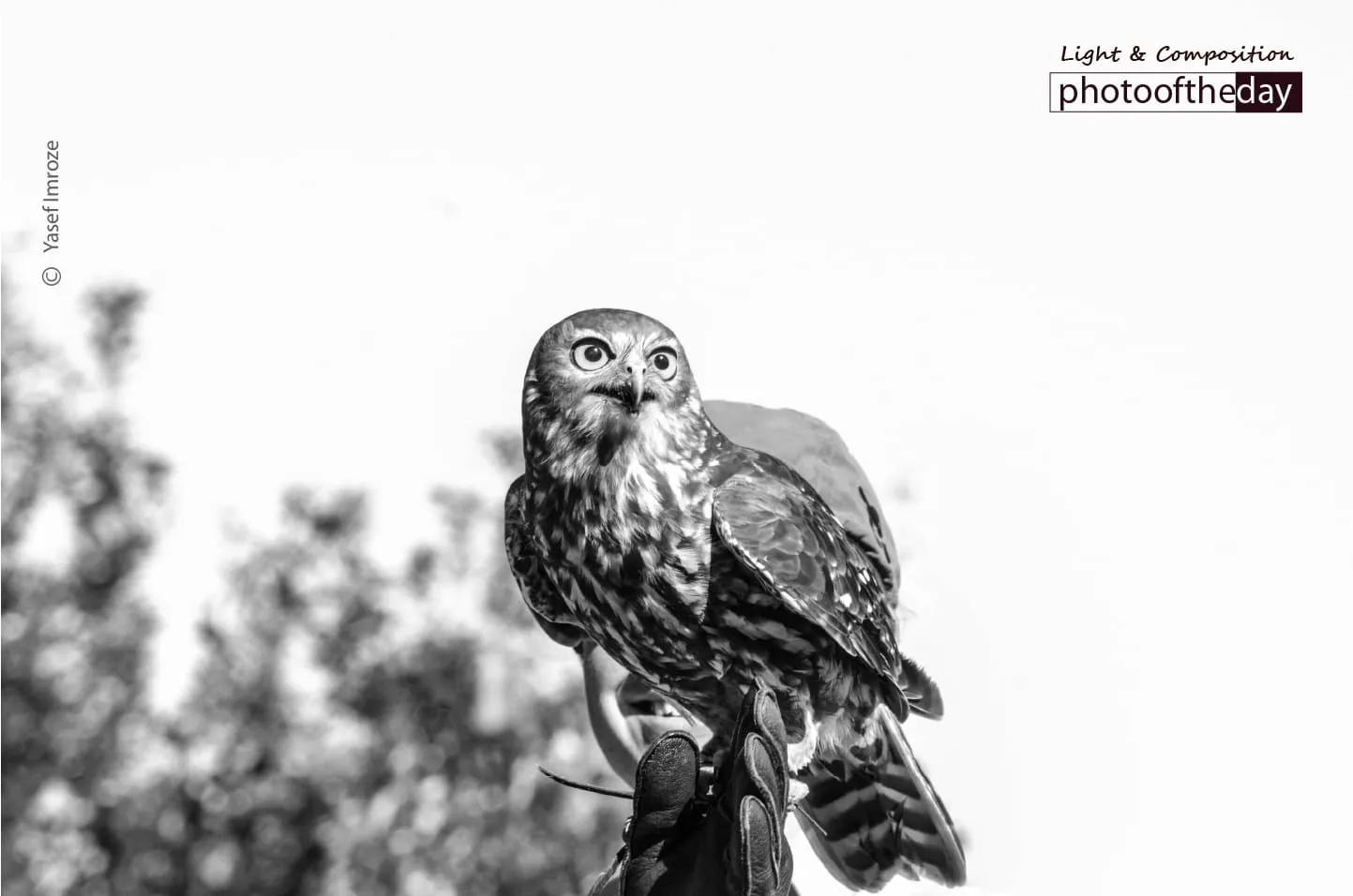
Captured at the Taronga Zoo in Sydney, this striking portrait of an owl highlights the creature's intense, observant nature during a bird show. The photographer utilized a 240mm focal length to isolate the subject, capturing the intricate textures of its plumage and its piercing gaze. By focusing on the owl—a bird historically revered as a symbol of both victory and mystery—the image invites viewers to contemplate the animal's mastery of camouflage. The photograph is award-worthy for its sharp technical execution and the evocative, intimate connection established between the lens and this enigmatic wildlife subject.
Yasef Imroze
Originally from Dhaka, Bangladesh, Yasef Imroze Ifaz is a Sydney-based photographer who balances a professional career in financial services with a deep passion for the visual arts. Having completed his higher education in Australia, he has developed a keen interest in close-up and landscape photography, viewing the medium as a transformative tool for appreciating the natural world. His work frequently seeks to capture the beauty of his homeland, and he continues to refine his craft with the ambition of documenting diverse landscapes across the globe.
Resonance Score Breakdown
Transparency Note: The resonance score (10.9/20) is calculated based on social engagement metrics collected before the award announcement.
Expert Photography Reviews · 3
The Weight of the Watcher
In the quiet hours of the morning, when the house is still settling into its foundations, I often find myself watching the birds gather at the feeder.
Read the reflection →The Wisdom of the Watcher
There is a profound stillness in being watched by something that does not judge. We spend our days performing, speaking, and rushing, yet there are creatures who exist entirely in the present, anchored by a gaze that sees through the surface of things.
Read the reflection →Reviews & Comments
Share your thoughts about this award-winning photograph. Your reviews contribute to the community engagement score.
1/640sec at f/16, ISO 1000, 240mm. Stopping down to f/16 on a D7000 sensor is a tactical error; diffraction softens the plumage details you’re chasing. ISO 1000 introduces unnecessary noise for a zoo setting. It’s a clumsy compromise. I’ve spent years looking at sensor data, and this choice hurts. You’ve sacrificed the owl’s sharpness for a depth of field you didn’t need. The technical execution is flawed. It’s a missed opportunity for true clarity.
Isolation is a dangerous game. By compressing the owl against a blurred void, Imroze strips away the zoo’s structural datum, ignoring the threshold between wild and captive. I’m left craving the context of the enclosure—the steel, the mesh, the built reality of the bird’s cage. It’s technically sharp, sure, but it’s a lie of convenience. I find myself longing to see the light hit the architecture, not just the feathers. It’s lonely in there.
Capturing raptors in captivity is a tired trope, echoing the clinical detachment of 19th-century taxidermy displays. Imroze’s owl, however, avoids that static trap. The plumage detail, rendered with the precision of a Daguerreotype, forces a confrontation with the bird’s gaze that’s genuinely unsettling. It’s rare to see such raw, predatory intensity survive the sterile environment of a zoo show. I’m actually startled by how much life he’s pulled from those amber eyes. It’s a haunting, singular achievement.