The Longtail Boat by Ryszard Wierzbicki
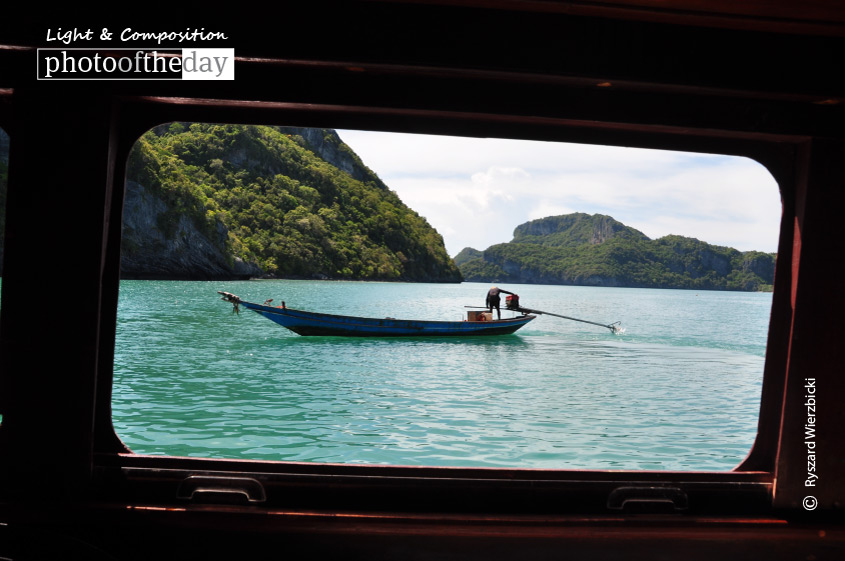
Captured while navigating the pristine waters of the Mu Ko Ang Thong National Marine Park, this image highlights the iconic longtail boat, a quintessential symbol of the Gulf of Thailand. The photographer utilized a wide 18mm focal length to capture the expansive maritime landscape, balancing the vibrant boat against the serene, turquoise backdrop. This photograph is award-worthy for its authentic portrayal of regional culture and its masterful use of natural light, which brings out the rich textures of the vessel. It serves as a poignant reminder of the simple, enduring beauty found in the daily lives of local maritime communities.
Ryszard Wierzbicki
Born in 1963 and a graduate of the University of Gdańsk, Ryszard Wierzbicki transitioned from a diverse career in education and marketing to become an avid traveler and photographer following his move to the United Kingdom in 2006. A PADI scuba instructor with a deep passion for South-East Asia, he dedicates his time to volunteering with orphanages and managing travel-focused forums. Now based in Swindon, Wierzbicki balances his professional life as a marketing advisor with his adventurous pursuits, documenting the world through a lens shaped by his extensive global exploration.
Resonance Score Breakdown
Transparency Note: The resonance score (11.5/20) is calculated based on social engagement metrics collected before the award announcement.
Expert Photography Reviews · 7
Saltwater and Wood
I remember a boatman in a small village near Krabi who spent his mornings sanding the hull of his vessel with a piece of rough pumice stone.
Read the reflection →Drifting Toward the Quiet
There is a rhythm to the water that asks us to surrender our hurry. When we step away from the shore, the land-bound worries of the day begin to dissolve, replaced by the gentle rocking of the tide.
Read the reflection →Reviews & Comments
Share your thoughts about this award-winning photograph. Your reviews contribute to the community engagement score.
The frame hits you like a sudden, humid gust of wind. It’s the stillness of the Gulf that gets me; I can almost hear the engine’s rhythmic thrum echoing off the limestone cliffs. Wierzbicki didn’t just snap a boat; he captured the exact moment the motion stops, holding the turquoise expanse in a perfect, wide-angle tension. It’s the shot an editor keeps because the light on that wood grain tells the whole story without a single cut.
The light here isn’t just illumination; it’s a conversation with the turquoise depths. Ryszard waited for that precise, high-noon clarity where the water turns to glass. I can feel the salt air on my skin just looking at the weathered wood of that longtail boat. It’s a quiet, humble presence. I’ve spent enough mornings on the water to know he didn’t rush this. He let the Gulf breathe, and it finally answered him.
The turquoise water here is a trap, a bright lie that demands we look away from the hull. Wierzbicki’s boat doesn’t just float; it anchors itself against the blinding glare of the Gulf. I’m unsettled by how the wood grain fights the sun. It’s a struggle for existence. When I look at those deep, recessed shadows beneath the prow, I feel a sudden, cold loneliness. It’s where the truth hides, refusing to be illuminated.
The frame resolves into a precise 1:2 ratio, anchoring the boat’s prow against the horizon’s rigid horizontal axis. That diagonal vector cutting through the lower quadrant creates a perfect tension against the expansive negative space of the turquoise water. I’m genuinely struck by how the hull’s geometry stabilizes the entire composition. It’s a beautifully solved spatial equation; the boat doesn’t just float, it anchors the math of the scene. It’s rare to see such clean, structural equilibrium.
Most travel photography is disposable, but Wierzbicki’s boat lingers. Of the hundreds of maritime shots I’ve reviewed, this succeeds because the 18mm lens doesn’t just capture the scenery; it forces the viewer into the bow. I felt the salt spray on my face the moment I saw it. It’s the weathered wood against that specific, aggressive turquoise that anchors the frame. It’s not just a boat; it’s a quiet, enduring defiance against the encroaching modern world.
You’ve captured the salt and the heat here. I can almost smell the diesel and the damp wood of that longtail. It’s a quiet, working vessel, not some polished prop for tourists. Because you held your ground, I feel the stillness of the water against the hull. I’ve spent enough time on boats to know that rhythm. You didn’t just take a picture; you sat with the moment until it felt real. That’s good work.
We look at this longtail boat and we aren’t just seeing a vessel; we’re hearing the rhythm of the Gulf. Ryszard didn’t just point his lens at the turquoise water; he listened to the wood’s history. It’s a quiet portrait of a life lived on the tide. I feel a sudden, sharp ache for the salt air when I study those weathered textures. It’s a photograph that asks to be returned to, again and again.