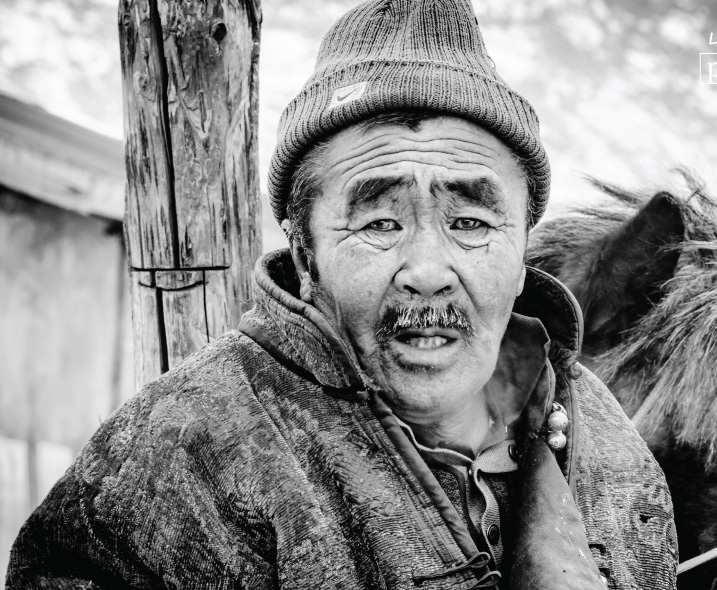
Horseman of Mongolia by Shirren Lim
Captured amidst the vast, rugged terrain of Terelj National Park, this portrait features the local leader of a horse-riding excursion. The photographer focused on the subject's weathered features and traditional attire, effectively conveying the spirit of Mongolian horsemanship. By isolating the subject against the expansive landscape, the image highlights the deep connection between the rider and his environment. The photograph is award-worthy for its raw, authentic portrayal of humanity, demonstrating a keen ability to find profound, sincere expressions in the midst of an active, outdoor setting, ultimately capturing the quiet dignity of a life lived in harmony with nature.
Shirren Lim
Born on Penang Island, Malaysia, in 1970, Shirren Lim is a Jakarta-based photographer who discovered her true passion for the craft in 2009. Specializing in portraiture, she is driven by a desire to capture the sincere and uncovered beauty of human expression, often drawing inspiration from the iconic work of Steve McCurry. Her photography is characterized by an intense, earthy aesthetic and a minimalist approach to composition that seeks to reveal the heart of her subjects. Her evocative work has been featured in numerous international web and print publications.
Resonance Score Breakdown
Transparency Note: The resonance score (13.1/20) is calculated based on social engagement metrics collected before the award announcement.
Expert Photography Reviews · 7
The Geography of Skin
We are all cartographers of our own survival. Look closely at the hands that have held the reins of a life, and you will find the topography of every winter endured and every wind faced.
Read the reflection →The Weight of the Wind
There is a rhythm to the land that only reveals itself to those who move at the pace of a heartbeat. We often mistake stillness for a lack of action, yet the deepest wisdom is found in the quiet endurance of a life lived under an open sky.
Read the reflection →Reviews & Comments
Share your thoughts about this award-winning photograph. Your reviews contribute to the community engagement score.
Most portraits of nomads feel like staged theater, but this one avoids the trap. The grit in the rider’s skin isn’t just texture; it’s a map of the Mongolian wind. I’ve seen thousands of travel portraits, yet this one lingers because of the way his gaze anchors that vast, empty horizon. It’s haunting. I find myself wanting to know what he’s looking at, and in thirty years, that curiosity will still be pulling us in.
The horizon line cuts the frame. It’s a sharp, clean divide. The rider sits still. He doesn’t fight the vastness of the steppe. He occupies it. I’ve spent minutes watching the way the sky presses against his shoulders. It’s heavy. It’s quiet. Nothing here is accidental. The empty corner is not empty. It’s the weight of the wind. I feel a sudden, sharp ache for that silence. It’s a rare, honest breath.
The horizon line bisects the frame with clinical indifference, anchoring the subject’s verticality against the sweeping horizontal expanse. It’s a rigid geometry. The rider’s gaze creates a necessary fulcrum, pulling the eye back from the periphery. I’ve grown weary of such vast landscapes, yet the tension here holds. The negative space doesn’t bleed; it exerts pressure. It’s a disciplined arrangement of mass. The composition demands attention, and for once, the frame doesn’t collapse under the weight.
The horizon acts as a brutal datum here, slicing the frame and emphasizing the rider’s verticality against the void. It’s a study in scale; the man’s weathered skin mimics the rugged topography, turning his body into a tectonic element. I’m struck by how the light rakes across his face, defining mass like a sun-drenched facade. It’s not just a portrait; it’s a spatial dialogue between a singular human form and the infinite, unbuilt Mongolian expanse.
Before the eye identifies the rider, a sudden stillness settles in the chest. It’s the weight of that horizon, pressing against the lungs. I’ve returned to this portrait three times today, and each time, the man’s weathered skin feels like a map of my own forgotten silences. It doesn’t just depict Mongolia; it triggers a visceral, lonely ache. When I close my eyes, I’m still standing in that wind, breathing in his quiet, rugged endurance.
The weathered skin and traditional deel feel curated, almost like a costume for our consumption. Why does the rider look past the lens, avoiding any real encounter? It’s a polished performance of “authenticity” that leaves me cold. We’ve seen this romanticized Mongolian nomad a thousand times before. Does this frame capture a man, or just a prop in a landscape? I’m tired of these hollow portraits that trade human complexity for a convenient, exotic aesthetic.
The jury’s obsession with clarity here feels stifling. Lim’s horseman is trapped in a sharp, clinical vacuum that ignores the kinetic violence of the Mongolian wind. I’d have preferred a long exposure, letting the rider dissolve into the steppe like a ghost. Why resolve every wrinkle when the soul of the subject is in the motion? It’s technically competent, sure, but it’s missing the raw, blurred truth of a life lived in constant, shifting transit.