Shogran Panorama by Imran Dawood
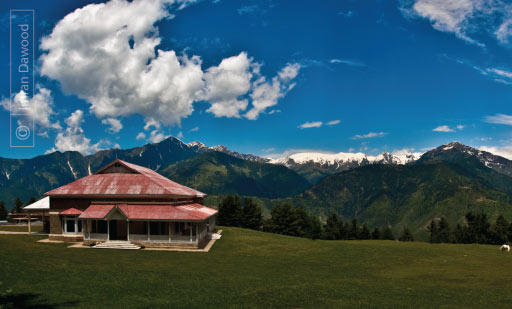
Captured amidst the serene landscapes of the Naran Valley, this photograph showcases a picturesque rest house nestled within a vibrant, lush green plateau at an elevation of 2,362 meters. The photographer was drawn to the perfect harmony of the setting, where the crisp mountain weather and rich, natural colors created a balanced and tranquil atmosphere. This image is award-worthy for its masterful composition and its ability to evoke the profound stillness of the Pakistani highlands, transforming a simple architectural subject into a timeless reflection of the region's breathtaking beauty.
Imran Dawood
Based in Lahore, Pakistan, Imran Dawood is a telecommunications engineer who balances his professional career with a deep-seated passion for nature photography. His journey began while working in the Philippines, where he acquired his first DSLR, eventually leading him to document stunning landscapes across numerous countries. A dedicated nature enthusiast, Dawood specializes in capturing the raw beauty of the outdoors, utilizing his technical expertise to freeze fleeting memories into evocative, high-quality imagery.
Resonance Score Breakdown
Transparency Note: The resonance score (13.4/20) is calculated based on social engagement metrics collected before the award announcement.
Expert Photography Reviews · 6
The Architecture of Silence
In the high, thin air of the mountains, sound behaves differently. It does not travel so much as it dissolves, swallowed by the vastness of the slopes and the indifference of the stone. I have often wondered why we build in such places.
Read the reflection →The Breath of High Places
The air at that altitude tastes of crushed pine needles and a cold, metallic sharpness that stings the back of the throat. It is a thin, hungry air that demands you slow your pulse to match the rhythm of the earth.
Read the reflection →Reviews & Comments
Share your thoughts about this award-winning photograph. Your reviews contribute to the community engagement score.
The rest house sits in the Naran Valley like a fragile thought against the crushing indifference of the peaks. It’s too bright, too eager to please. I’m unsettled by how the light refuses to hide anything, leaving no room for the architecture to breathe in the dark. Where are the secrets? A landscape that doesn’t know how to hold a shadow is a landscape that hasn’t yet learned how to die. It’s beautiful, but it’s hollow.
The architecture sits too low, failing to anchor the frame against the aggressive verticality of the peaks. It’s a missed opportunity for geometric balance. The foreground grass lacks the necessary spatial tension to pull the eye toward the structure. I’ve grown tired of such soft, unearned tranquility. The composition doesn’t hold; it drifts. It’s technically precise, sure, but the lack of a clear fulcrum leaves the viewer wandering aimlessly across a cluttered, disjointed plane.
The light here is remarkably even, which usually suggests a photographer who didn’t mind waiting for the clouds to soften the harsh mountain glare. It’s a clean, disciplined frame. I’ve spent enough mornings in the Naran Valley to know that silence at 2,300 meters is rarely this cooperative. One suspects Imran didn’t just stumble upon this rest house; he sat with it. It’s a quiet, honest piece of work. I’d have liked to be there.
The air at 2,362 meters has a way of thinning one’s ego. He stood here in the cooling hour, waiting for the light to stop rushing across the plateau. It’s quiet, isn’t it? I’ve felt that specific, heavy stillness in the Naran Valley, where the shadows don’t just fall; they listen. The rest house doesn’t dominate the frame; it simply breathes within the green. I find myself wanting to sit on that porch and disappear.
Most landscapes in this category rely on dramatic peaks to do the heavy lifting, but this shot succeeds because it doesn’t try too hard. The rest house sits anchored in that vast, rolling green, creating a quiet tension between human structure and wild space. I’ve stared at this for a long time, and honestly, it makes me want to breathe that thin, cold air. It’s a rare, enduring stillness that won’t fade in thirty years.
The verdant plateau, saturated in the acidic, chlorophyll-heavy greens of a Morandi still life, breathes with a humidity that’s almost palpable. It’s a lush, suffocating vibrancy that makes one’s heart ache for the thin, crystalline air of the Naran Valley. I’m utterly seduced by how the rest house’s muted timber tones anchor that wild, emerald expanse, creating a chromatic tension that feels like a quiet, lingering sigh against the vast, indifferent mountain sky.