Expedition Overview
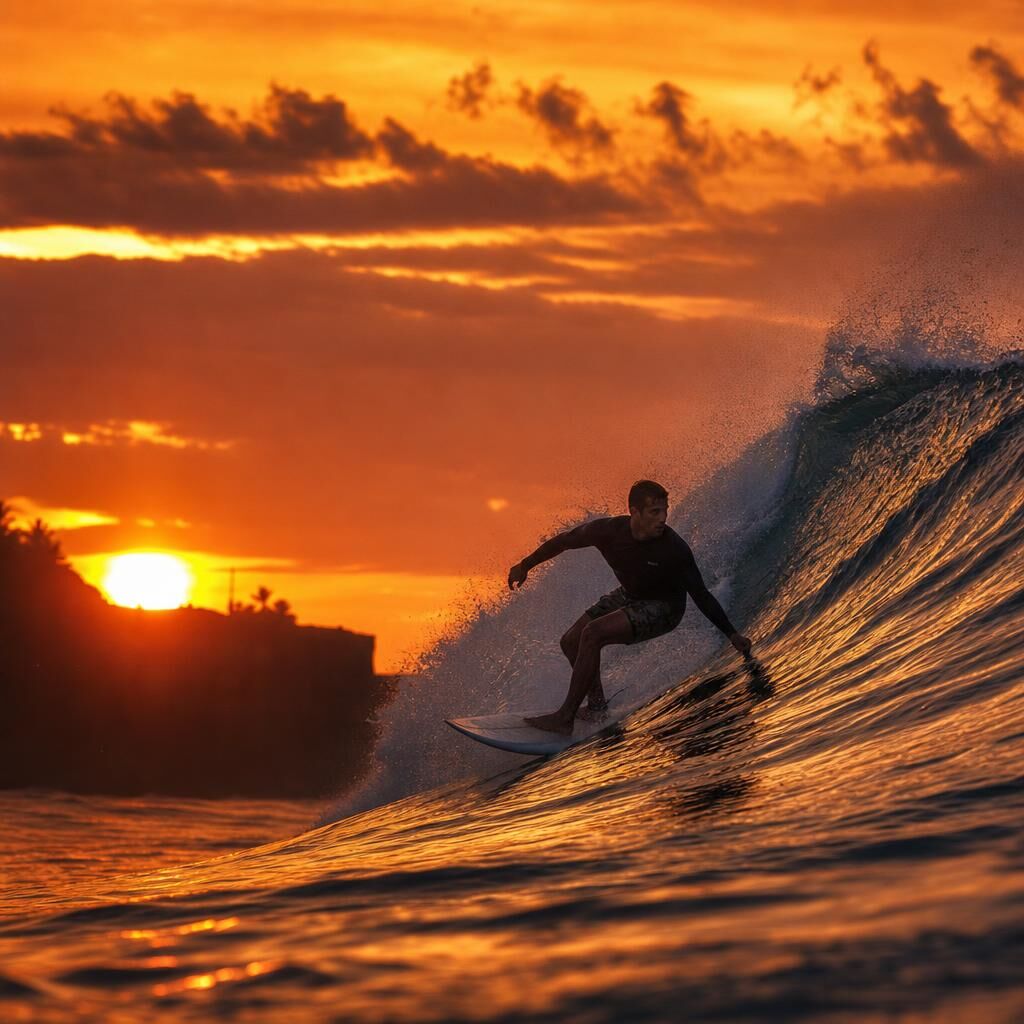
The west coast of Puerto Rico faces the Mona Passage, where the Atlantic and Caribbean converge to create the best surf breaks in the Caribbean — Tres Palmas, Domes, and Dogman's at Rincón, with swells arriving unobstructed from the open Atlantic. The light here operates differently from the rest of the island: the western exposure means the most dramatic light falls at sunset rather than sunrise, and the surf creates natural motion at telephoto distances where the right shutter speed isolates a wave from the water beneath it.
José J. Rivera-Negrón approaches Rincón without the beach-chair frame — shooting from inside the reef break zone at waist depth when the light demands it, or from the elevated Lighthouse Point where the wave face and the rider compress into a single plane at 400mm. Three days gives enough time to read the swell cycle and be in the right position when the light finally lines up.
Expedition Itinerary
Day 1: Rincón — Surf Culture, Water Level
The day focuses on surf photography from beach access and water-entry points near Tres Palmas and Domes. The morning session (6–10am) uses telephoto from shore to isolate surfers in the tube, studying wave patterns before committing to position. The afternoon transitions to lifestyle work in Rincón town — the surf shops, the outdoor rinse stations, the evening gatherings at the beachside bars that define the town's genuine surf culture.
The Goal of the Day: Make a surf photograph without a fisheye lens — work from shore at 300–400mm to compress the wave face and the rider into a single plane that shows both simultaneously.
Day 2: Isabela — Limestone Cliffs and the Empty Coast
The north-facing beaches of Isabela — Playa Jobos, Shacks, Montones — are less visited than Rincón and offer a different photographic character: limestone sea cliffs, sea caves accessible at low tide, and a beach face that changes by 30 feet between high and low water. Morning is for the cliffs and seascape work from the elevated vantage points. Afternoon shifts to lifestyle and environmental portraiture of the people who use these beaches daily, not as tourists but as neighbors.
The Goal of the Day: Photograph the same beach at three different tide heights — document how the same location is a structurally different landscape at each.
Day 3: Sunset — The Mona Passage in Long Light
The final day is dedicated to the west coast's defining photographic event: the sunset over the Mona Passage from Lighthouse Point. The session begins two hours before sunset, using the elevation to plan compositions across the full western horizon. The light moves through six distinct color phases in the 90 minutes around sunset. The session continues 30 minutes into nautical twilight, when the last color leaves the sky and the sea surface becomes monochromatic and completely still.
The Goal of the Day: Shoot the same composition through all six phases of the sunset without moving the camera — build a sequence that shows how changing light transforms the scene the camera never moved from.
Book Your Expedition
Note: Final price may vary based on specific expedition details and customizations.
Expedition Leaders
José J. Rivera-Negrón is a Puerto Rican photographer whose work centers on resilience, human connection, and the documentary truth of places rarely photographed well. Born in Puerto Rico, his path to photography came through adversity — years that shaped fundamentally how he looks at light, at faces, and at the stories that ordinary streets contain. He shoots with the attention of someone who understands what it means to see a place clearly for the first time. A Light & Composition award-winning photographer with over 49 award recognitions including 4 Photo of the Month wins, he leads expeditions across Puerto Rico with the intimate local knowledge of someone who grew up on the island — knowing which beach is deserted at 5am, which street corner catches the right light, and which people will let you photograph them honestly.
What to Bring
Telephoto zoom (100–400mm or 150–600mm) for surf work. Wide-angle zoom for cliff and seascape compositions. Polarizing filter for Mona Passage water color. Fast prime (85mm or 50mm) for lifestyle and portrait work. Waterproof housing or surf housing if you plan to shoot from the water. Dry bag for beach transport of gear. Reef-safe sunscreen — legally required in Puerto Rico. Water shoes for cliff and sea cave access.