Tucson Twilight by Jack Hoye
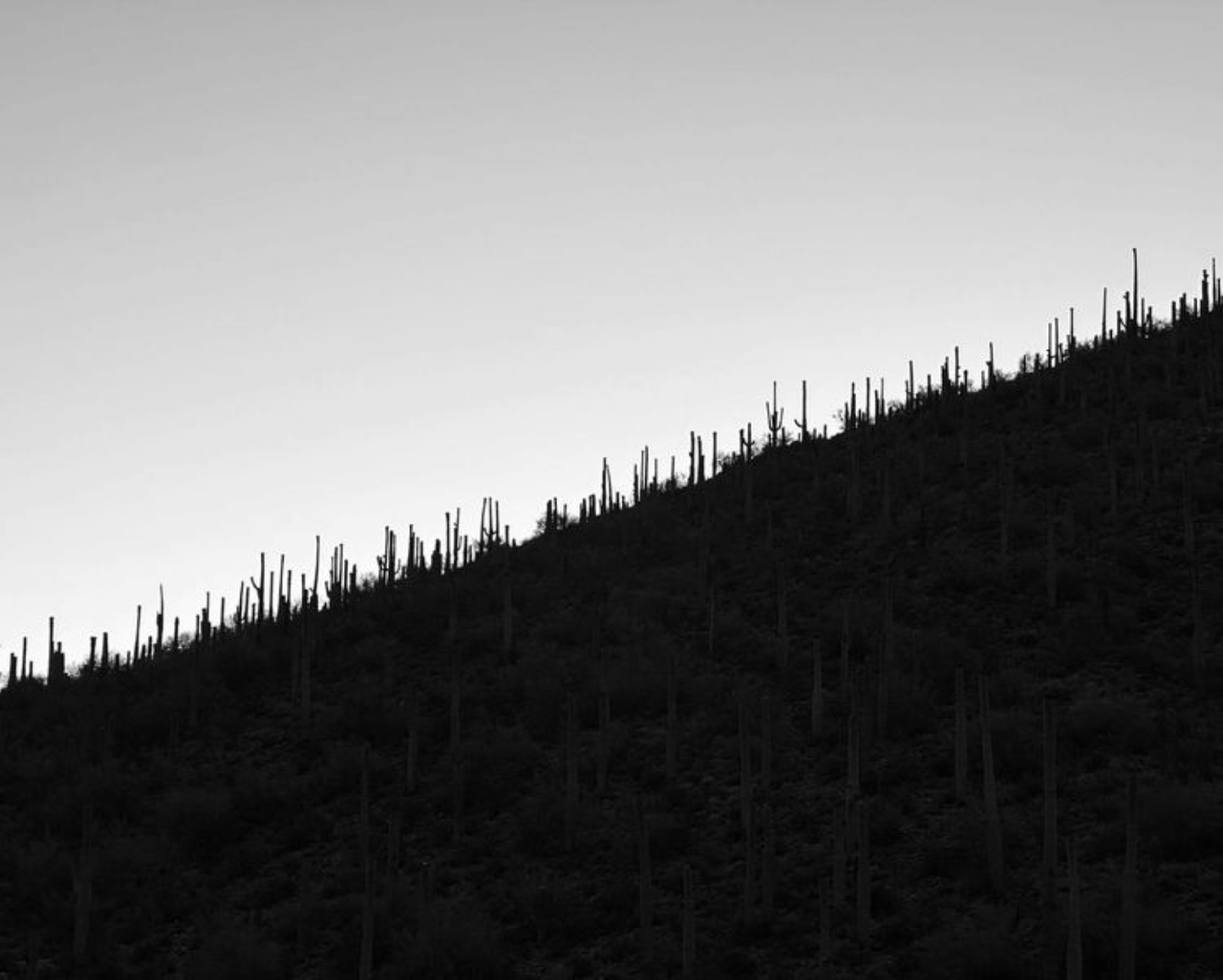
Captured during the summer of 2023, this photograph showcases the serene beauty of a cacti-covered hillside on the outskirts of Tucson, Arizona. Taken from the vantage point of a secluded hotel, the image highlights the photographer's keen eye for the interplay of natural light and shadow during the transition into nightfall. The composition emphasizes the rugged, organic textures of the desert landscape, transforming a quiet evening view into an evocative study of atmosphere. This work is award-worthy for its ability to find profound stillness and aesthetic harmony within the vast, untamed beauty of the American Southwest.
Jack Hoye
Jack Hoye is a dedicated digital artist and an alumnus of The Westphal College of Media Arts & Design at Drexel University. His work has garnered international acclaim, appearing in publications such as Architectural Digest and Art Market International Magazine, and has been exhibited in venues ranging from New York to Tokyo. Currently based in Cortlandt Manor, New York, Hoye balances his career as an independent artist and entrepreneur, consistently pushing the boundaries of digital media through his unique visual perspective.
Resonance Score Breakdown
Transparency Note: The resonance score (6.8/20) is calculated based on social engagement metrics collected before the award announcement.
Expert Photography Reviews · 5
The Hour of Long Shadows
I remember sitting on a porch in Marfa, watching the desert floor turn from a dusty gold to a bruised, deep violet. My host, a man named Elias who had lived in the high desert for forty years, didn’t say a word for nearly an hour.
Read the reflection →The Desert’s Long Breath
Saguaro cacti possess a remarkable capacity for water storage, expanding their pleated, accordion-like trunks during the rare desert rains to survive months of relentless heat.
Read the reflection →Reviews & Comments
Share your thoughts about this award-winning photograph. Your reviews contribute to the community engagement score.
Most desert photography feels like a postcard, but this captures the actual weight of a Tucson dusk. Of the thousands of submissions I’ve reviewed, few handle the transition from heat to shadow with such restraint. It’s the way the saguaros lose their edges against the darkening sky that gets me; I felt a genuine shiver of loneliness looking at it. It’s not just a landscape; it’s a quiet, enduring record of a world turning off its lights.
Tucson’s twilight isn’t just a landscape; it’s the final breath of a day before the desert yields to the ancient dark. Jack’s iPhone sensor struggles against the noise floor, yet that grain feels like the static of time itself. I’m genuinely moved by how those cacti silhouettes anchor us to the earth while the sky begins its long, cold vigil. It’s a humble collaboration, capturing photons that have traveled across the void just to land here.
Twilight in Tucson isn’t a transition; it’s a surrender. Hoye’s lens catches the saguaros as they dissolve into the encroaching void, forcing the desert to confront its own finitude. I’ve stared at these silhouettes until my eyes ached, feeling the cold weight of the coming night. It’s not just a landscape; it’s a reckoning. When the light retreats, the shadows finally begin to speak, and honestly, I find their silence absolutely terrifying. It’s beautiful, but it resists.
It’s a pleasant enough view from a hotel balcony, isn’t it? One suspects the shutter was clicked while the photographer was nursing a gin and tonic. The light is soft, certainly, but it lacks the grit of a man who’s spent three days shivering in the scrub waiting for the shadows to align. It’s pretty, but I’ve never been fond of landscapes that don’t require a change of boots. It’s a comfortable photograph.
The desert’s rugged massing creates a natural datum against the fading sky. Hoye’s frame captures the threshold between the hotel’s curated comfort and the untamed void beyond. I’m struck by how the light rakes across the cacti, turning organic texture into architectural ornament. It’s a quiet study of fenestration—not of glass, but of gaps between silhouettes. It doesn’t just show a view; it makes me feel the cooling air of a Tucson dusk.