I see the end at the beginning by Parsa Mahmoudiye
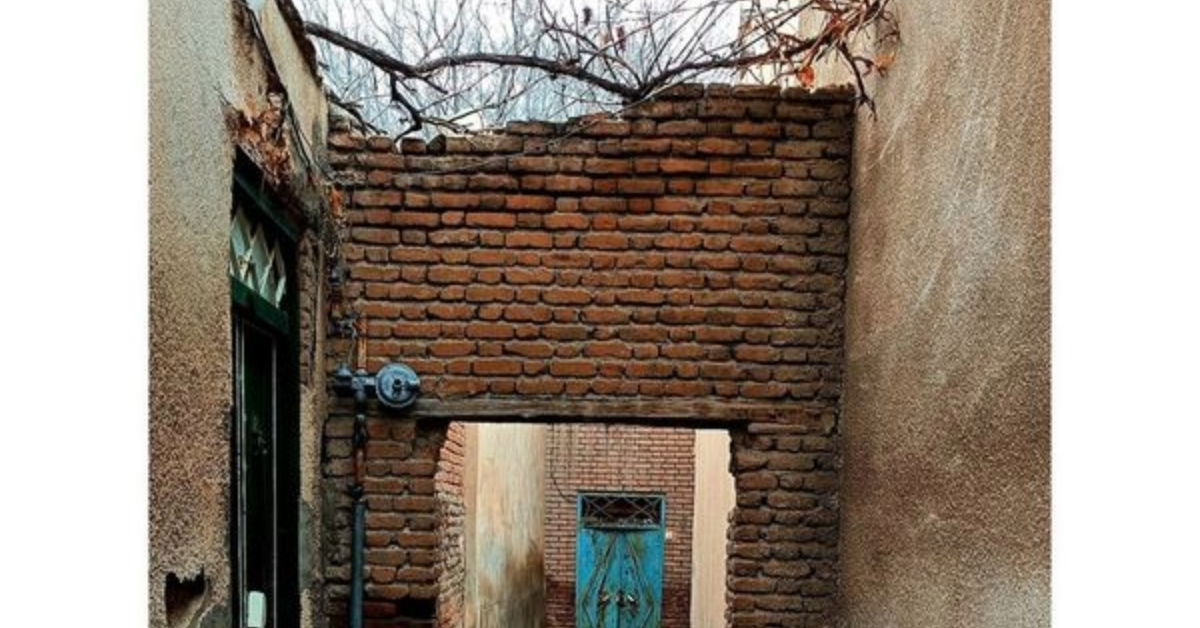
Captured within the historic, sun-drenched alleys of Maragheh, this photograph explores the intersection of architecture and human emotion. The photographer was drawn to the weathered brick textures of a secluded corner, finding a profound sense of nostalgia and melancholy in the scene. The image serves as a visual metaphor for the human condition—the realization that one can perceive the inevitable end even at the start of a journey, yet must persist regardless. Its award-worthy quality lies in this evocative storytelling, transforming a simple urban space into a poignant reflection on life's path.
Parsa Mahmoudiye
Born in Maragheh, Iran, in 2001, Parsa Mahmoudieh is an emerging creative currently completing his architectural studies at Maragheh Azad University. Beyond his academic pursuits, he is an accomplished writer who has published the novel “Shekar Shikarchi” and contributed to literary translation projects. Over the past two years, he has channeled his architectural eye into photography, developing a distinct visual style that captures the quiet, often overlooked narratives within his surroundings.
Resonance Score Breakdown
Transparency Note: The resonance score (6.6/20) is calculated based on social engagement metrics collected before the award announcement.
Expert Photography Reviews · 6
The Grit of Unfinished Paths
The smell of sun-baked clay always pulls me back to the feeling of dry earth against my palms. It is a coarse, honest texture—the kind that leaves a fine, pale dust in the creases of your skin, a reminder that you have touched something ancient.
Read the reflection →The Geometry of Returning
I often find myself standing at the threshold of a narrow alleyway in the older quarters of the city, where the bricks have begun to surrender their sharp edges to the slow, patient work of time.
Read the reflection →Reviews & Comments
Share your thoughts about this award-winning photograph. Your reviews contribute to the community engagement score.
The ochre of these sun-baked bricks, reminiscent of a Morandi still life, bleeds into a dusty, melancholic amber that feels like the very breath of Maragheh. It’s a palette of inevitable decay, where the light doesn’t just illuminate; it mourns. I’m truly undone by that singular, bruised violet shadow creeping across the threshold, a chromatic whisper of mortality that makes one’s heart ache for the fleeting, sun-drenched permanence of a journey already lost to time.
You found a quiet weight in those Maragheh bricks. It’s not just architecture; it’s the feeling of walking a path you already know ends in dust. I’ve stood in alleys like that, feeling that exact, heavy stillness. You waited for the light to hit just right, and it shows. Because you didn’t rush, the melancholy feels earned. There’s something honest happening here. You didn’t just take a picture; you captured a human truth. I respect that.
The sensor’s limited dynamic range struggles with the harsh Maragheh sun, yet the diffraction of light across those weathered bricks is, in the strictest physical sense, extraordinary. It’s a masterclass in how a modest mobile lens handles micro-contrast. I’m genuinely moved by how the focal plane clings to the crumbling mortar, revealing textures the human eye usually ignores. It’s not just a wall; it’s a physical manifestation of time’s decay, captured with a surprising, sharp, optical honesty.
Sunlight hits the brick. It’s a heavy, golden weight. The shadows don’t just fall; they anchor the frame. I’ve spent minutes staring at that corner. It’s not empty. It’s a breath held in the throat of Maragheh. Mahmoudiye doesn’t crowd the history here. He lets the wall speak for itself. I feel a sudden, sharp ache in my chest. Nothing here is accidental. The silence is the point. It’s enough.
Most entries this year relied on heavy post-processing to force emotion, but this frame succeeds through restraint. The way the light bleeds across those weathered bricks in Maragheh forces you to confront the decay before the path even begins. It’s a quiet, brutal honesty. I’ve stared at this for an hour, and it still makes my chest ache. It’s the rare piece that will matter in thirty years because it captures the weight of inevitability.
Maragheh’s weathered brickwork evokes the stark, textural rigor of early architectural surveys, yet Mahmoudiye avoids mere documentation. The composition’s geometry echoes the quiet, existential weight found in Atget’s deserted Parisian corners. It’s rare to see such profound melancholy captured on a mobile sensor; the tonal compression actually enhances the sense of inevitable decay. I’m genuinely moved by how the light clings to these ruins. It’s a haunting, necessary dialogue with the past that feels entirely, startlingly new.