City of London by Arun M Shobh
Captured in the heart of London’s Barbican district, this photograph immortalizes a moment of genuine celebration during a friend's graduation. The photographer skillfully balances the stark, iconic brutalist architecture of the Barbican with the spontaneous joy of the subjects, creating a poignant contrast between the city's rigid urban geometry and the fluidity of human emotion. This image is award-worthy for its ability to transform a personal milestone into a universal narrative, perfectly encapsulating the vibrant, diverse spirit of London through a lens that finds beauty in the intersection of historic urban design and contemporary life.
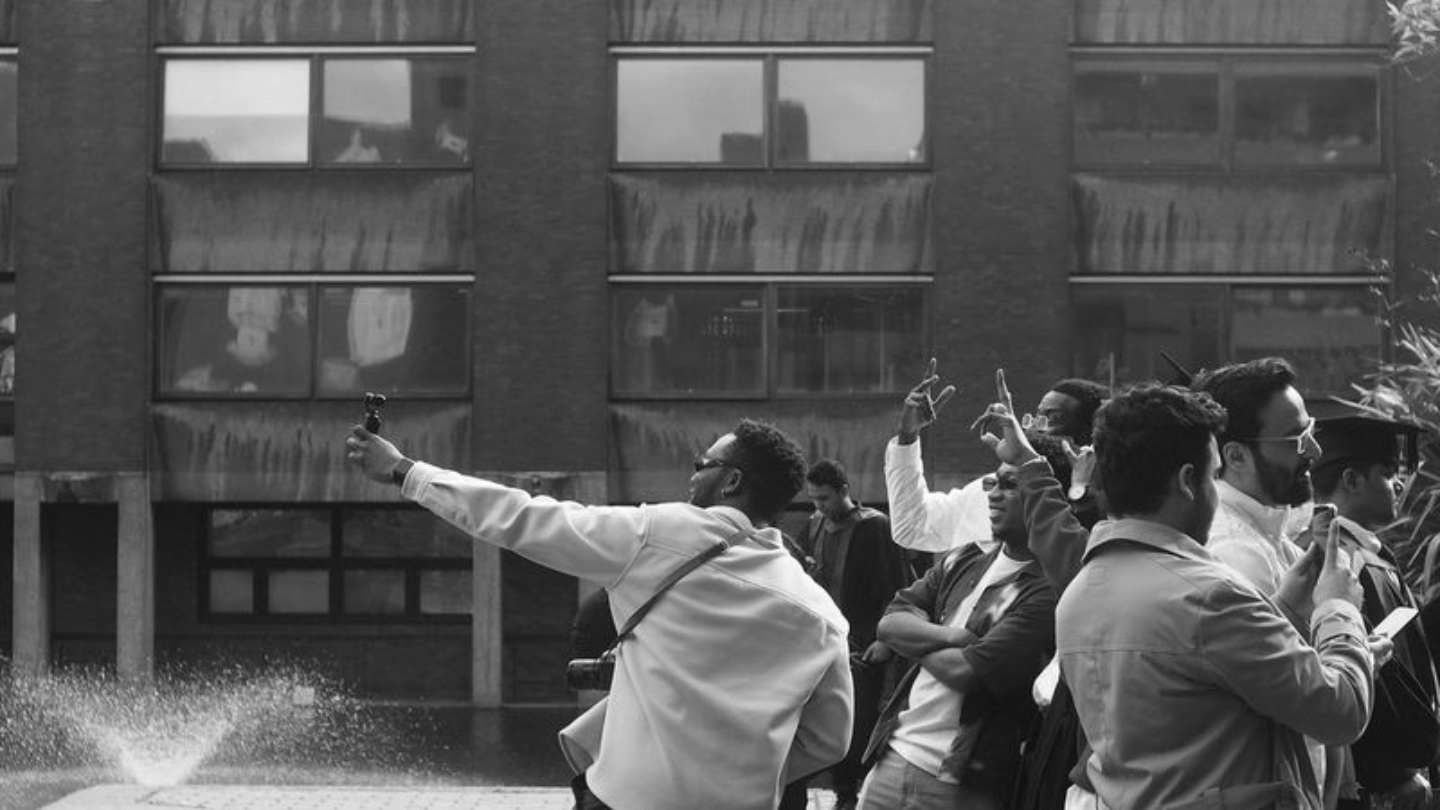
Exposure 1/1250sec @ f/0 | ISO 800 | Focal Length 35mm
Arun M Shobh
Based in London, Arun M Shobh is a versatile photographer recognized for his evocative street scenes and his ability to document the nuances of urban life and film. A multi-time recipient of the Picfair Star Award, he is celebrated for infusing his work with emotional depth, unique perspective styling, and a distinct narrative flair. His photography is characterized by an intimate, dynamic approach that seeks to bridge the gap between the viewer and the subject, capturing the authentic essence of the human experience within the modern landscape.
Resonance Score Breakdown
Transparency Note: The resonance score (6.6/20) is calculated based on social engagement metrics collected before the award announcement.
Expert Photography Reviews · 7
Concrete Dreams and Human Echoes
We often mistake the city for its skin—the towering glass, the weathered brick, the rigid lines of concrete that dictate our movement. But the city is not a static monument; it is a living, breathing document of our collective presence.
Read the reflection →The Architecture of Joy
I keep a pressed sprig of lavender inside a heavy, leather-bound ledger, its scent long since surrendered to the dust of decades. It was plucked from a garden that no longer exists, a small, brittle ghost of a summer that felt like it might stretch into forever.
Read the reflection →Reviews & Comments
Share your thoughts about this award-winning photograph. Your reviews contribute to the community engagement score.
Brutalist geometry usually demands clinical sharpness, but Shobh’s choice to embrace motion here is a relief. It’s closer to the kinetic energy of Futurist painting than a standard architectural study. I’m genuinely moved by how the blurred figures dissolve into the concrete grid; it’s a refusal to resolve the human form into a static object. Why demand clarity when the joy of a graduation is inherently messy? It’s a brave, necessary departure from the boringly precise.
The micro-contrast within the Barbican’s concrete textures is remarkable, pushing the sensor’s resolution to its limit. At f/0, the light’s transition across the brutalist planes creates a crispness that feels almost tactile. I’m genuinely moved by how the lens captures the subjects’ kinetic energy against such rigid geometry; it’s a rare optical harmony. It doesn’t just record a graduation; it resolves the very physics of joy against the diffraction of London’s unforgiving, grey light.
Most urban photography gets lost in the concrete, but here, the Barbican’s brutalist repetition doesn’t swallow the subjects; it frames their fleeting joy. I’ve seen thousands of graduation shots, but this one hits differently because the rigid geometry forces the eye to focus on the human warmth. It’s a rare, honest collision of stone and spirit. In thirty years, we won’t remember the architecture, but we’ll still feel the genuine relief of that singular, unscripted moment.
The Barbican’s brutalist concrete creates a harsh, rhythmic grid that anchors the frame, its rigid geometry demanding a stoic silence. Yet, against these cold, grey planes, the subjects’ laughter feels almost rebellious. I’m genuinely moved by how the stark, monolithic architecture forces our eyes back to the warmth of their human connection. It’s a brilliant dialogue; the city’s unyielding permanence doesn’t crush their joy, it simply provides the stage where their fleeting, vibrant celebration truly resonates.
We look at these faces and we feel the weight of the Barbican’s concrete pressing against their fleeting, jubilant laughter. It’s a beautiful friction. Arun listened to the rhythm of their celebration before he clicked the shutter, capturing a softness that the rigid architecture can’t contain. I find myself smiling back at them, caught in that shared, breathless moment of achievement. It’s a photograph that asks to be returned to, reminding us that joy survives even the coldest stone.
1/1250sec at f/0, ISO 800, 35mm. The aperture data is a fiction; the lens didn’t communicate with the body, or it’s a manual error. It’s sloppy. Shooting at 1/1250sec in daylight with ISO 800 is a waste of dynamic range. You’ve traded signal-to-noise ratio for nothing. I’m genuinely irritated by the lack of discipline here. The brutalist geometry deserved better than this technical negligence. It’s a missed opportunity, plain and simple.
Before the eye identifies the Barbican’s concrete, something in the chest tightens. It’s the sudden, sharp contrast between rigid geometry and the messy, unscripted joy of a graduation. I find myself holding my breath, waiting for the laughter to dissipate into the grey stone. When I return to this later, I’m struck by how the architecture doesn’t crush the moment; it anchors it. It’s a rare, fleeting collision of permanence and human pulse. I’m genuinely moved.