A Pair of Starlings by Syed Asir Ha-Mim Brinto
In this striking capture, a pair of Brahminy starlings rests within the dense foliage of a forest, illuminated by the soft, golden glow of late afternoon light. The photographer captures a rare and fortunate moment, as this particular species is seldom encountered in Bangladesh, making the presence of two birds in a single frame a significant achievement. The image highlights the exquisite beauty of the starling family, with the vibrant lighting enhancing the natural elegance of the subjects. This photograph is award-worthy for its technical precision and the rarity of the avian encounter it documents.
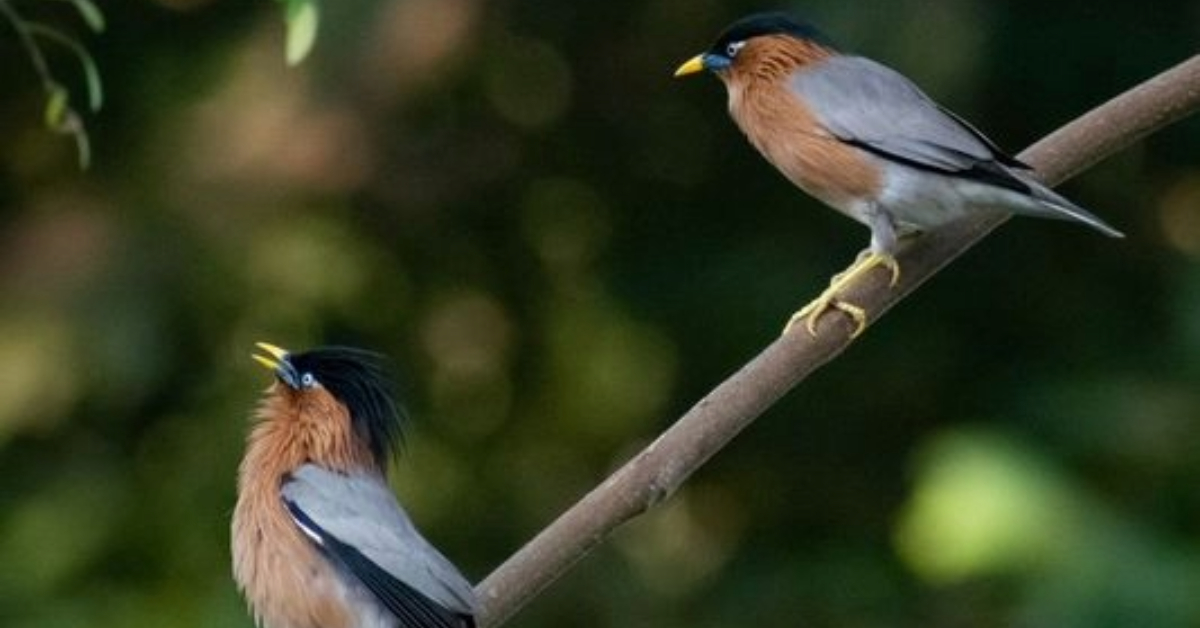
Exposure 1/1000sec @ f/6.3 | ISO 2500 | Focal Length 300mm
Syed Asir Ha-Mim Brinto
Syed Asir Ha-Mim Brinto is a self-taught photographer based in Rajshahi, Bangladesh, who holds a degree in Bengali Language and Literature from Rajshahi University. His lifelong fascination with photography, sparked by early exposure to cameras within his family, has evolved into a dedicated practice spanning street, lifestyle, landscape, and documentary genres. Driven by a passion for exploration, he utilizes his lens to craft compelling visual narratives that document the world around him.
Resonance Score Breakdown
Transparency Note: The resonance score (7.2/20) is calculated based on social engagement metrics collected before the award announcement.
Expert Photography Reviews · 5
The Unclaimed Periphery
We often mistake the city for a purely human construct, a grid of brick and mortar designed solely for our own utility. Yet, the true geography of any settlement includes the silent, non-human residents who navigate the cracks in our infrastructure.
Read the reflection →The Weight of Shared Breath
The smell of damp earth after a long, dry spell is a heavy, velvet thing that clings to the back of the throat. It is the scent of secrets kept by roots and the slow, rhythmic pulse of a forest waking up.
Read the reflection →Reviews & Comments
Share your thoughts about this award-winning photograph. Your reviews contribute to the community engagement score.
1/1000sec at f/6.3, ISO 2500, 300mm. The shutter speed is overkill for resting birds, forcing an ISO that introduces unnecessary luminance noise. It’s a technical compromise that degrades the plumage detail I’d hoped to see. At 300mm, f/6.3 is barely enough to isolate the subjects from that dense foliage. I’m frustrated by the wasted potential here. The optics were capable of more, but the exposure settings didn’t prioritize the sensor’s clean performance.
The wings are tucked, the posture is static. It’s a quiet study, but I’m looking for the kinetic spark. In athletics, we hunt the explosive transition; here, the starlings are simply resting. It’s technically clean, sure, but it lacks the physiological tension I crave. I’ve spent my life chasing the millisecond of maximum exertion, and this doesn’t have it. It’s a beautiful, calm portrait, but it’s not the peak moment I’d bet my career on.
The dense, emerald foliage acts as a living tapestry, cradling these starlings in a soft, golden light that feels almost sacred. It’s not just a bird study; it’s a portrait of a habitat. I’m genuinely moved by how the leaves frame their intimacy, turning a rare encounter into a quiet, domestic scene. The environment doesn’t just house them—it defines their existence. It’s a beautiful, fleeting dialogue between the subjects and the wild, untamed world they inhabit.
Brahminy starlings are notoriously skittish, yet these two remain perfectly composed. I’ve spent enough dawn hours in the brush to know that such proximity usually demands a blind or immense, quiet patience. If Brinto didn’t flush them, he’s earned this frame. The soft light catching their plumage is lovely, and honestly, it makes me miss the field. It’s a rare, calm encounter that feels genuinely respected rather than forced. I’m impressed by the restraint shown here.
Before the eye identifies the starlings, a sudden stillness anchors the chest. It’s the golden light, I think, that triggers this quietude—a visceral, amber warmth that slows my pulse. When I return to this frame, the foliage feels less like a backdrop and more like a sanctuary I’ve inhabited before. I find myself holding my breath, waiting for the birds to stir. It’s a rare, fragile intimacy that lingers long after I’ve looked away.