Freckled Beauty by Anastasia Markus
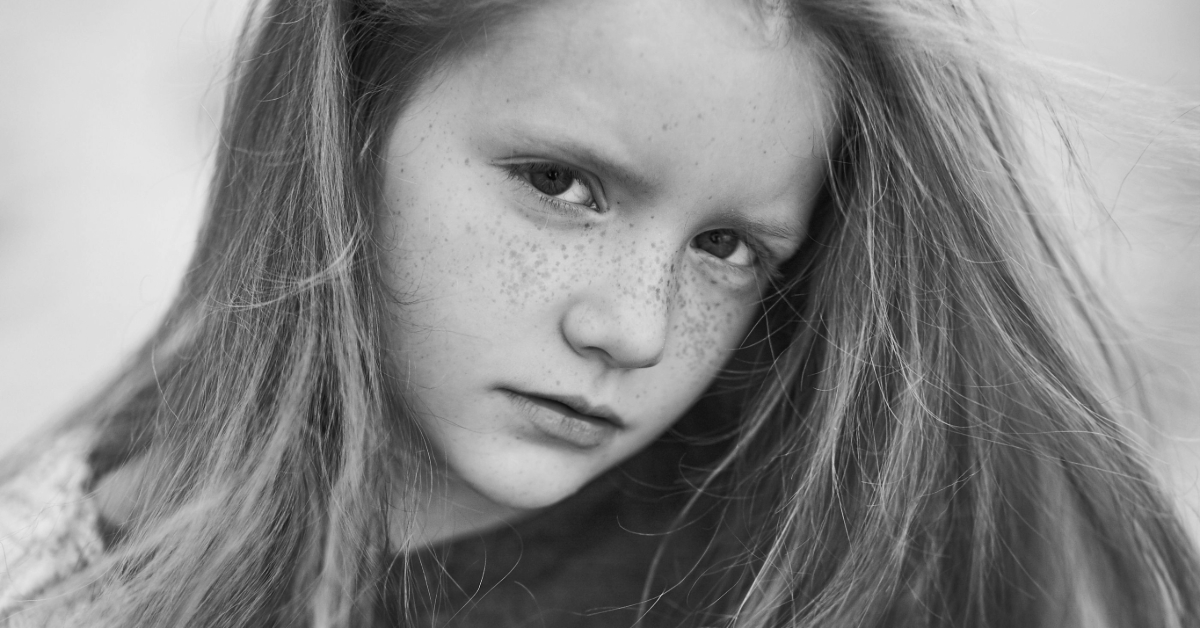
Freckled Beauty captures a moment of profound intimacy, showcasing a young girl whose piercing gaze and natural features are elevated by a sophisticated black-and-white treatment. By stripping away color, Anastasia Markus emphasizes the raw intensity of the subject’s expression and the delicate texture of her freckles. This portrait succeeds through its minimalist approach, allowing the subject's emotional depth to take center stage. The composition is both elegant and mysterious, transforming a simple portrait into a timeless study of human character that leaves an enduring impression on the viewer.
Anastasia Markus
Born in Donetsk, Ukraine, Anastasia Markus transitioned from a background in business to a dedicated career in photography, specializing in children’s, family, and wedding portraiture. After a decade-long hiatus, she has returned to the craft with a renewed passion for artistic growth and competitive excellence. Currently based in Beer Sheva, Israel, Markus views the spirit of photography competitions as a vital catalyst for creative evolution, constantly seeking to refine her technical execution and explore new facets of visual storytelling.
Resonance Score Breakdown
Transparency Note: The resonance score (7.1/20) is calculated based on social engagement metrics collected before the award announcement.
Expert Photography Reviews · 5
The Unadorned Truth
Seneca once remarked that we are often more concerned with the appearance of our lives than with the substance of our character.
Read the reflection →The Map of Being
We are born with a landscape written upon us, a constellation of marks that tell the story of where we have been and the sun we have gathered. These small, scattered points are not flaws to be smoothed away, but a map of our own history.
Read the reflection →Reviews & Comments
Share your thoughts about this award-winning photograph. Your reviews contribute to the community engagement score.
The background’s blurred concrete suggests a brutalist datum, yet it’s entirely stripped of context. Markus isolates the subject, but I’m left craving the threshold she occupies. How does the light hitting her skin relate to the fenestration behind her? It’s a beautiful portrait, sure, but it’s a spatial vacuum. I find myself aching to see the solid and void she’s standing against. Without the architecture, it’s just a face floating in a silent, empty room.
There’s a quiet, heavy stillness in those eyes that tells me this girl didn’t just pose; she let Anastasia in. You can’t fake that kind of presence. The way the light catches those freckles feels like a secret shared between two people who’ve stopped rushing. It’s rare to see such vulnerability held with this much grace. Honestly, looking at her, I feel a sudden, sharp ache for the world she’s living in.
It’s a striking portrait, but I can’t help but miss the blue. In my world, we fight the water’s refractive index and the relentless absorption of the red spectrum just to keep a subject from looking like a ghost. Stripping away colour here feels like a surrender to the surface. I’d love to see this girl submerged, where the light dances and the physics get real. It’s beautiful, sure, but it’s missing the deep-sea soul.
Shadows here don’t merely frame the face; they interrogate the skin. Markus denies the light its usual vanity, forcing those freckles to emerge from a profound, encroaching gloom. It’s a stark refusal of clarity that I find deeply unsettling. When I look into her eyes, I don’t see a girl, but a void where time has stalled. It’s heavy, almost suffocating. She’s not posing for us; she’s hiding from the very light that reveals her.
The 85mm compression flattens the plane, forcing the freckles into a rigid, rhythmic grid. It’s a calculated geometry. The gaze anchors the frame, preventing the subject from drifting into mere sentimentality. I’m struck by how the negative space around the chin creates a necessary fulcrum. The composition holds because the weight is distributed with clinical precision. It doesn’t rely on the subject’s youth. It relies on the structural integrity of the frame itself.