Light at The End of the Tunnel by Jose Juniel Rivera-Negron
After trekking half a mile to reach the end of a long tunnel, the photographer captured this poignant moment as a family emerged into the light. Initially challenged by the technical demands of silhouette photography, the photographer adjusted the camera settings through trial and error to achieve the desired effect. The resulting image masterfully balances the stark contrast between the dark tunnel and the bright exit, transforming a simple walk into a powerful visual metaphor. This dedication to refining his craft and his ability to turn a challenging environment into a compelling narrative make this photograph a standout award-winning piece.
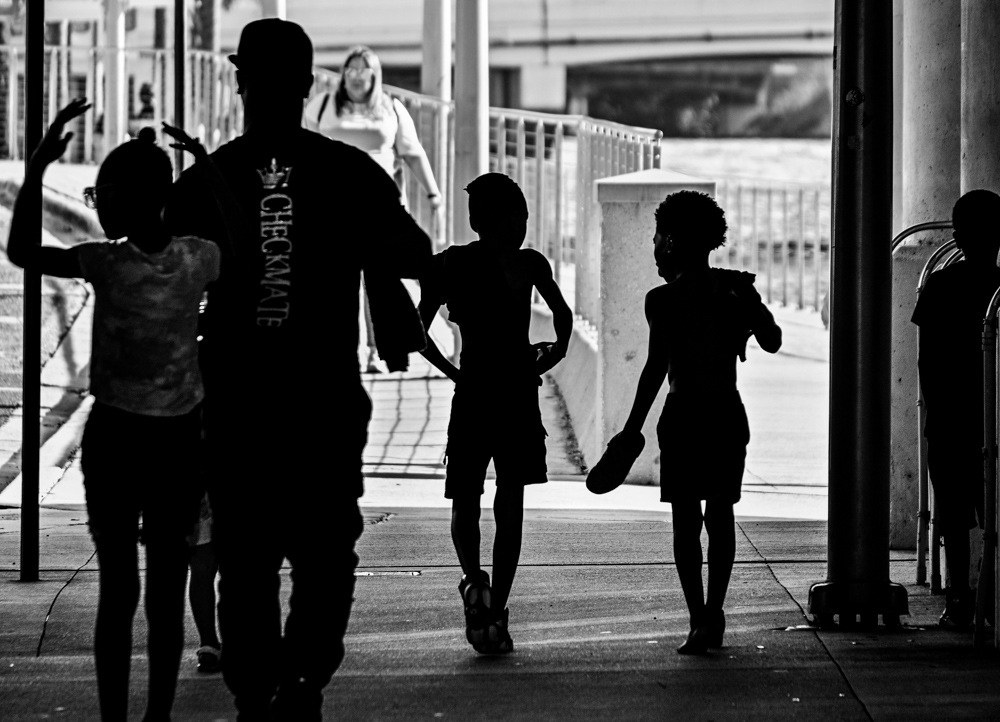
Exposure 1/200sec @ f/5.6 | ISO 100 | Focal Length 277mm
Jose Juniel Rivera-Negron
Born in Puerto Rico, Jose Juniel Rivera-Negron is a resilient artist whose journey from the challenges of addiction to the world of professional photography serves as a profound testament to the power of transformation. Now based in the United States, he uses his lens to document the beauty and diversity of global cultures, infusing his work with messages of hope and perseverance. As a dedicated advocate for mental health and recovery, he strives to inspire others through his art, proving that dedication and a renewed sense of purpose can lead to meaningful creative success.
Resonance Score Breakdown
Transparency Note: The resonance score (6.6/20) is calculated based on social engagement metrics collected before the award announcement.
Expert Photography Reviews · 7
The Architecture of Arrival
I have always found the metaphor of the tunnel to be a bit tired. It is the sort of shorthand we use when we want to talk about struggle without actually doing the work of describing it.
Read the reflection →The Threshold of Emergence
Deep within the subterranean dark, certain cave-dwelling species undergo a total loss of pigmentation, their bodies turning translucent as they adapt to a world without sun.
Read the reflection →Reviews & Comments
Share your thoughts about this award-winning photograph. Your reviews contribute to the community engagement score.
Stripped of chromatic variance, one finds a profound meditation on the tonal weight of transition, where the obsidian throat of the tunnel yields to a blinding, ethereal luminescence. It’s a stark, Morandi-esque reduction of form, yet I’m genuinely moved by the way the silhouettes dissolve into that searing, high-key aperture. It’s not merely light; it’s the tactile sensation of breath caught in the throat as one finally abandons the heavy, suffocating dark for the infinite.
1/200sec at f/5.6, 277mm. It’s a tight compression of space. The Z50’s sensor handled the dynamic range well, but f/5.6 at that focal length is a lazy choice. You’ve flattened the tunnel’s depth into a two-dimensional wall. I’ve spent years staring at histograms, and this one is just barely functional. It’s technically adequate, I suppose. Honestly, the lack of sharpness in the subjects irritates me. You played it safe when you should’ve pushed the glass.
We watch them emerge from the dark, a family stepping into the blinding promise of the exit. It’s a quiet migration. Rivera-Negron didn’t just capture a silhouette; he listened to the weight of their journey before he clicked the shutter. I feel a sudden, sharp ache in my chest seeing their small, hopeful shapes against that brilliant glow. It’s a photograph that asks to be returned to, reminding us that we’re all walking toward our own light.
To walk through darkness is to confront the void, yet Rivera-Negron forces us to linger in the threshold. The silhouette isn’t a mere absence; it’s a heavy, ontological weight pressing against the blinding exit. I’ve spent hours staring at these figures, and it’s unsettling—they don’t just emerge, they surrender their identities to the light. It’s a brutal, necessary transition. When I look at this, I don’t see a tunnel; I see the terrifying cost of becoming visible.
Emerging from darkness into light is a tired trope, yet it’s the anonymity of these figures that haunts me. Why are they reduced to mere silhouettes? By stripping away their features, Rivera-Negron denies them their humanity, turning a family into a convenient metaphor for his own artistic journey. Does the tunnel belong to them, or is it just a prop for his composition? I’m left wondering if he even asked their names before framing their exit.
The tunnel swallows them, then spits them into the light. It’s a classic silhouette, but the timing is everything. If he’d clicked a fraction later, the family would’ve blurred into the tunnel’s mouth. I love the way the geometry holds them. It’s that Winogrand energy—capturing the transition from dark to blinding white. One tenth of a second off and the frame collapses. He nailed the exit. It’s a clean, sharp, decisive slice of life.
Emerging from the dark, this family steps into a blinding, singular source of light. It’s a terrestrial echo of a star’s birth. At f/5.6, the exposure is brief, lacking the thermal noise of my usual long-exposure work, yet the contrast feels infinite. I’ve spent my life chasing photons that traveled eons to reach my lens, but seeing these humans walk toward their own bright horizon makes me feel strangely, beautifully small. It’s a quiet, perfect transition.