Mother & Daughter by Ryszard Wierzbicki
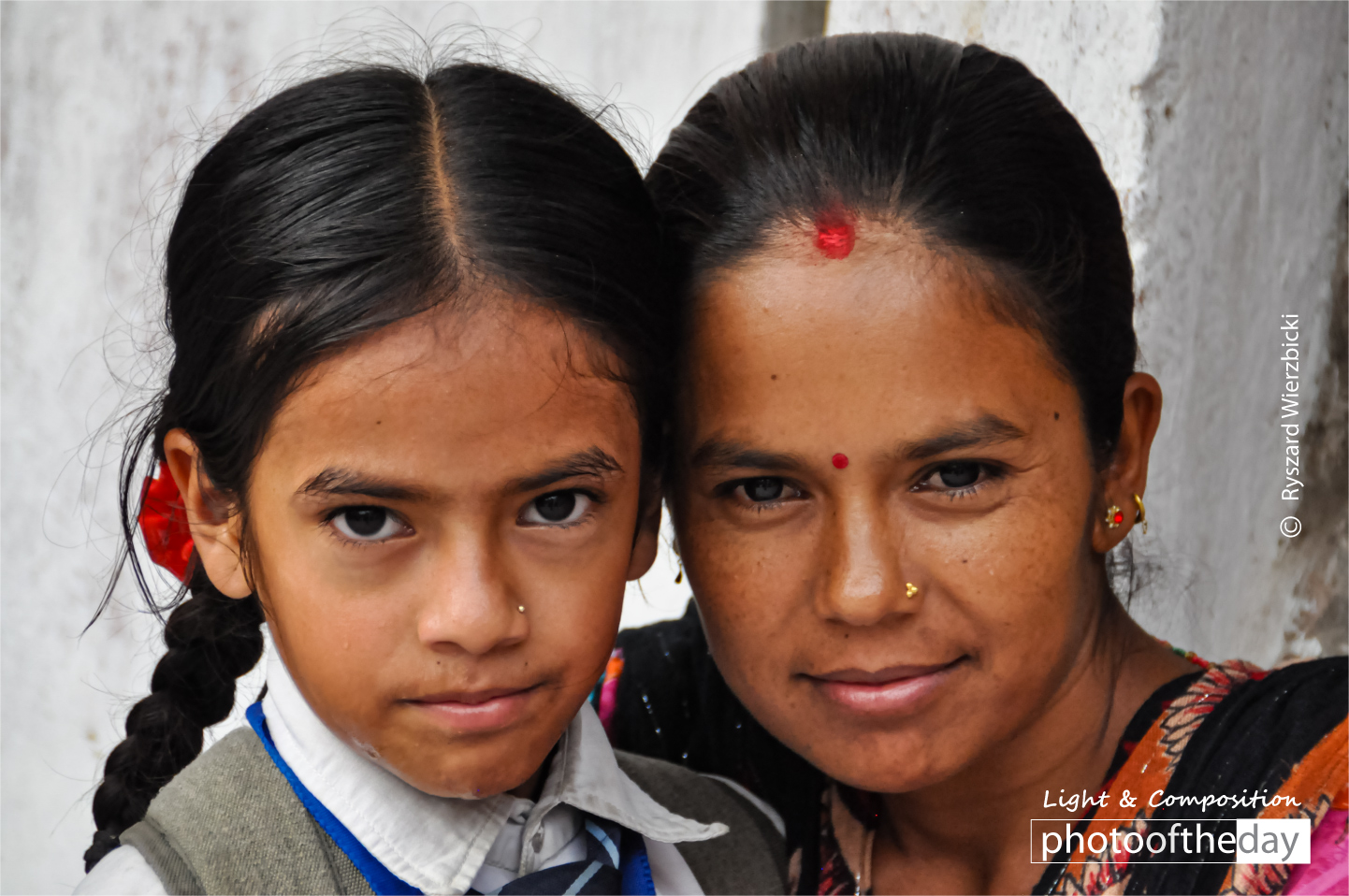
Captured in the vibrant streets of Kathmandu, this portrait of a mother and daughter reflects the photographer's commitment to building genuine connections with his subjects. By spending time with the pair before taking the shot, the photographer moved beyond a transactional interaction, allowing the subjects to relax and engage naturally with the camera. The image is award-worthy for its intimate portrayal of human connection, elevated by the photographer's patient approach to street portraiture, which successfully captures a moment of authentic vulnerability and grace amidst the bustling backdrop of Nepal.
Ryszard Wierzbicki
Born in 1963 and a graduate of the University of Gdańsk, Ryszard Wierzbicki transitioned from a diverse career in social sciences and marketing to become a dedicated travel photographer and scuba instructor. After relocating to the United Kingdom in 2006, he began documenting his extensive travels across South-East Asia, often volunteering his time with charitable organizations. Currently based in Swindon, Wierzbicki balances his work as a marketing advisor and tour organizer with a deep-seated passion for capturing the human experience through his lens.
Resonance Score Breakdown
Transparency Note: The resonance score (8.3/20) is calculated based on social engagement metrics collected before the award announcement.
Expert Photography Reviews · 6
The Root and the Bloom
There is a quiet language spoken between generations that requires no words at all. It is found in the way a hand rests upon a shoulder, or how a gaze softens when it meets another that carries the same history.
Read the reflection →The Weight of a Shared Breath
The smell of damp wool always brings me back to the winters of my childhood, pressed against the rough, scratchy fabric of my mother’s shawl. It was a scent of woodsmoke and rain, a heavy, grounding perfume that signaled safety.
Read the reflection →Reviews & Comments
Share your thoughts about this award-winning photograph. Your reviews contribute to the community engagement score.
The street noise of Kathmandu fades. It’s just them. The mother’s gaze anchors the frame, while the daughter’s stillness pulls the air toward her. I’ve spent minutes watching the shadows fall across their faces. It’s quiet. Nothing here is accidental. The empty corner is not empty. It holds the weight of their bond. I feel a sudden, sharp ache in my chest. It’s the grace of what isn’t being said. A rare, perfect pause.
The weathered textures of the Kathmandu brickwork frame them like a Renaissance altarpiece, grounding their presence in the city’s ancient, dusty pulse. I’m struck by how the soft, diffused light catches the daughter’s shawl, echoing the tactile warmth of the mother’s protective embrace. It’s not just a portrait; the environment acts as a silent, sturdy witness to their bond. You can feel the history of those streets in every shadow, making their intimacy feel profoundly eternal.
The mother’s gaze is soft, but the daughter’s eyes are drifting. In athletics, we call this a missed connection. The shutter clicked a fraction too late; the daughter’s focus had already slipped from the lens. It’s a shame, because the lighting on their faces is perfect. I’ve spent my life chasing that singular, locked-in millisecond of total presence. Here, the timing is just off. It’s a near miss, and honestly, that makes me ache a little.
One suspects Wierzbicki didn’t just stumble upon these two. You don’t get that level of unguarded gaze at 150mm without putting in the hours. It’s a rare thing to see a portrait where the subjects have clearly forgotten the lens is even there. I’ve spent enough afternoons in the dust to know when someone’s earned their keep. It’s a quiet, decent bit of work. He stayed long enough to be invited in. That’s the real craft.
Before the eye identifies the faces, a sudden stillness anchors the chest. It’s the weight of their shared gaze that pulls me in; I feel my own pulse slow to match the quiet gravity between them. When I return to this, I’m struck by how their vulnerability lingers, a soft ache in the periphery of my memory. It’s rare to feel so seen by strangers. I’ve found myself breathing differently just looking at their hands.
The vertical alignment of the mother’s gaze against the daughter’s tilted profile creates a necessary fulcrum. It’s a rigid geometry that anchors the frame. The background’s chaotic texture is suppressed by the shallow depth of field, forcing the eye toward the central axis. It doesn’t collapse into sentimentality because the spatial tension remains taut. I’m actually struck by how the composition holds its own against the noise. It’s a disciplined study in structural equilibrium.