Greater Yellownape Concealed Among Sundari Leaves by Saniar Rahman Rahul
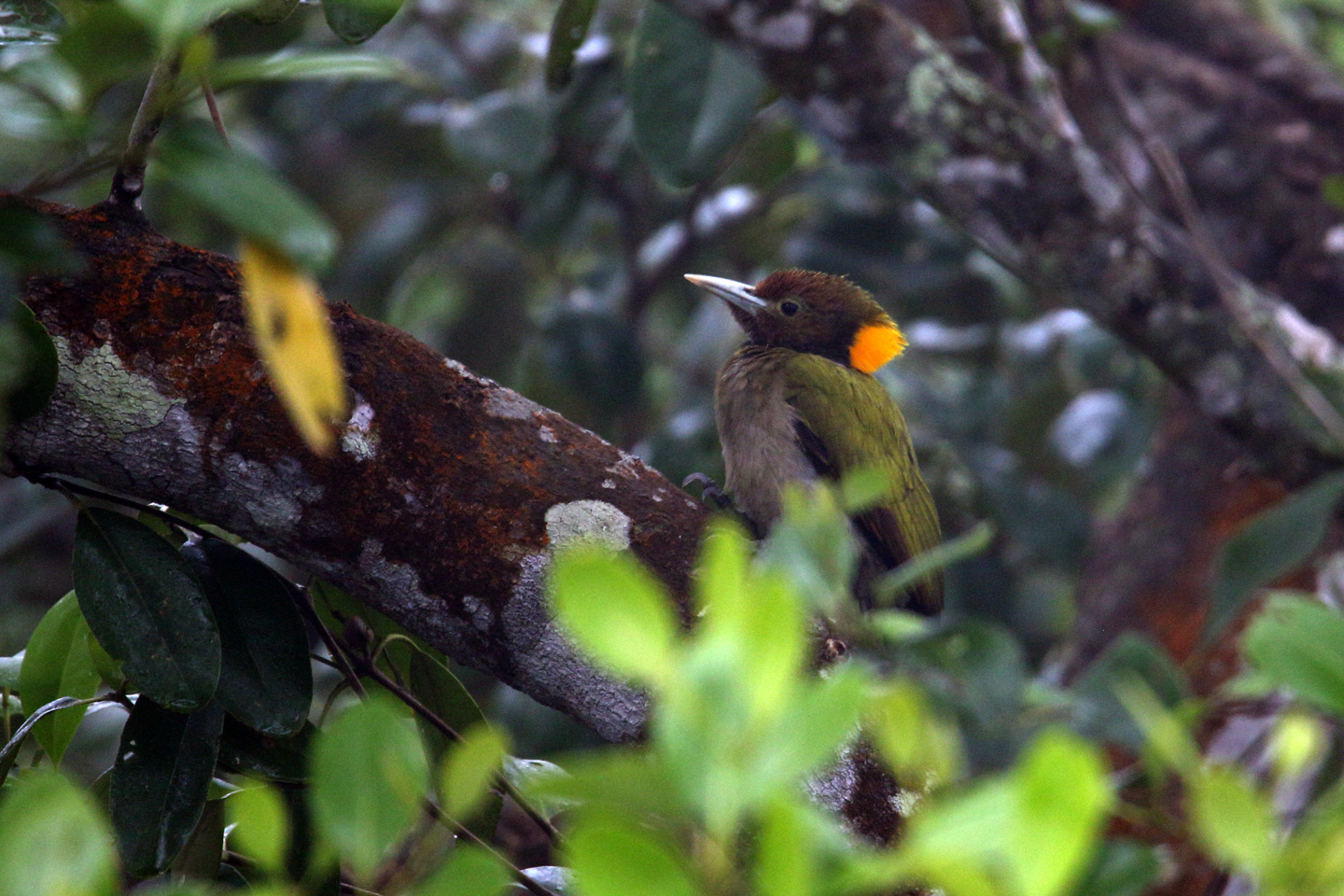
Deep within the verdant canopy of the Sundarbans, a Greater Yellownape is captured in a moment of quiet concealment. The bird’s striking yellow and black plumage offers a vivid contrast against the dense, lush green foliage of the Sundari trees. By focusing on the subject’s subtle gaze and its integration into the mangrove environment, the photographer highlights the mystery of the natural world. This award-worthy image succeeds through its masterful use of a long focal length to isolate the bird, creating a harmonious balance between the intricate details of the wildlife and the vast, untamed beauty of its habitat.
Saniar Rahman Rahul
Saniar Rahman Rahul is a distinguished photographer and Art Director based in Dhaka, Bangladesh. His creative journey began in childhood, inspired by his father’s photography, and was later refined through a successful career in graphic design and advertising with global agencies like Grey Worldwide. Since winning his first major photography award in 2010, Rahul has balanced his professional expertise in visual communication with a deep passion for capturing the natural world. His work reflects a keen eye for composition and a profound appreciation for the unique landscapes of his home country.
Resonance Score Breakdown
Transparency Note: The resonance score (7.1/20) is calculated based on social engagement metrics collected before the award announcement.
Expert Photography Reviews · 7
The Green Silence
In the deepest part of the forest, there is a quality of light that feels filtered through layers of damp moss and ancient, breathing wood. It is a heavy, verdant light, lacking the sharp edges of the sun we know in the north.
Read the reflection →The Architecture of Hiding
The Sundari tree, like all mangroves, manages the impossible: it thrives in the saline tension between land and tide, filtering salt through its roots to survive in an environment that would wither most other life. This is the mastery of the threshold.
Read the reflection →Reviews & Comments
Share your thoughts about this award-winning photograph. Your reviews contribute to the community engagement score.
The Yellownape’s gaze echoes the elusive subjects of early ornithological plates, yet here, the 600mm compression flattens the Sundari leaves into a painterly, almost abstract tapestry. It’s reminiscent of Eliot Porter’s dye-transfer precision, though far more claustrophobic. I’ve spent decades cataloging the tension between subject and habitat, but this specific, verdant entanglement genuinely caught my breath. It’s not just documentation; it’s a quiet, modern dialogue between the bird’s vibrant plumage and the suffocating, beautiful density of the mangrove.
Most wildlife shots are just trophies, but this one lingers. Of the thousands I’ve reviewed, few handle the Sundari leaves with such restraint. The Yellownape isn’t just a subject; it’s a ghost in the canopy. I’ll admit, the way the bird’s eye pierces that dense, chaotic green actually made me hold my breath. It’s the tension between concealment and revelation that ensures this will still matter in thirty years. It’s a rare, quiet victory for patience.
The Yellownape’s crest, a sharp, acidic lemon, cuts through the Sundari leaves like a blade of light in a Vermeer interior. It’s a chromatic collision that makes my heart ache, that sudden, violent warmth against the deep, mossy gloom of the mangrove. One finds the shadows here aren’t merely absent light, but a rich, velvet olive, a Morandi-esque stillness that holds the bird’s gaze suspended in a humid, emerald silence I’ve rarely felt so acutely.
Before the eye identifies the bird, something quiets in the chest. The dense Sundari leaves create a claustrophobic, emerald pressure that forces a shallow, rhythmic breath. I’ve found myself leaning in, searching for that sliver of yellow, feeling the sudden, sharp activation of my own predatory focus. It’s a quiet, unsettling game of hide-and-seek. When I return to this, I still feel that strange, prickling urge to hold my breath until the bird finally looks back.
We look at this Yellownape and we aren’t just seeing a bird; we’re meeting a resident of the Sundarbans. Saniar Rahman Rahul didn’t just point a lens; he waited until the forest let him in. That gaze, caught between the Sundari leaves, feels like a secret shared. I’ve spent my life listening to stories, and this one is whispered in gold and green. It’s a portrait of patience. Honestly, it makes me want to hold my breath.
The Yellownape’s placement creates a precarious fulcrum against the Sundari leaves. It’s a rigid geometry. The bird’s plumage disrupts the chaotic green density, forcing the eye into a singular, sharp focal plane. I’m genuinely irritated by the peripheral blur; it’s sloppy, yet the subject’s structural isolation holds the frame together. It doesn’t rely on sentiment. The tension between the avian mass and the surrounding foliage is precise. It’s a cold, calculated victory of spatial discipline.
The Yellownape is static, yet I’m looking for the twitch of a muscle or the tension of a wing about to snap open. It’s a quiet frame, sure, but it’s missing the kinetic potential I crave. The bird’s gaze is fixed, but the body is dormant. I’d have preferred the millisecond before the take-off, when the talons release their grip. It’s technically clean, but it doesn’t give me that jolt of pure, physiological adrenaline.