Kathmandu Street Life by Ryszard Wierzbicki
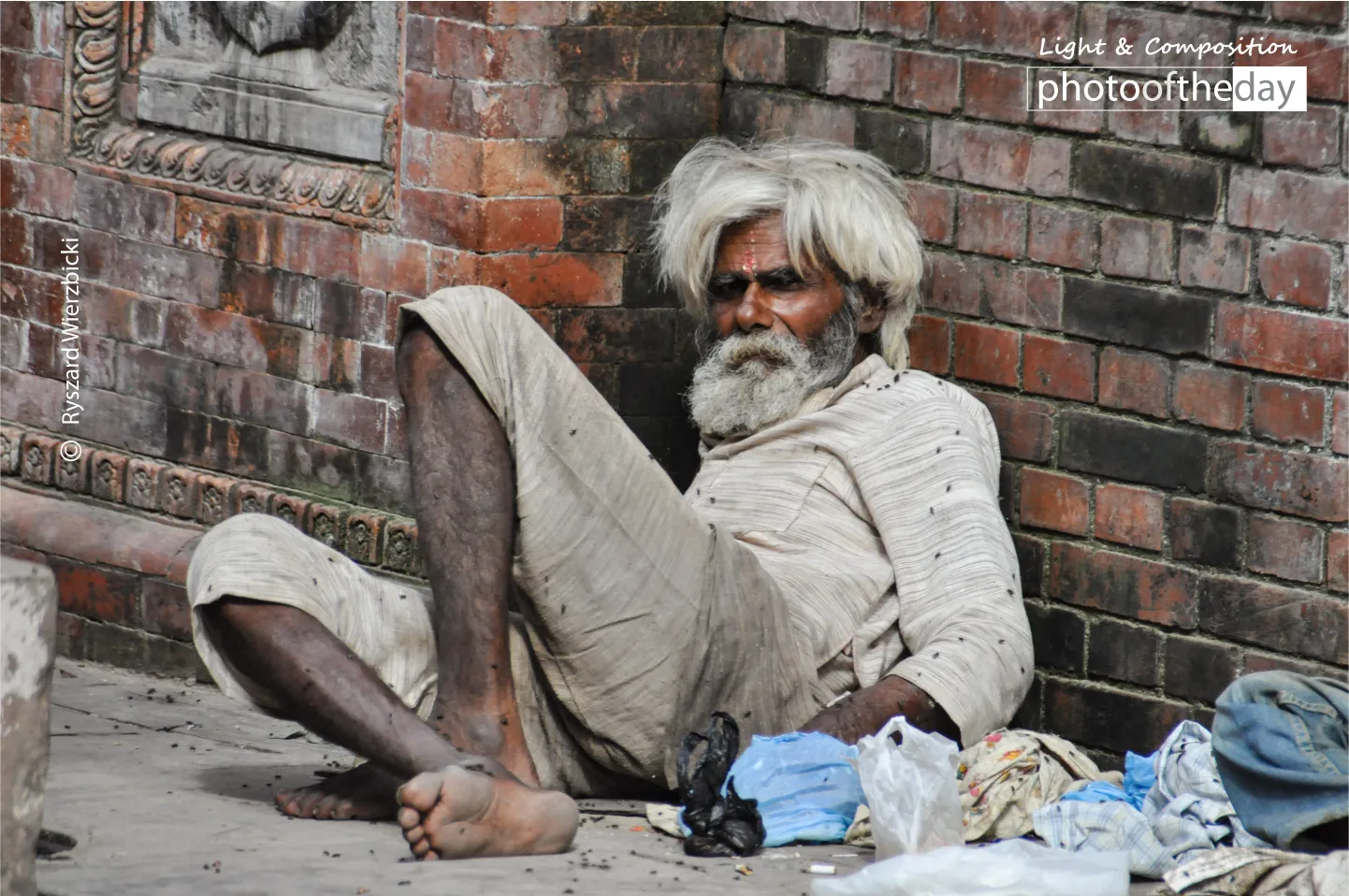
Captured in the bustling heart of Kathmandu, this poignant portrait explores the stark contrast between material scarcity and the profound human charisma found in the city’s street life. The photographer utilized a 200mm focal length to isolate the subject, creating an intimate connection that transcends the distance between the viewer and the individual. By focusing on the subject's eyes, the image serves as a powerful commentary on the limitations of Western consumerism, highlighting a sense of contentment and spirit that is often absent in modern society. This evocative work is award-worthy for its raw emotional depth and its ability to humanize the global narrative of poverty.
Ryszard Wierzbicki
Born in 1963 and a graduate of the University of Gdańsk, Ryszard Wierzbicki transitioned from a career in social sciences and marketing to become a dedicated traveler and photographer after relocating to the United Kingdom in 2006. His work is deeply influenced by his extensive explorations of South-East Asia and his commitment to humanitarian volunteerism with orphanages in Thailand and Burma. As a self-employed marketing advisor and tour organizer, he balances his professional life with a passion for photography and scuba diving, frequently sharing his experiences through his established travel and photography forums.
Resonance Score Breakdown
Transparency Note: The resonance score (7.2/20) is calculated based on social engagement metrics collected before the award announcement.
Expert Photography Reviews · 8
The Weight of a Worn Coat
I have a wool coat in the back of my closet that still smells faintly of woodsmoke and damp earth, a relic from a winter I spent wandering through cities that did not know my name.
Read the reflection →The Weight of the Unburdened
Epictetus once remarked that wealth consists not in having great possessions, but in having few wants. It is a sharp, uncomfortable truth for a world that measures its worth by the accumulation of things.
Read the reflection →Reviews & Comments
Share your thoughts about this award-winning photograph. Your reviews contribute to the community engagement score.
Using a 200mm lens to “isolate” a subject in Kathmandu feels like a clinical extraction. Why does the curator insist this humanizes poverty when it actually flattens a complex life into a prop for Western contentment? I’m genuinely uncomfortable with how we’ve commodified this man’s gaze to soothe our own existential fatigue. Does he know he’s being framed as a moral lesson? It’s not an intimate connection; it’s a power imbalance disguised as empathy.
The 200mm compression flattens the street, forcing the subject against a chaotic, blurred backdrop. It’s a tight, claustrophobic geometry. The subject’s gaze acts as the fulcrum, anchoring the frame despite the visual noise. I’m genuinely unsettled by how the depth of field isolates the eyes, stripping away the context of the city. It doesn’t rely on sentiment; it relies on the rigid, clinical placement of the subject within the frame’s narrow, unforgiving architecture.
The jury’s obsession with the subject’s eyes feels dreadfully conventional. Why resolve the gaze so clinically when the chaotic energy of Kathmandu demands a looser hand? I’m genuinely frustrated that Wierzbicki didn’t lean into the 200mm compression to abstract the street into a painterly smear. It’s technically competent, sure, but it’s safe. I’d trade that sharp iris for a deliberate blur any day; it’s the motion, not the focus, that holds the truth.
Before the eye identifies the dust of Kathmandu, something in the chest tightens. It’s the gaze—that piercing, unblinking stillness—that triggers a sudden, shallow breath. I’ve returned to this portrait three times today, and each time, the subject’s eyes seem to dismantle my own restlessness. It’s an uncomfortable, quiet confrontation. I feel my pulse slow, a strange, heavy empathy settling in. It’s not just a face; it’s a mirror that follows me into the night.
That 200mm lens pulls the soul right out of the Kathmandu dust. I love the grit in those eyes; it’s a gaze that cuts through the noise. But wait. Did he catch the peak? One tenth of a second later and the connection would’ve vanished. He nailed it. It’s raw, it’s honest, and it doesn’t blink. Winogrand would’ve tipped his hat to this timing. It’s a rare, fleeting slice of humanity captured perfectly.
The shutter speed is fast enough, but the timing misses the kinetic truth. Street photography isn’t a sprint, yet the same rules apply: you’re hunting for the peak of the gesture. Here, the subject’s gaze is static, lacking the tension of a lived, moving moment. I’ve spent my life chasing that singular, explosive frame, and this feels like a practice drill. It’s technically clean, sure, but it doesn’t capture the pulse. It’s just a portrait, not a peak.
You didn’t just take a picture; you sat with him. Using that 200mm lens was a smart move—it let you get close without breaking the spell of his gaze. I’ve spent enough time in Kathmandu to know that look, and it’s heavy. Because you waited, I can feel the weight of his quiet dignity. It’s not about poverty. It’s about the person staring back. You caught something real. I respect that.
The peeling ochre plaster behind him acts as a map of time, its crumbling texture echoing the deep lines etched into his skin. I’m struck by how the muted, dusty light of Kathmandu softens the harshness of his surroundings, turning poverty into a quiet, dignified stage. It’s not just a face; it’s a dialogue between a man and his city. He doesn’t need to speak because the worn walls have already told his entire story.