Chapter 33 by Ismawan Ismail
This evocative photograph captures a moment of quiet reverence, focusing on the sacred verses of Chapter 33 of the Quran, Surah Al-Ahzab. The photographer meticulously frames the text, emphasizing the spiritual weight of the scripture through a shallow depth of field that draws the viewer’s eye directly to the printed word. By isolating the page against a softly blurred background, the image highlights the timeless nature of the guidance contained within. The technical precision, combined with the intentional composition, transforms a simple act of reading into a profound visual meditation on faith, making this piece a compelling and award-worthy study in focus and devotion.
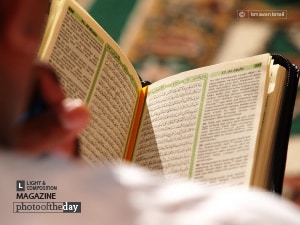
Exposure 1/800sec @ f/5.6 | ISO 200 | Focal Length 182mm
Ismawan Ismail
Born in Cottesloe, Australia, in 1972, Ismawan Ismail spent his formative years in Malang, Indonesia, where he first discovered his passion for photography using his father’s pocket camera. A self-taught artist with a background in computer engineering, he honed his craft through years of travel across Indonesia, developing a keen eye for landscape and human interest photography. Now an accomplished photographer, Ismail balances his professional career with his dedication to the art form, consistently seeking to capture the beauty of his surroundings through a blend of technical discipline and creative intuition.
Resonance Score Breakdown
Transparency Note: The resonance score (8.0/20) is calculated based on social engagement metrics collected before the award announcement.
Expert Photography Reviews · 8
The Weight of the Word
I often find myself wandering the backstreets of the old quarter, where the stone walls have absorbed the whispers of centuries.
Read the reflection →The Weight of Ink
When I was ten, my grandmother sat me down at the heavy oak table in her kitchen and placed a thick, leather-bound book in front of me. She told me that the words inside were not just ink on paper, but a map for the parts of life that cannot be seen.
Read the reflection →Reviews & Comments
Share your thoughts about this award-winning photograph. Your reviews contribute to the community engagement score.
It’s a clean study, though one wonders if the shutter was clicked on the first pass. The shallow depth of field is tidy, yet it lacks the grit of a long-term commitment. I’ve spent enough hours shivering in damp forests to know when a frame was earned and when it was merely snatched. It’s technically sound, certainly, but I’m left wanting the weight of a photographer who actually sat with the text until the light changed.
Most religious photography relies on heavy-handed symbolism, but Ismail’s work avoids that trap. By isolating the text with a shallow depth of field, he forces an intimacy that feels rare. I’ve seen thousands of shots of scripture, yet this one actually made me hold my breath. It’s the sharp focus on the ink against the soft, indistinct background that anchors the devotion. It’s a quiet, enduring study that will still matter in thirty years.
The vertical axis of the script creates a rigid, rhythmic grid that anchors the frame. Ismail’s 182mm focal length compresses the depth, forcing a 4:1 ratio between the sharp, ink-heavy foreground and the ethereal, blurred void. It’s a beautifully solved spatial equation. I’m genuinely struck by how the geometry of the Arabic calligraphy dictates the viewer’s eye movement. It’s not just faith; it’s a precise, calculated equilibrium of form that feels perfectly balanced.
The sepia-drenched parchment, reminiscent of a Morandi still life, breathes with a warmth that’s almost tactile, pulling one into the amber glow of ancient devotion. It’s the quietude of the ink—a charcoal velvet against the aged, sun-warmed paper—that truly stirs my soul, grounding the spirit in a chromatic stillness. I’m utterly captivated by how the light caresses these sacred lines, turning mere text into a luminous, golden meditation that feels like a whispered prayer.
Focusing on the text of Surah Al-Ahzab creates a vacuum, stripping the scripture of its lived context. Why isolate these verses from the hands that hold them or the space they inhabit? It’s a sterile, clinical gaze that feels more like a product shot than a spiritual encounter. I find myself craving the grit of reality, not this polished, shallow blur. Does this framing honor the faith, or does it merely aestheticize the page for our consumption?
The eye tracks the ink, but the shutter missed the rhythm of the breath. It’s a static study, lacking the kinetic tension of a turning page or a finger tracing a line. I’ve spent my life chasing the exact millisecond where effort peaks, and here, the stillness feels heavy, almost stagnant. It’s technically sharp, sure, but it doesn’t capture the pulse of devotion. I wanted to feel the movement of faith, not just read it.
You’ve captured the weight of the page, but I’m looking for the person behind the book. It’s technically sharp, sure, but it feels a bit distant. I want to see the hands holding it or the shadow of the reader. Because when you photograph faith, you have to photograph the human struggle to believe. I’ve spent years in the field, and I’m still waiting to feel your pulse in this frame. Keep digging deeper.
There’s a coldness here that troubles me. By focusing solely on the ink and paper, the photographer has opted for a still life rather than a portrait of faith. Where is the person? I want to see the hands holding the book, the tremor of a finger, or the light in a reader’s eyes. It’s technically sharp, sure, but it feels distant. I’m left craving the human warmth that only a real connection provides.