In the Old Town of Dresden by Mirka Krivankova
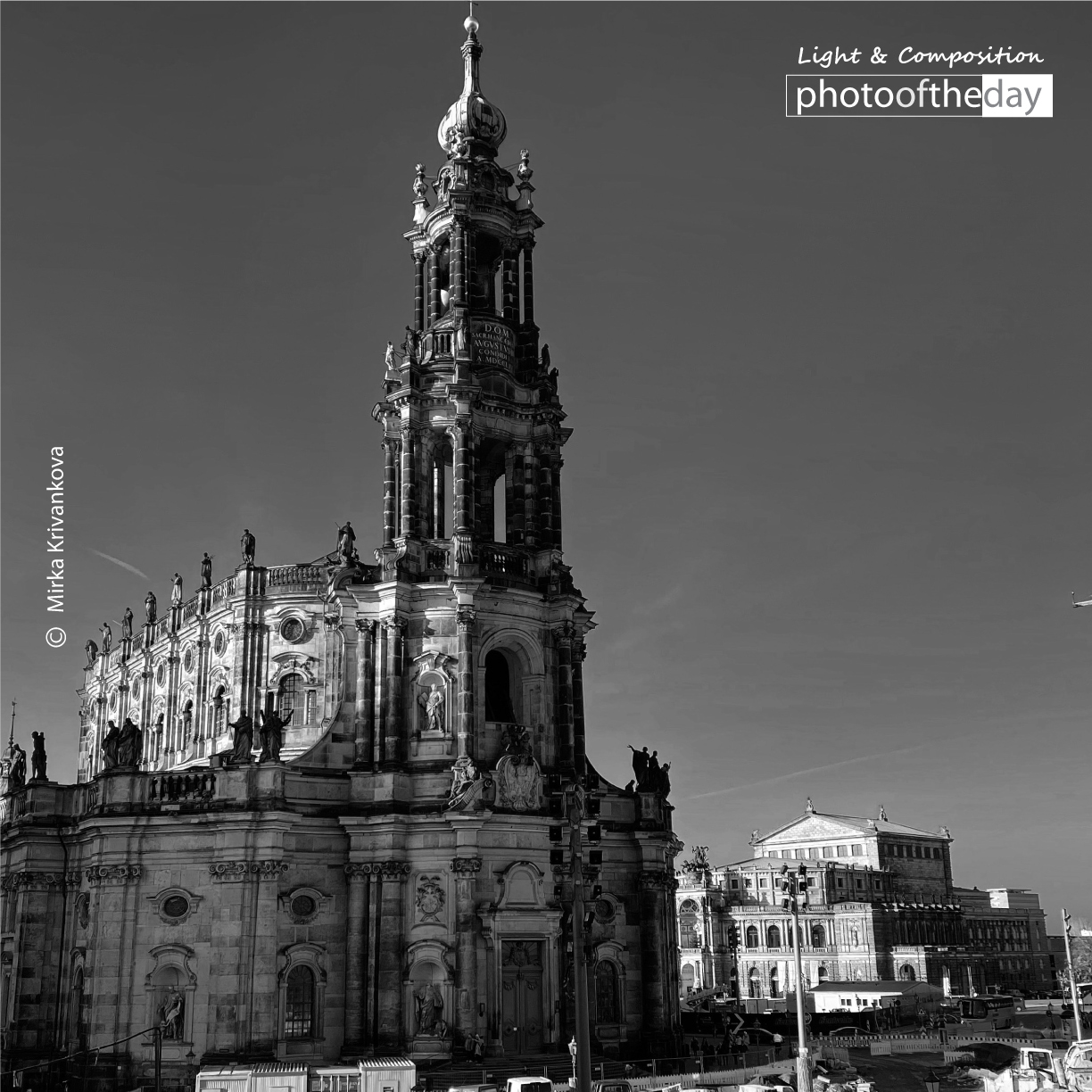
Captured in the heart of Dresden, this photograph highlights the architectural grandeur of the Hofkirche, the largest church in Saxony. The photographer utilized the iPhone 11 Pro to frame the Baroque masterpiece, carefully balancing the low-light conditions of the historic site. By focusing on the intricate details of the 18th-century structure, the image captures the solemnity and historical weight of the cathedral. This piece is award-worthy for its ability to transform a well-known landmark into a compelling visual narrative, demonstrating a keen eye for composition and a sophisticated approach to mobile photography within a complex urban environment.
Mirka Krivankova
Hailing from Mestec Kralove in the Czech Republic, Mirka Krivankova is an emerging photographer recognized for her versatile portfolio. Her work spans a diverse range of subjects, from the serene beauty of the Czech countryside to evocative portraits that masterfully utilize natural light and shadow. Krivankova is noted for her commitment to artistic growth and her evolving approach to visual storytelling, consistently refining her bodies of work to create a more cohesive and impactful narrative for her audience.
Resonance Score Breakdown
Transparency Note: The resonance score (8.5/20) is calculated based on social engagement metrics collected before the award announcement.
Expert Photography Reviews · 4
Echoes in the Stone
I spent this morning walking through the older part of my neighborhood, where the buildings still hold the soot of a different century. I found myself running my hand along a brick wall, feeling the rough, uneven surface under my fingertips.
Read the reflection →The Weight of Stone
I remember sitting on a low wall in a quiet square in Prague, watching an old man polish a brass plaque for the third time that morning. He didn’t look up at the tourists rushing past with their maps and their noise.
Read the reflection →Reviews & Comments
Share your thoughts about this award-winning photograph. Your reviews contribute to the community engagement score.
Before the eye identifies the Hofkirche, a sudden stillness anchors the chest. The low-light grain creates a tactile, velvet pressure against the ribs. It’s an intimate, heavy silence that I’ve felt walking through Dresden at dusk. When you return to this frame a year later, the stone’s cold weight remains, triggering a phantom chill in your palms. It doesn’t just document architecture; it forces your pulse to sync with the slow, rhythmic breathing of history.
We look at the Hofkirche and we don’t just see stone; we see the silence of centuries. Mirka Krivankova didn’t just point a phone at a building; she listened to the echoes trapped in those Baroque curves. It’s a portrait of a city that’s seen everything. I find myself shivering, feeling the weight of Dresden’s history pressing against the lens. It’s a photograph that asks to be returned to, because it’s finally heard the building’s long, lonely story.
Dresden’s Baroque weight demands a certain gravitas, yet here, the iPhone’s sensor struggles against the shadows, echoing the limitations of early dry plates. It’s a brave attempt to capture the Hofkirche’s intricate geometry, though the digital noise lacks the velvet depth of a platinum print. I’m genuinely moved by the ambition to frame such history through a mobile lens. It’s a modern dialogue with the past, even if the technical execution doesn’t quite reach the sublime.
It’s a sterile, static frame. I’m used to the erratic pulse of the wild, where a single shutter click is earned through hours of shivering in the brush. Here, there’s no tension, no life. It’s just stone and light. I find myself craving the messy, unpredictable movement of a living creature against those arches. Without a heartbeat in the frame, this architectural study feels hollow, like a stage set waiting for a play that never begins.